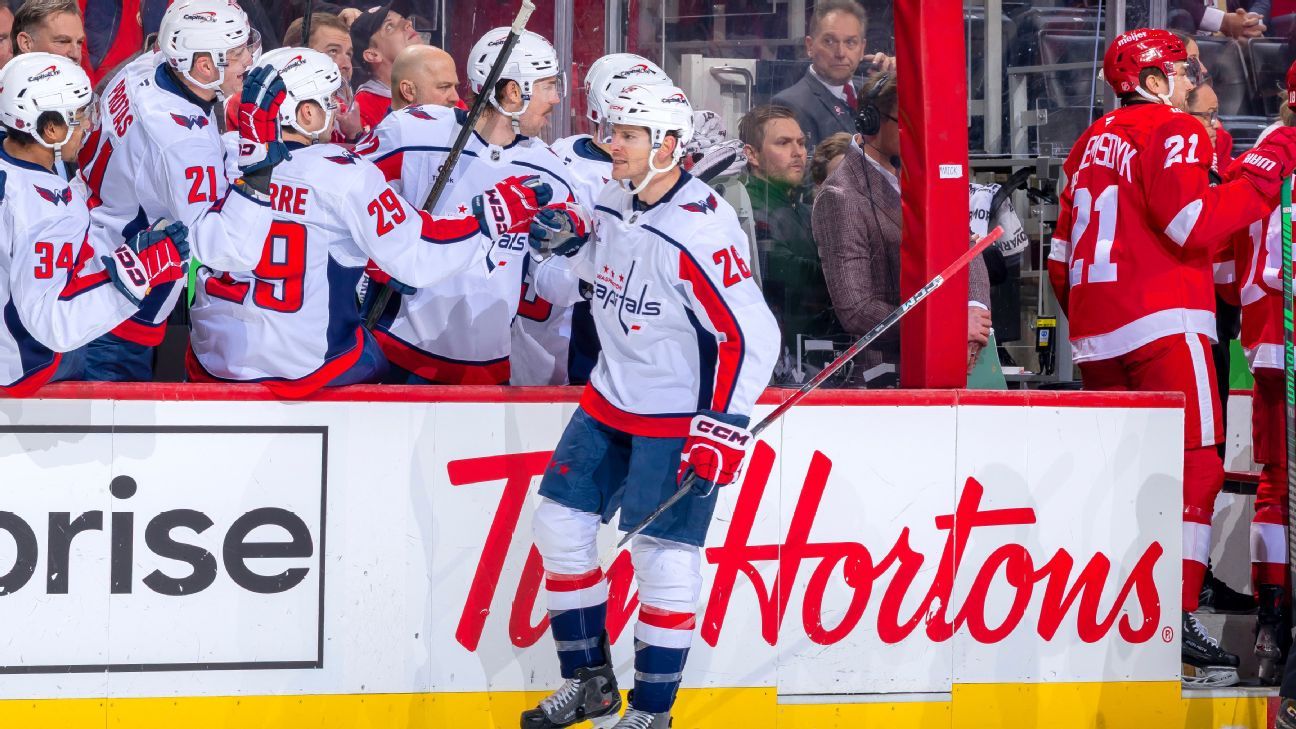
Strategic Imperatives Drive NHL Trade Deadline Activity
The Vegas Golden Knights have executed a significant roster move, acquiring veteran center Nic Dowd from the Washington Capitals. This transaction, occurring ahead of the NHL trade deadline, underscores distinct strategic imperatives for both franchises, reflecting their current competitive windows and long-term organizational objectives.
For the Golden Knights, the acquisition of Dowd addresses immediate operational vulnerabilities while providing crucial stability. His arrival is a direct response to a challenging injury landscape that has impacted key offensive personnel, necessitating robust depth to maintain competitive integrity.
Vegas Golden Knights: Bolstering Depth for a Championship Pursuit
The Golden Knights’ decision to bring in Dowd is rooted in a pressing need for enhanced forward depth, particularly at the center position. The club has been navigating a period marked by significant absences, including captain Mark Stone, who was recently moved to injured reserve, alongside Brett Howden and William Karlsson, both on long-term injured reserve.
These key injuries have forced tactical adjustments, leading to temporary positional shifts for other forwards. Dowd’s integration is designed to alleviate this positional strain, allowing for a more natural alignment of the forward group and restoring specialized roles within the lineup.
Dowd’s profile as a defensive-minded, bottom-six center provides an anchor for the fourth line, a critical component for teams aiming for deep playoff runs. His documented proficiency in penalty-killing minutes and a high percentage of defensive zone starts highlight a skill set valued for its ability to absorb pressure and maintain structural integrity during crucial game segments.
Beyond immediate operational relief, Dowd’s contract status, in the first year of a two-year agreement with a $3 million annual cap hit, offers the Golden Knights financial and roster certainty. This stability mitigates potential future volatility, particularly relevant as Vegas faces four active forwards becoming unrestricted free agents, including recent acquisition Cole Smith. His presence through the next season addresses depth concerns not just for the current playoff push but also provides a known commodity for immediate subsequent planning, buffering against potential free agency departures.
The Golden Knights’ aggressive posture at the trade deadline, marked by multiple acquisitions including winger Cole Smith, signals a clear organizational commitment to maximizing their current contention window. These moves reflect a calculated investment in immediate performance and playoff leverage, positioning them strategically within a tightly contested Pacific Division.
This pattern of proactive roster management underscores a ‘win-now’ philosophy, where the accumulation of proven talent, even in depth roles, is prioritized to navigate the rigors of the regular season and the intensified demands of post-season competition. The strategic calculus involves balancing current competitive needs against future asset expenditure, a hallmark of teams positioned for championship contention.
Washington Capitals: Strategic Retooling for Future Contention
Conversely, the Washington Capitals’ decision to trade Dowd signals a strategic pivot, indicating an intention to operate as sellers at the trade deadline. This move reflects a realistic assessment of their current standing within the Eastern Conference, where they sit outside of a wild card spot, having played more games than the team currently occupying that position.
The return for Dowd—prospect goaltender Jesper Vikman, a 2027 third-round draft pick, and a 2029 second-round draft pick—illustrates a clear organizational focus on future asset accumulation. This type of transaction is characteristic of teams initiating a retooling or rebuilding phase, prioritizing long-term sustainability over short-term competitive aspirations.
Jesper Vikman represents a future-oriented investment in goaltending depth, a critical position for any franchise’s long-term health. The acquisition of multiple draft picks, particularly a second-rounder, provides valuable currency for future player development or subsequent trades, enhancing the club’s flexibility in shaping its roster over the coming seasons.
Trading a veteran like Dowd, who commanded a $3 million cap hit for another year, also creates immediate and prospective salary cap flexibility for the Capitals. While not a massive cap relief, it contributes to the overall financial maneuverability required to sign upcoming free agents, absorb new contracts, or facilitate further trades as the team reconfigures its competitive outlook.
Dowd’s specific role as a defensive specialist and penalty killer, while valuable, becomes expendable for a team shifting its focus. His departure allows for opportunities to evaluate younger players within the system or to clear space for other strategic acquisitions that align with a longer developmental timeline.
The Capitals’ broader market signaling, including the identification of other pending unrestricted free agents as potential trade candidates, reinforces this strategic direction. This comprehensive approach to asset management indicates a deliberate move away from a ‘win-now’ mentality towards a more patient, future-oriented strategy.
This strategic shift has implications for fan engagement and media narratives, as teams transitioning from a competitive window often face scrutiny regarding their long-term vision. The explicit move to acquire future draft capital and prospects serves as a tangible demonstration of commitment to a new organizational trajectory, even if it entails short-term competitive sacrifices.
For the Capitals, the trade of a respected veteran like Dowd, even for future considerations, can impact team morale and locker room dynamics. However, it also sends a clear message about the organization’s commitment to a new direction, potentially signaling to younger players that opportunities for advancement will emerge as the roster evolves.
Broader NHL Trade Dynamics: A Microcosm of Strategic Divergence
The Dowd trade exemplifies the intricate competitive dynamics that define the NHL trade deadline, forcing teams into binary decisions: invest for an immediate playoff push or divest assets for future competitive advantage. This transaction underscores the continuous interplay between on-ice performance, salary cap management, and long-term organizational planning, where every move is a complex calculation of player value, contract terms, and strategic direction.
The contrasting strategies of the Golden Knights and Capitals reflect a fundamental divergence in their current competitive cycles. Vegas is leveraging its assets to maximize a championship window, while Washington is recalibrating its approach, aiming to build a sustainable foundation for future contention through prudent asset management. Ultimately, the Dowd trade serves as a microcosm of the strategic pressures and opportunities inherent in professional sports management, illustrating how immediate competitive demands intersect with long-term organizational planning, shaping the destinies of franchises and influencing the broader landscape of the league.