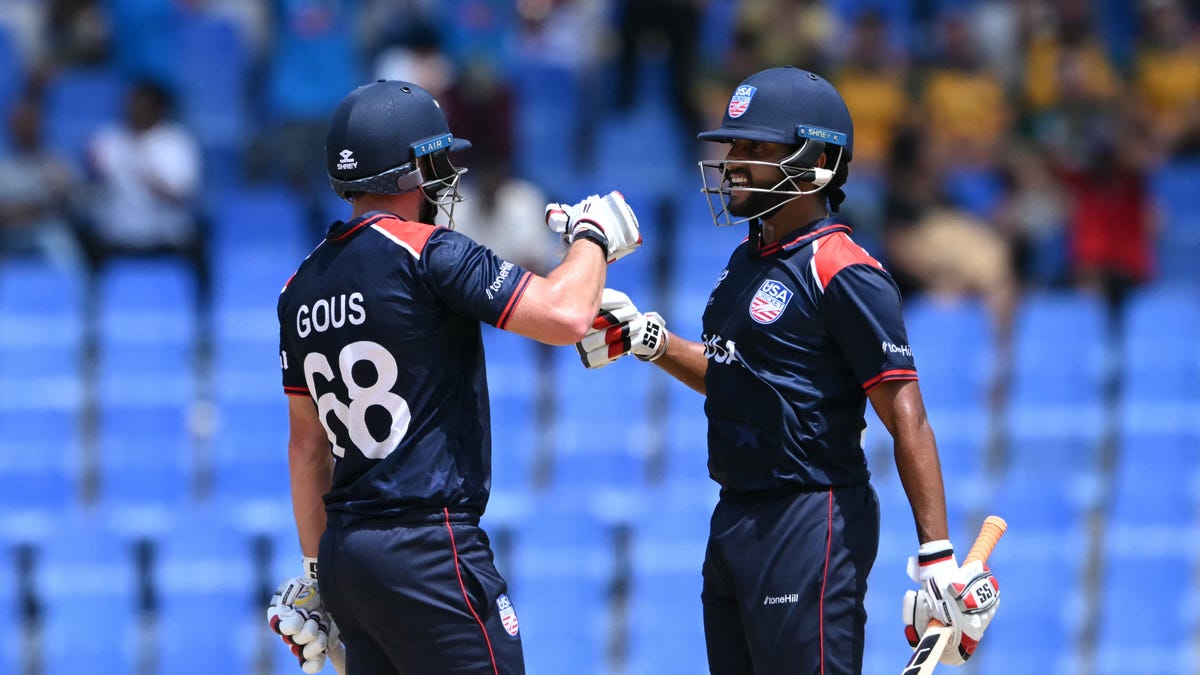
The United States cricket team’s participation in the 2026 ICC T20 World Cup was formally concluded following Pakistan’s decisive victory over Namibia on Wednesday, February 18th, confirming their inability to secure advancement to the Super Eight stage.
This elimination, despite Team USA posting an equivalent 2-2 win/loss record to other contenders, critically exposes the rigidity of ICC qualification mechanics, where head-to-head results and Net Run Rate (NRR) supersede simple win counts when points totals are tied.
The operational reality marks a performance regression from the 2024 tournament’s Super Eight appearance, positioning this result as a significant inflection point for stakeholder assessment of the current development cycle.
Group A Qualification Mechanics and Competitive Thresholds
Pakistan’s definitive success against Namibia solidified the top two positions in Group A, ensuring progression for India and Pakistan, and simultaneously sealing the fate of the US squad based on accumulated standings points.
The US performance trajectory—starting with losses against the eventual qualifiers (India and Pakistan) and following up with victories against associate-level peers (Netherlands and Namibia)—demonstrates a critical failure to convert competitive parity into vital early-stage points.
Finishing third confirmed that the tie-breaker matrix favored the top two seeds, exposing a structural weakness in consistency against fully accredited ICC members when margins are narrow.
Performance Benchmarking and Margin Analysis
The initial defeats against India (by 29 runs) and Pakistan (by 32 runs) created a point deficit that subsequent victories could not overcome within the cumulative group standings system. These margins quantify a systemic gap in high-leverage execution.
This pattern reflects a common challenge for emerging cricket nations: achieving parity against established powers but failing to translate this into tangible results when qualification depends on fine margins. The subsequent wins validated the team’s floor performance but proved insufficient against the ceiling established by the group leaders.
Stakeholder Accountability and Recalibration
For US cricket governance, this early exit mandates a rigorous post-mortem focused exclusively on high-leverage performance deficits, particularly tactical execution during the opening fixtures against top-tier opposition. The benchmark set by the 2024 Super 8 appearance now exerts immediate pressure on talent pipeline management and elite coaching structures.
The financial implication is a reduction in high-value, globally televised match exposure during the Super Eights (scheduled Feb 21st to Mar 1st), directly impacting sponsorship valuation and return on investment tied to sustained visibility in ICC premier events.
Strategic Pivot to ICC Pathway Management
The official tournament context, referencing the dense ICC calendar including the 2025 Champions Trophy and the ongoing World Cup League 2 (2024-26 cycle), dictates an immediate strategic pivot. Sustained relevance is now contingent upon maximizing results in League 2 fixtures.
The continuity of the US pathway relies heavily on leveraging the competitive foundation built against Netherlands and Namibia into consistent victories within the League 2 structure, which directly governs qualification access for future T20 World Cups.
Analysis of Qualification Structure Reliance
The mandated progression of the top two teams from each group confirms that USA’s campaign was fundamentally evaluated against the performance threshold set by India and Pakistan. The round-robin format inherently assigns disproportionate weight to early results against stronger seeds.
Strategic planning must therefore be adjusted to prioritize shock absorption and result generation against group leaders, as compensating for initial stumbles via late-stage wins against lower-ranked sides is mathematically precarious under current tie-breaker rules.
Operational Deficits Quantified
The 29 and 32-run margins of defeat against India and Pakistan suggest quantifiable deficiencies in critical operational areas—such as middle-order consolidation or death bowling consistency—demanding targeted investment in high-performance infrastructure. These margins signal systemic gaps rather than stochastic variance.
While the victories against Netherlands and Namibia confirm associate-level capability, the measurable ceiling remains significantly below that required for Super Eight progression. The eliminated teams face an immediate transition to League 2 commitments, contrasting with the sustained high-intensity phase for advancing squads.