
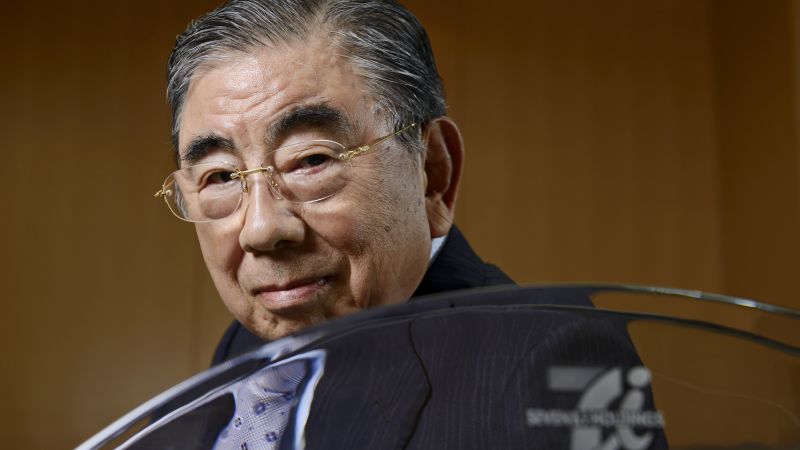
Toshifumi Suzuki, Architect of the Modern Convenience Store, Dies at 93
Toshifumi Suzuki, the transformative leader who established Seven-Eleven Japan and redefined the global convenience store model, has died at 93. His influence extended beyond basic retail, integrating essential daily services into an omnipresent store format, fundamentally reshaping the industry.
Suzuki’s journey began at Ito-Yokado in 1963, a time when the 24-hour convenience store concept was nascent. His strategic decision to partner with Southland Corp., the then-US operator of 7-Eleven, to launch Seven-Eleven Japan in 1973 defied market skepticism. The first Tokyo store opened in 1974, laying the foundation for what would become an indispensable part of Japanese urban life.
Pioneering Data-Driven Retail Operations
A cornerstone of Suzuki’s innovation was the pioneering use of data analytics to optimize inventory management. This strategic focus enabled a business model centered on ready-to-eat meals and rapid inventory turnover, significantly reducing waste and ensuring product freshness. This operational efficiency became the hallmark of the Japanese convenience store, or ‘conbini,’ model, setting a global benchmark for retail logistics.
The success of this data-driven approach not only cemented 7-Eleven’s dominance in Japan but also provided a blueprint for efficient, consumer-responsive retail operations. It demonstrated how granular data could drive substantial improvements in supply chain management and product assortment, directly boosting profitability and customer satisfaction.
Rescuing and Restructuring a Global Brand
Suzuki’s strategic acumen was further showcased when he led the critical restructuring and rescue of the financially distressed Southland Corp. in the early 1990s. His intervention stabilized the struggling US parent company, underscoring his commitment to the brand’s long-term viability. This rescue was a strategic integration that ultimately led to Seven & i Holdings acquiring full ownership of the US business.
This acquisition consolidated global control and facilitated the application of the successful Japanese operational model worldwide, amplifying the impact of Suzuki’s innovations and consolidating the brand’s global presence.
Building a Diversified Retail Conglomerate
In 2005, Suzuki established Seven & i Holdings, consolidating the convenience store operation into a diversified retail conglomerate. This strategic move leveraged synergies across various retail formats, creating a retail powerhouse with a significant global footprint and transforming the company’s market position.
The formation of Seven & i Holdings marked a strategic shift from a single-brand focus to a multi-faceted retail enterprise, enabling adaptation to evolving consumer demands and market conditions for sustained growth.
Enduring Influence and Industry Impact
Despite stepping down as chairman in 2016, Toshifumi Suzuki remained an influential figure in Japan’s retail sector. His vision and operational strategies continue to inform the industry, highlighting the enduring impact of his contributions. The ‘conbini’ model, perfected under his guidance, has become a global standard for accessible, convenient retail services.
Suzuki’s passing prompts reflection on the profound structural changes he instigated. His emphasis on operational excellence, data utilization, and strategic brand management has left an indelible mark, influencing how convenience is delivered and consumed globally.
The ‘Conbini’ Ecosystem: More Than Just Retail
The ‘conbini’ model, cultivated by Suzuki, evolved into a sophisticated ecosystem far beyond simple retail. These outlets became integral to daily life in Japan, offering services such as ATM access, utility bill payments, and document copying. This multi-functional approach transformed them into essential community hubs, demonstrating foresight into consumer needs that transcended basic product sales.
This comprehensive service integration created significant barriers to entry for traditional retailers and fostered deep customer loyalty. The operational complexity also necessitated advanced logistical and technological infrastructure, solidifying 7-Eleven’s competitive advantage.
Astute Capital Allocation and Strategic Expansion
Suzuki’s tenure was characterized by astute capital allocation, prioritizing investments in store network expansion and technological upgrades. Key capital movements, including the acquisition of Southland Corp. and the formation of Seven & i Holdings, reshaped the global retail landscape, reflecting a strategic vision focused on long-term market control and brand consolidation.
The strategic leverage employed in the Southland acquisition, despite initial challenges, ultimately positioned Seven & i Holdings for dominant global market share, showcasing Suzuki’s financial and strategic acumen in leveraging capital for market acquisition and operational integration.
Competitive Landscape and Market Dominance
Under Suzuki’s leadership, 7-Eleven Japan achieved an almost unassailable market position through prime locations, efficient operations, and a broad service offering. This market dominance provided a stable financial foundation for international expansion and diversification.
The success of the ‘conbini’ model spurred competition, leading to the proliferation of similar formats globally. However, 7-Eleven’s early adoption of data-driven strategies and comprehensive service integration provided a sustained competitive edge, influencing rivals’ strategic responses.
Governance and Succession Dynamics
The management dispute leading to Suzuki’s 2016 departure highlights the complexities of corporate governance and succession in large conglomerates. While he remained influential, the transition signaled a leadership shift for Seven & i Holdings, marking a critical juncture for the company’s strategies and culture.
Future strategic recalibration by new leadership will likely balance Suzuki’s legacy with emerging market trends and shareholder expectations, testing Seven & i Holdings’ resilience and future market positioning.
Global Retail Trends and Suzuki’s Enduring Relevance
Toshifumi Suzuki’s innovations in convenience retail remain highly relevant today. The increasing consumer demand for on-demand services, personalized experiences, and integrated digital/physical touchpoints echoes the foundational principles he established. His legacy underscores the enduring power of operational efficiency and consumer-centric strategy.
The strategic decisions made under Suzuki’s guidance, particularly the emphasis on data and service integration, continue to serve as a model for businesses seeking to thrive in competitive consumer markets. His influence on shaping the convenience store as a vital urban utility is undeniable and persistent.

Photo by HansLinde on Pixabay.