
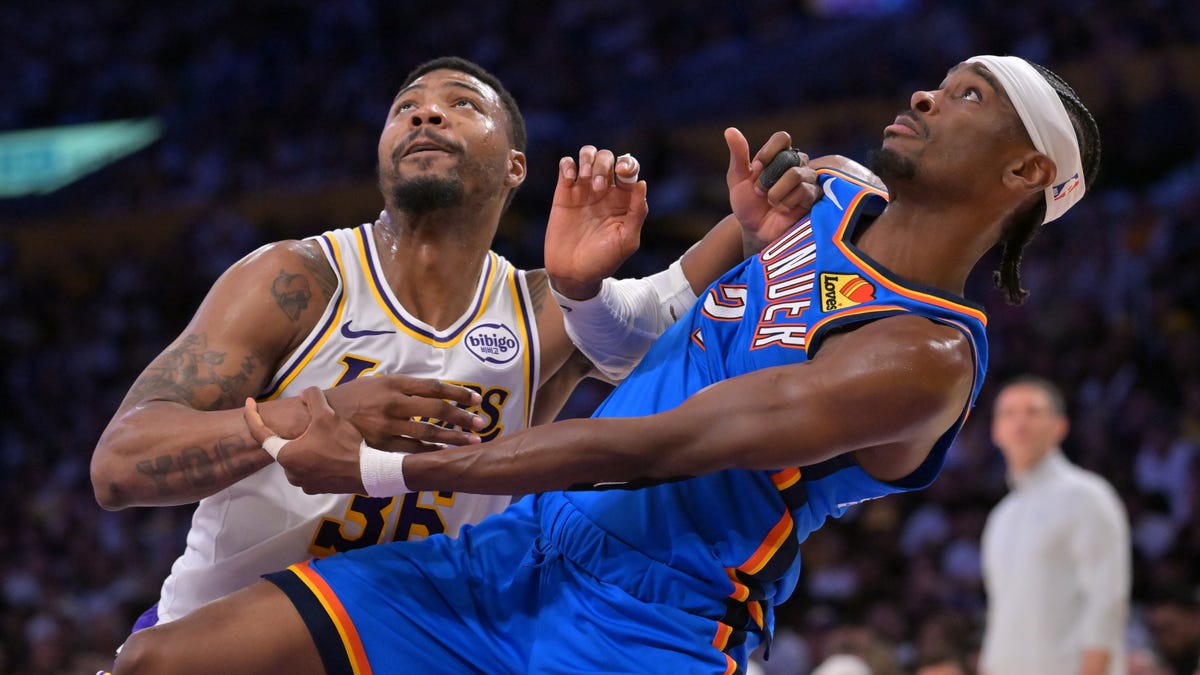
Thunder Establish Dominance in Western Conference Semifinals
The Oklahoma City Thunder have asserted significant control in their Western Conference Semifinals series against the Los Angeles Lakers, holding a commanding 3-0 lead. This dominant performance extends their undefeated streak in the postseason, having previously swept the Phoenix Suns in the opening round. Each of their playoff victories thus far has been by a margin of at least 18 points, underscoring a substantial competitive advantage.
The Thunder’s latest victory, a 131-108 win in Los Angeles, saw second-year player Ajay Mitchell emerge as a pivotal offensive force. Mitchell achieved new playoff career highs in both scoring and assists, contributing 24 points and 10 assists. This performance is particularly notable given his increased role, having started the last five playoff games following an injury to Jalen Williams in Game 2 of the first round.
Mitchell’s elevated play has been a critical factor in the Thunder’s postseason success, averaging 17.4 points and 5.0 assists across their seven playoff contests. His ability to step into a primary playmaking and scoring role demonstrates the depth of talent and adaptability within the Oklahoma City roster. This development suggests a strategic advantage for the Thunder, as they can rely on emerging talent to maintain high performance levels even when key players are sidelined.
Lakers Struggle to Counter Thunder’s Momentum and Tactics
The Los Angeles Lakers find themselves in a precarious position, unable to find a consistent answer to the Oklahoma City Thunder’s multifaceted attack and effective strategic execution. The Lakers’ inability to contain the Thunder’s offensive output and defensive pressure has led to significant point differentials in each game of the series, indicating a clear tactical mismatch or an inability to adapt to the Thunder’s game plan effectively.
The series’ trajectory, with the Thunder holding a substantial lead, highlights potential structural issues for the Lakers in their current playoff configuration. Their performance in Game 3, a 131-108 loss, indicates a persistent struggle to execute fundamental game plans against a well-drilled and high-performing opponent. The Lakers’ consistent inability to close the gap in games points to deeper challenges beyond individual player matchups.
Strategic Implications of Thunder’s Playoff Performance
The Oklahoma City Thunder’s undefeated playoff record and substantial win margins signal a significant shift in the competitive landscape of the Western Conference. Their ability to consistently dominate opponents, even with roster adjustments, points to a robust organizational strategy encompassing player development, coaching, and roster construction. This sustained high-level performance positions the Thunder as a formidable contender, impacting future strategic decisions for rival franchises.
Ajay Mitchell’s emergence as a key player is a testament to the Thunder’s player development pipeline. The organization has successfully integrated and nurtured talent, allowing for seamless transitions when injuries occur. This operational efficiency in player management provides a competitive leverage that can be difficult for opponents to replicate, especially in high-stakes playoff environments.
Competitive Landscape and Future Outlook
The current playoff series between the Thunder and the Lakers underscores the dynamic nature of the NBA. While the Lakers, a historically significant franchise, are facing a significant challenge, the Thunder’s ascent highlights the league’s ongoing evolution and the rise of new powerhouses. This contrast in current performance and historical standing sets a compelling narrative for the remainder of the postseason and beyond.
The Thunder’s strategy of building through player development and smart roster management appears to be yielding significant dividends. Their ability to consistently outperform expectations, particularly in the playoffs, suggests a sustainable model for success. This approach contrasts with teams that may rely more heavily on established stars or aggressive free-agent acquisitions, offering a different pathway to championship contention.
Player Development and Roster Depth as Strategic Assets
The Oklahoma City Thunder’s success in the current playoff series is deeply rooted in their organizational commitment to player development and roster depth. The emergence of Ajay Mitchell as a playoff-leading scorer and playmaker, particularly in the absence of Jalen Williams, exemplifies this strategic advantage. This capability allows the Thunder to maintain a high performance ceiling even when facing adversity, a critical factor in extended postseason campaigns.
This emphasis on developing talent from within provides the Thunder with significant financial and operational flexibility. Unlike teams that might need to pursue expensive free agents or blockbuster trades to fill roster gaps, the Thunder can rely on internal growth. This strategy not only conserves valuable salary cap space but also fosters a cohesive team culture built on shared development and mutual reliance.
Impact on Franchise Valuation and Market Position
The Oklahoma City Thunder’s dominant playoff performance has tangible implications for their franchise valuation and market position within the NBA. Consistent success, especially a deep playoff run culminating in a potential championship, significantly enhances a team’s brand equity, fan engagement, and commercial appeal. This translates into increased ticket sales, higher merchandise revenue, and more lucrative sponsorship deals.
Furthermore, a strong showing in the playoffs elevates the team’s profile on a national and international level. This heightened visibility can attract a broader fan base, making the franchise more attractive to advertisers and media partners. The narrative of a young, ascendant team overcoming established powers is particularly compelling and generates substantial positive media attention.
League-Wide Strategic Repercussions and Talent Management
The Oklahoma City Thunder’s current playoff dominance, characterized by their undefeated streak and significant win margins, serves as a compelling case study for other NBA franchises. Their success highlights the efficacy of a strategic approach focused on player development, roster depth, and adaptability, particularly in navigating the challenges of the postseason.
This performance by the Thunder, especially Ajay Mitchell’s rise to prominence, could influence how other teams manage their talent pools and draft strategies. Franchises may re-evaluate their investment in scouting and player development programs, seeking to replicate the Thunder’s ability to unearth and cultivate impactful talent. The financial leverage gained from developing homegrown stars, rather than relying on costly external acquisitions, is a significant strategic consideration.
Operational Efficiency and Coaching Impact
The Oklahoma City Thunder’s consistent performance in the playoffs points to a high degree of operational efficiency within the organization. This encompasses not only player development but also the effectiveness of their coaching staff in implementing game plans and making in-game adjustments. The ability to maintain such a high level of play, even with key players experiencing injuries, suggests a well-oiled machine.
The coaching staff’s role in integrating emerging talents like Ajay Mitchell into pivotal roles is crucial. Their strategic decisions regarding player rotations, offensive schemes, and defensive assignments directly contribute to the team’s success. This synergy creates a competitive advantage that extends beyond individual player matchups, suggesting a holistic approach to team building and performance management.
Media Narrative and Public Perception Dynamics
The Oklahoma City Thunder’s impressive playoff run is shaping a compelling media narrative that highlights their ascendance and the Lakers’ struggles. Ajay Mitchell’s breakout performance, in particular, provides a strong storyline focusing on the rise of a young star and the potential for a changing of the guard in the Western Conference.
This narrative can significantly influence public perception and fan engagement. A dominant performance from the Thunder can galvanize their fan base and attract neutral observers, while the Lakers’ difficulties may lead to increased scrutiny and criticism. The media’s framing of these events impacts team morale, player confidence, and future recruitment.
Capital Investment and Long-Term Franchise Strategy
The sustained success of the Oklahoma City Thunder in the current playoff scenario implies a well-executed long-term capital investment strategy by the ownership group. Building a consistently competitive team through player development and astute roster management, rather than solely through high-cost free-agent acquisitions, suggests a focus on sustainable growth and value creation.
This approach likely involves significant investment in scouting, analytics, player development facilities, and coaching infrastructure. The return on this capital is evident in the team’s performance, its growing market appeal, and its potential for sustained relevance in the league, aiming to build a resilient franchise capable of contending year after year.
The NBA’s Evolving Officiating and Competitive Balance
The commentary regarding the NBA’s officiating and the need for change introduces a structural element to the competitive analysis. Perceived inconsistencies in the officiating framework can create an uneven playing field and impact the integrity of competition. For teams like the Thunder, who are excelling, this represents navigating the current system effectively. Conversely, teams struggling may view potential rule or interpretation adjustments as a pathway to improved performance.
Stakeholder Implications: Fans, Players, and League
The Oklahoma City Thunder’s dominant playoff performance has multifaceted implications for various stakeholders. For fans, it offers the excitement of a team on the cusp of significant achievement, fostering strong engagement and loyalty. For the players, it represents the culmination of hard work and development, with opportunities for individual accolades and career advancement.
For the league, the Thunder’s success story, particularly the rise of Ajay Mitchell, provides a compelling narrative that can boost viewership and interest. It showcases the effectiveness of the NBA’s developmental model and the potential for new franchises to reach the pinnacle of success, contributing to the league’s overall appeal and its ability to attract new audiences.
Future Trajectory and Competitive Recalibration
The Oklahoma City Thunder’s current playoff dominance suggests a significant recalibration of competitive expectations within the NBA. Their ability to consistently outperform opponents, coupled with the emergence of key young talent like Ajay Mitchell, positions them as a formidable force for the foreseeable future.
This sustained success will likely compel rival franchises to re-examine their own strategic blueprints. Teams that have historically relied on veteran star power may need to accelerate their transition towards youth development and building a deeper, more adaptable roster. The Thunder’s model of organic growth and consistent performance offers a compelling alternative pathway to sustained contention.

Photo by RJA1988 on Pixabay.