
Systemic Vulnerability in High-Value Talent Assets
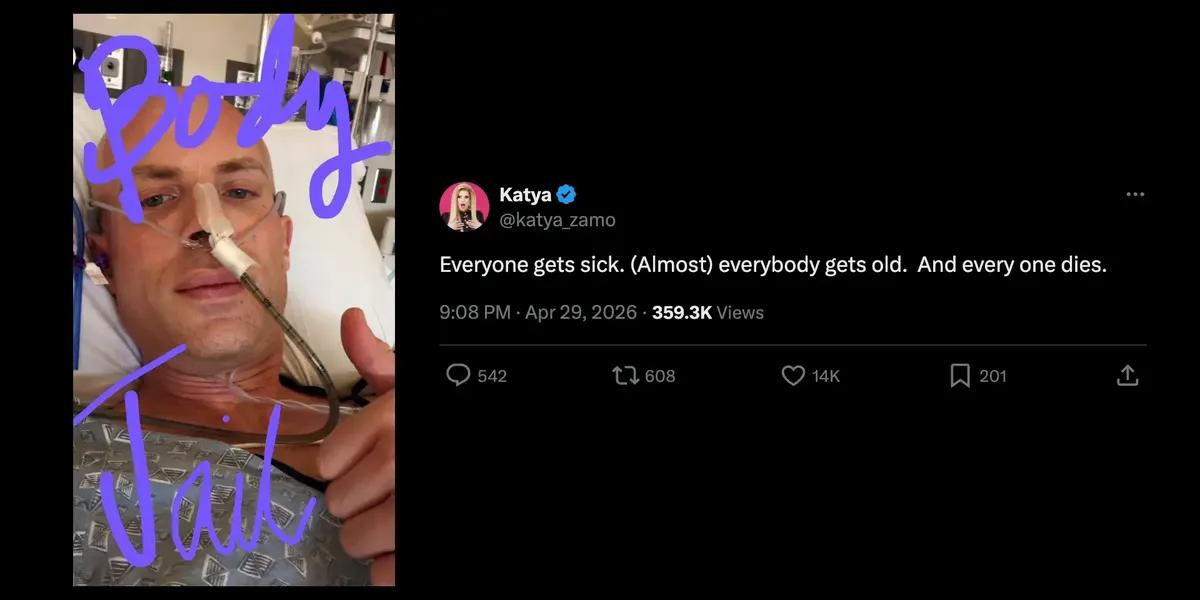
The recent hospitalization of Brian McCook, professionally known as Katya Zamolodchikova, serves as a critical case study in the operational risks inherent to the modern drag industry. As a primary revenue-generating asset, McCook’s sudden incapacitation—documented via social media from a hospital bed equipped with a nasogastric tube and nasal cannula—signals more than a personal medical event; it represents a significant disruption in the supply chain of a highly centralized entertainment niche. This incident exposes the fragile intersection between the physical body and the commercial viability of high-performance drag careers.
The Semiotics of ‘Body Jail’ and Physical Capital
By framing his condition as being in ‘body jail,’ McCook introduced a linguistic construct that highlights the total loss of physical agency. In the drag economy, the body functions as the primary capital—an essential tool for the delivery of intellectual property through touring, filming, and live appearance. The use of the hashtag #hellonearth denotes a departure from the performer’s typical comedic detachment, signaling an acute state of physiological distress. For a brand predicated on high-intensity movement and vocal dexterity, such confinement constitutes a total cessation of professional output, creating immediate voids in multi-stakeholder scheduling and revenue realization.
Philosophical Mitigation and Strategic Communication
McCook’s subsequent communications pivoted toward an existential framework, referencing the Five Remembrances of Buddhist philosophy (the inevitability of sickness, aging, and death). This shift functions as a sophisticated brand-management technique, transitioning the narrative from a visceral medical crisis to a universal philosophical inquiry. By contextualizing the illness within the ‘Truth of Suffering,’ the performer mitigates speculative frenzy and aligns the event with his established intellectual persona. This strategic alignment serves to maintain brand continuity even when the physical asset is offline, leveraging a deep-seated parasocial connection with an audience trained to appreciate dark, complex themes.
Operational Risk and the Drag Industrial Complex
The ‘Katya’ brand is a cornerstone of a collaborative ecosystem, most notably through ventures with Trixie Mattel. Consequently, McCook’s health status generates cascading effects on joint revenue streams and institutional stability. Unlike traditional media structures with deep talent benches, the drag economy is often hyper-dependent on specific individuals, leading to profound information asymmetry when medical crises occur. The lack of an immediate clinical diagnosis creates a state of uncertainty for promoters and insurers, highlighting a lack of robust contingency planning within the industry. This event underscores the necessity for institutionalized health protocols to protect the human assets that power the drag industrial complex.