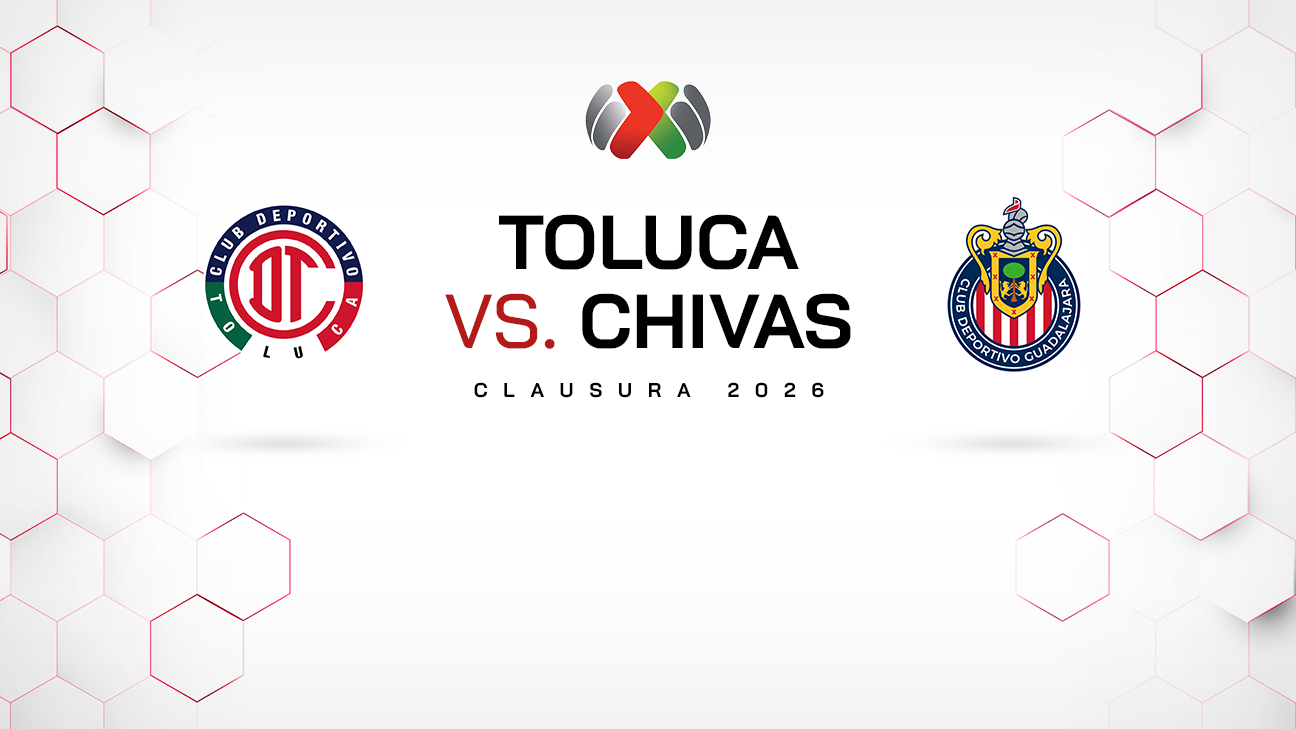
The upcoming Jornada 8 fixture between Toluca and Club Deportivo Guadalajara (Chivas) represents a critical inflection point in the Clausura 2026 tournament, directly challenging the league’s established hierarchy.
Chivas enters the Estadio Nemesio Diez defending its status as the general leader, leveraging significant psychological advantage and potential playoff seeding leverage.
Toluca, conversely, holds the immediate opportunity to seize the top spot, necessitating a victory to disrupt the current standings structure, utilizing their home advantage.
Strategic Density: The Argentine Coaching Duel
The tactical confrontation pits two Argentine managers, each having imprinted distinct operational philosophies, against one another. Success hinges less on individual flair and more on exploiting marginal tactical advantages to penetrate opposing defensive structures.
The performance metrics of key offensive units under these contrasting strategic frameworks will define ball progression rates and tempo imposition.
Asset Management and Personnel Leverage
Toluca’s squad strategy involves balancing competitive momentum with asset protection, notably concerning Alexis Vega. The calculated decision to limit minutes for the recovering player prioritizes long-term squad fitness over immediate necessity in this specific league fixture.
This conservative management shifts the offensive burden, demanding recalibration of Toluca’s attacking vectors against the league leader.
Key Performer Under Scrutiny: Jesús Gallardo
Jesús Gallardo’s recent goal-scoring form internationally elevates his importance on Toluca’s left flank. His capacity for dual threat—defensive tracking coupled with offensive penetration—creates complex assignment problems for Chivas’ wide defenders.
Gallardo’s transition from defense to deep support serves as a primary mechanism for bypassing Chivas’ central midfield containment.
Lineup Dynamics and Institutional Trust
Projected starting elevens reflect institutional trust in specific signings for this high-leverage encounter. Toluca’s goalkeeping decision leans toward Hugo González, acquired in 2025, prioritizing perceived solidity and managerial confidence over alternatives.
González’s tenure, following successful spells at major clubs, places performance expectations tied directly to mitigating pressure against the league benchmark team.
The defensive structure features Federico Pereira (Uruguayan CB, acquired 2024), whose aerial dominance and goal contributions are vital for set-pieces. Right-back Diego Barbosa selection emphasizes ball-playing capability from deep, suggesting an intent to initiate possession-based attacks.
Argentine midfielder Santiago Simón (signed 2025), noted for technical skill from youth success, is slated for a role demanding high mobility and tactical discipline across the midfield structure.
Chivas’ Defensive Exposure Analysis
Toluca’s potential deployment utilizing Barbosa’s technical output and Simón’s mobility suggests Chivas must dedicate substantial resources to neutralizing wide play. The effectiveness of Chivas’ wide defenders in tracking Gallardo’s overlaps will directly correlate with the pressure exerted on their central defensive pairing.
Broader Context: Liga MX and Continental Benchmarks
This domestic fixture is analyzed against the backdrop of concurrent continental competition coverage (CONCACAF Champions Cup). The integration of Liga MX analysis with major European football coverage signifies the league’s elevated status in the regional sports media ecosystem.
The competitive pressure on both clubs is amplified by the knowledge of their upcoming international rivals, necessitating domestic dominance as a performance validation metric.
Media Narrative and Commercial Valuation
Framing this as a premier Jornada 8 match establishes the narrative for the Clausura 2026 season, directly influencing fan engagement and commercial perception. The heightened scrutiny, evidenced by coverage alongside global football events, demands a higher standard of tactical execution.
Managerial Mandates and Strategic Validation
The success of both clubs is intrinsically linked to the mandates given to their Argentine managers. For Chivas, retaining the lead validates the current strategy; for Toluca, a victory serves as powerful affirmation of their methodology, potentially accelerating investment.
The performance of 2025 acquisitions like Simón and González in a direct challenge against the leader provides immediate data points validating the club’s preceding transfer strategy efficacy.
Temporal Context and Tournament Trajectory Shift
Scheduled late in February 2026, this match occurs when tactical patterns are solidified but before the intense pressure of the closing stages. A Toluca victory recalibrates the competitive landscape, suggesting greater parity at the summit; a Chivas win solidifies their control.
Media Consumption and Transnational Viewership
The scheduling across multiple time zones reflects the transnational viewership interest in top-tier Liga MX. External validation, noted by inclusion in global football discourse (e.g., ‘Puesta a Punto’), raises the performance bar for key assets.
Defensive Structure and Ball Progression Dynamics
Toluca’s strategy likely involves using Barbosa’s technical area to draw Chivas wide, exploiting central gaps. If Chivas prioritizes central solidity, they concede space on the flanks, allowing Gallardo and Simón to dictate attack sequencing. Conversely, overcommitting wide risks isolating the central defense against quality service.
Goalkeeping Experience Premium
The preference for González, given his experience at major institutions (América, Monterrey), indicates a strategic premium placed on composure under immediate, high-stakes pressure, weighing proven history against potential tactical fit.
Competitive Leverage Beyond the Scoreline
Chivas winning on the road reinforces their dominance narrative, influencing future rival recruitment decisions. Toluca succeeding validates the recent capital deployment in signings like Simón, demonstrating immediate competitive returns on strategic alignment.
The Burden of Expectation
Chivas carries the implicit burden of expectation from a national fanbase, where dropping points against direct rivals is often construed as a strategic failure. Toluca faces the pressure of execution: converting tactical parity into scoreboard dominance to maximize the opportunity presented by fixture scheduling.
Institutional Visibility and Tactical Coherence
The cross-pollination of coverage with global leagues means tactical nuances in the Toluca-Chivas match are assessed against global standards. This raises the required standard of operational execution, impacting player valuations and the league’s perceived technical ceiling.
The Argentine Stylistic Imperative
The focus on the Argentine coaches highlights a trend in Liga MX where managerial appointments are expected to deliver immediate, identifiable stylistic coherence, differentiating their tenures through aesthetic and tactical execution.
Structural Implications: Depth Resilience
Toluca’s handling of Vega suggests a long-term view of the competitive window, potentially trading a marginal immediate gain for playoff reliability. Chivas, as leader, faces the inverse demand: maintaining peak performance from their core without the luxury of resting key personnel.
International Fatigue Integration
The integration of players returning from international duty—managing fatigue versus leveraging confidence, as seen with Gallardo—is a subtle factor that can shift the balance of power in a tight contest, demanding immediate tactical adaptation.
Conclusion: Structural Evaluation
This match serves as a structural evaluation of league leadership, managerial efficacy, and the successful integration of high-profile personnel. The result will either solidify Chivas’ control or catalyze a significant rebalancing of the Clausura 2026 competitive hierarchy, defined by the granular execution of players like Gallardo and the management of critical assets like Vega.