The 2026 NCAA Women’s Tournament has commenced with a definitive signaling of the sport’s evolving power dynamics. As the First Four phase transitions into the Round of 64, the prevailing narrative is one of structural decoupling—a widening chasm between elite institutional capital and mid-major parity, mirrored in unprecedented betting market volatility.
Market Signals and the Talent Concentration Index
Oddsmakers have responded to the top-tier talent concentration with historic spreads. UConn entering as a 54.5-point favorite against UTSA and UCLA’s 49.5-point advantage over California Baptist are not merely statistical quirks; they represent a ‘certainty tax’ in the betting markets. For liquidity providers, these lines illustrate the difficulty of quantifying high-variance mid-major tactics against the industrialized efficiency of Tier 1 programs.
This concentration of assets—driven by superior recruitment infrastructure and NIL leverage—has transformed the opening round from a competitive gauntlet into a logistical formality for top seeds. The focus has shifted from whether these favorites win, to how their internal resource allocation and depth management will sustain them through the high-leverage matchups of the second weekend.
Case Study: Strategic Intelligence in Coaching Transitions
The No. 5 Kentucky versus No. 12 James Madison (JMU) matchup serves as a premier case study in intellectual property transfer within the coaching carousel. Kentucky’s Kenny Brooks faces the very infrastructure he curated over two decades at JMU. This creates a unique layer of ‘asymmetric information,’ as Brooks possesses granular knowledge of the Dukes’ developmental pipelines.
While JMU maintains a top-15 national rebounding rate, Kentucky’s tactical evolution emphasizes floor spacing and transition efficiency—philosophies Brooks refined at JMU but has now scaled with SEC-caliber talent. The outcome hinges on whether JMU’s physical interior presence can disrupt Kentucky’s superior technical execution.
First Four Analytics: Survival of the Efficient
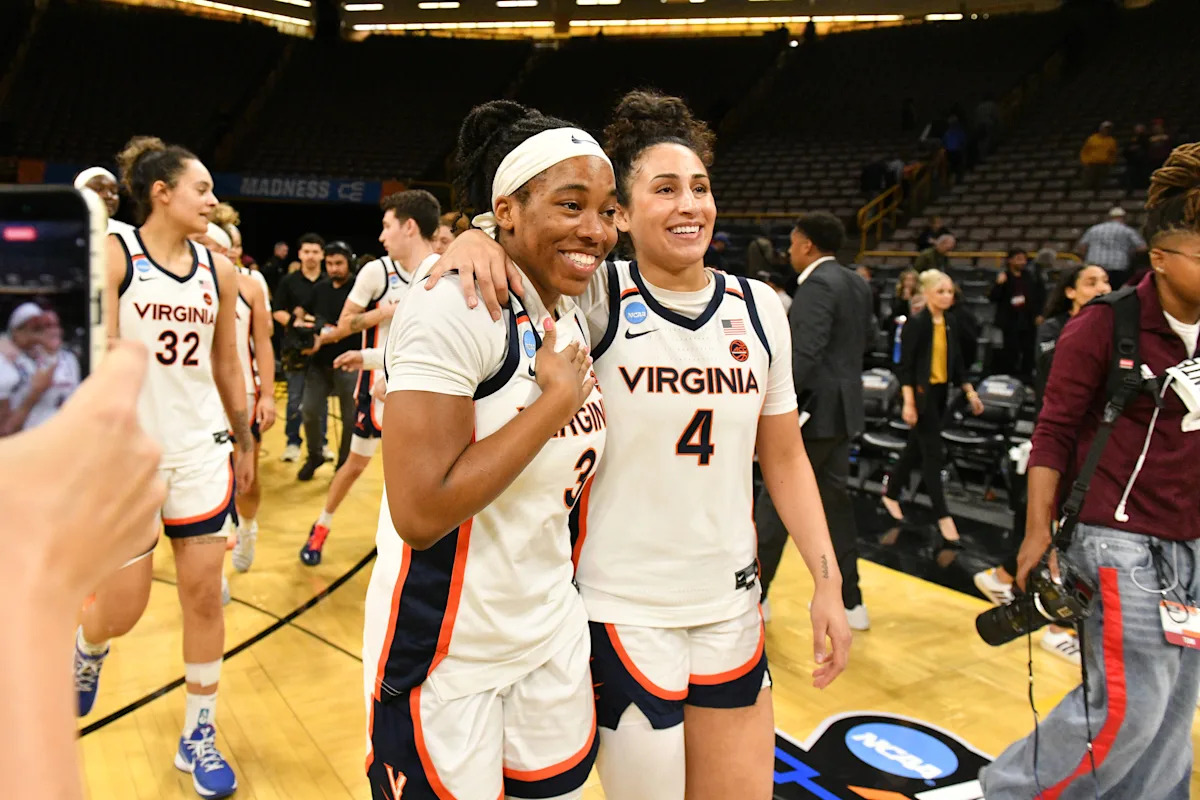
The play-in games highlighted the thin margins defining survival for programs outside the elite circle. Virginia’s 57-55 victory over Arizona State illustrated the value of backcourt versatility, with Kymora Johnson’s 17-point, 10-rebound performance serving as the stabilizing force. Arizona State’s failure to optimize late-game shot selection—favoring low-probability quick twos over perimeter-spacing attempts—ultimately ceded the advantage to Virginia’s free-throw reliability.
Similarly, Southern University’s 65-53 win over Samford demonstrated the efficacy of high-pressure defensive schemes. A 14-2 scoring run, anchored by DeMya Porter’s 15 points and 12 rebounds, exploited Samford’s late-game fatigue. However, the reward for this efficiency is a meeting with No. 1 South Carolina (31-3), a program that represents the apex of current institutional dominance.
Economic Incentives and Brand Equity
Expansion of the First Four format has direct fiscal implications. For schools like Nebraska and Missouri State, advancing secures tournament revenue units and national television windows that function as peak marketing for donor recruitment. While 1-vs-16 matchups are often non-competitive, the 8-vs-9 and 5-vs-12 segments remain the primary drivers of tournament drama, where the talent gap is narrow enough for tactical innovations to yield upsets.
Conclusion
The 2026 tournament opening reinforces a dual-speed reality: an elite tier that is increasingly untouchable and a sophisticated middle class battling for incremental gains. The coming rounds will determine if the strategic decisions made in the regular season—from high-stakes coaching hires to roster construction—can withstand the physical toll and analytical scrutiny of the national stage.