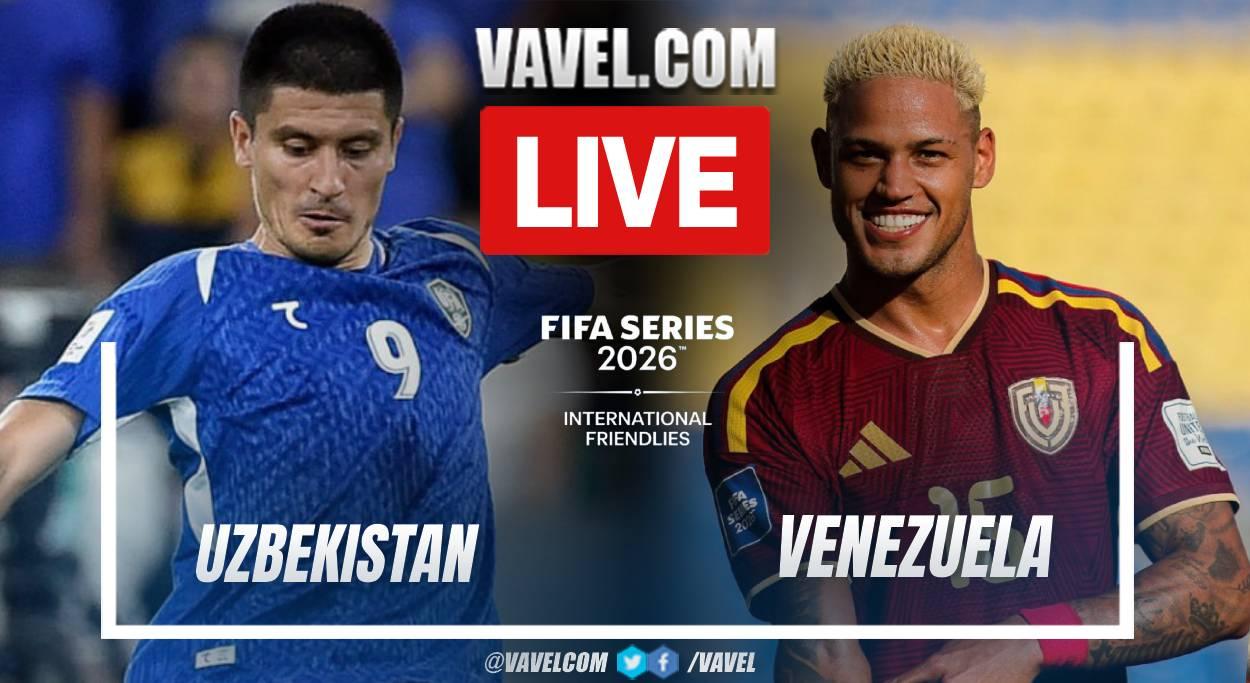
The concluding fixture of the FIFA Series at Milliy Stadion transcends a typical international friendly, serving as a high-stakes benchmark for the developmental progress of both Uzbekistan and Venezuela within the 2026 qualification cycle. With both teams entering on identical records, this match functions as the de facto series decider, validating the FIFA Series format’s intent to foster meaningful, cross-confederation contests.
Cannavaro’s Tactical Discipline and Resilience
Uzbekistan’s trajectory under Fabio Cannavaro signals a pronounced elevation in tactical discipline and psychological fortitude. The team’s recent 3-1 comeback victory over Gabon exemplifies this maturity—a capacity to absorb early pressure and execute decisive counter-measures. This stability is underpinned by an unbeaten run since November 2024, establishing a clear tactical identity within the AFC.
Cannavaro’s imprint is most visible in the defensive organization and the fluid transition game. The blend of established quality, led by Eldor Shomurodov, with dynamic younger players like Jakhongir Urozov and Alisher Odilov, has forged a balanced unit capable of controlling matches late. The response to conceding early against Gabon, culminating in stoppage-time success, underscores high physical conditioning and adherence to the implemented system.
Venezuela: Possession Control and Structural Integrity
Venezuela arrives maintaining a flawless 2026 record, attributable to rigorous game management and superior defensive positioning. In the opening phases against Uzbekistan, La Vinotinto established midfield dominance through sustained possession, effectively forcing the host nation into a reactive posture and disrupting their build-up tempo.
The Venezuelan defensive line exhibits exceptional spatial awareness, neutralizing penetration attempts and providing a stable platform for their offensive endeavors, frequently testing the Uzbek goalkeeper from distance. This possession-centric strategy acts as a counter-press against Uzbekistan’s more direct attacking methodology, compelling the White Wolves to abandon structured passing for long-ball play. The core tension of the final hinges on this clash: structured defense versus persistent chance creation.
Institutional Significance and VAR Protocol
The FIFA Series offers vital exposure to non-traditional opponents, crucial for both federations’ global calibration. Hosting the final at Milliy Stadion allows the Uzbekistan Football Association to showcase organizational capacity and enhance the national team’s international standing. The competitive structure—every team arriving with two wins—validates the rigorous matchmaking process.
The integration of VAR technology reinforces the commitment to professional standards. A critical 24th-minute VAR review for a potential Uzbek penalty, though denied, preserved the match’s integrity and highlighted the rigorous officiating protocols in place for this tournament, elevating its status beyond a mere friendly fixture.
Operational Dynamics and Key Match Moments
The initial minutes revealed divergent operational priorities: Uzbekistan focused on ball-winning and transition threats, while Venezuela controlled tempo via retention. This dichotomy created a tactical stalemate in the first quarter, where Uzbek defense relied heavily on the goalkeeper against long-range strikes, and Venezuelan structure stifled home-side build-up.
The non-award of the 24th-minute penalty, confirmed by VAR, intensified the contest, signaling that goals would be decisive. This officiating rigor is essential for benchmarking tactical performance accurately. The match hinges on which tactical advantage—Uzbek persistence or Venezuelan control—can translate into clinical final-third execution.
Competitive Implications for 2026 Seeding
The result directly impacts FIFA rankings and subsequent tournament seeding. For Uzbekistan, securing a victory over a CONMEBOL side validates their investment in elite technical leadership and infrastructure modernization. For Venezuela, sustaining their momentum proves their defensive solidity translates effectively into hostile away environments, cementing their reputation as a tactically complex opponent ahead of grueling CONMEBOL qualifiers.
The FIFA Series successfully engineered a competitive narrative superior to standard friendlies. The final at Milliy Stadion serves as a critical milestone, revealing the operational readiness of both squads under significant pressure as they finalize preparations for the 2026 international calendar.