
Strategic Volatility and Elite Team Dynamics in the 2026 World Cup
The 2026 FIFA World Cup is characterized by significant tactical variance, exemplified by the high-stakes match between Portugal and Croatia. This encounter illuminated evolving strategies for set-piece execution and defensive organization under intense pressure.
Cristiano Ronaldo’s penalty, a deliberate feint designed to induce an early commitment from goalkeeper Dominik Livakovic, underscores the increasing reliance on individual technical mastery and psychological acumen to overcome defensive stalemates in modern tournament football.
Operational Constraints and Adaptive Tactics
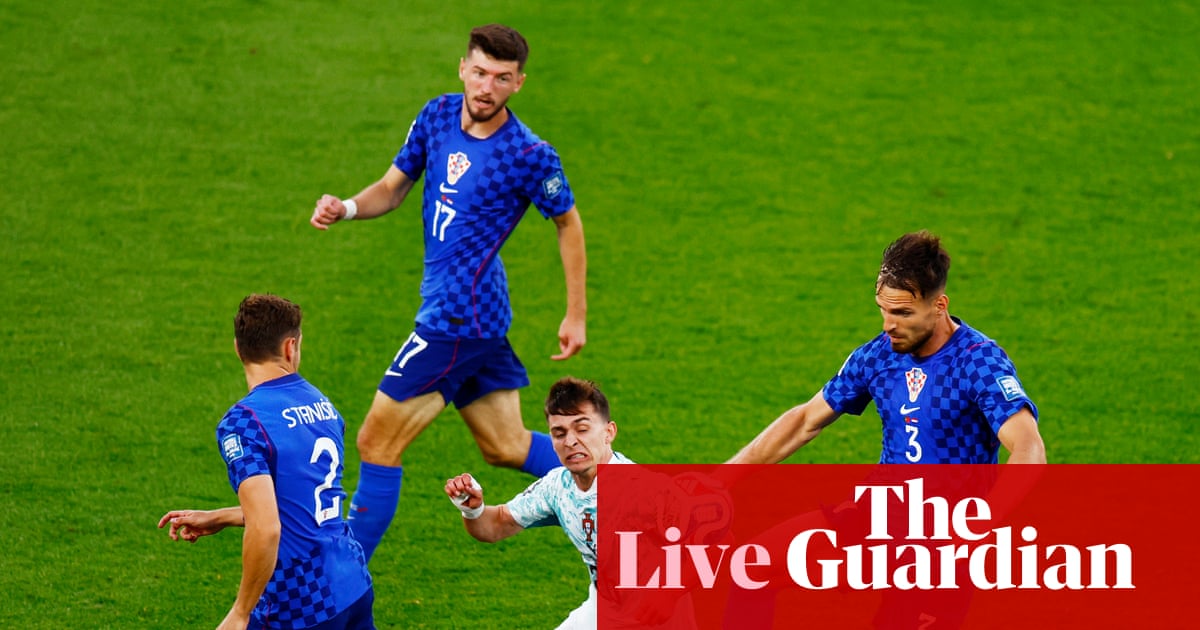
The Portugal-Croatia fixture highlighted the critical need for rapid tactical adaptation when conventional offensive patterns prove ineffective. Croatia’s successful exploitation of wide areas, notably through Stanisic’s overlapping runs, demonstrates a strategic intent to bypass central defensive structures, such as those marshaled by Ruben Dias.
The substitution of Matanovic for Budimir at halftime signals a direct response to offensive stagnation. Introducing a more dynamic forward aimed to address a lack of penetration, a common challenge in high-intensity group stage encounters.
Institutional and Competitive Ramifications
Portugal’s performance, including their draw with the Democratic Republic of Congo, accentuates the reputational and competitive risks tied to the output of star players. Underperformance by marquee talent can significantly impact team morale and public perception, a phenomenon discussed by analysts like Danny Parkins and Dax McCarty.
This scrutiny reflects the substantial financial and institutional stakes of the tournament. Nations failing to secure results against less-favored opponents must critically assess squad depth and tactical flexibility, given the compressed margins for error in the 2026 format.
Structural Dynamics of On-Field Officiating
The limited intervention of VAR in critical offside calls during the Portugal-Croatia match emphasizes the paramount importance of on-field officiating accuracy. While technology is integral, a reliance on clear, observable infractions maintains game flow and minimizes procedural disruptions.
This approach heightens the onus on referees to ensure consistent application of the rules throughout the tournament, with player and public reactions serving as a crucial barometer for the perceived integrity of the competition’s structural framework.
Market Engagement and Stakeholder Considerations
Observed empty seats in certain stadium sections during the Portugal-Croatia match suggest evolving fan engagement patterns and potential attendance shifts. Such indicators of underutilization can influence long-term host city infrastructure planning and future tournament revenue projections.
Stakeholders, including FIFA and local organizing committees, must integrate these attendance trends with the logistical complexities of hosting a global event. Tournament financial viability hinges on balancing high-demand fixtures with venue capacities and regional interest, a dynamic equation influenced by evolving fan behaviors.
Strategic Outlook for Remaining Fixtures
As the tournament progresses into the knockout stages, the imperative to optimize performance metrics intensifies. Group stage lessons—regarding the perils of over-reliance on individual brilliance and the necessity of tactical depth—will heavily influence the strategic approaches of remaining contenders.
The ability of teams like the USMNT to adapt to varied opposition in high-pressure scenarios will be tested. These matches are the culmination of extensive institutional investment and strategic planning, with each outcome carrying significant weight for participating nations.

Photo by grafmex on Pixabay.