The 2026 Great American Getaway 400 at Pocono Raceway served as a high-stakes case study in operational discipline. As the season’s solitary visit to the ‘Tricky Triangle,’ the event demanded immediate engineering adaptability. For Hendrick Motorsports (HMS), the race was a vital calibration of their developmental pipeline, highlighting the marginal gains required to maintain a competitive edge against a surging Toyota field.
Tactical Restoration for the No. 24 Team
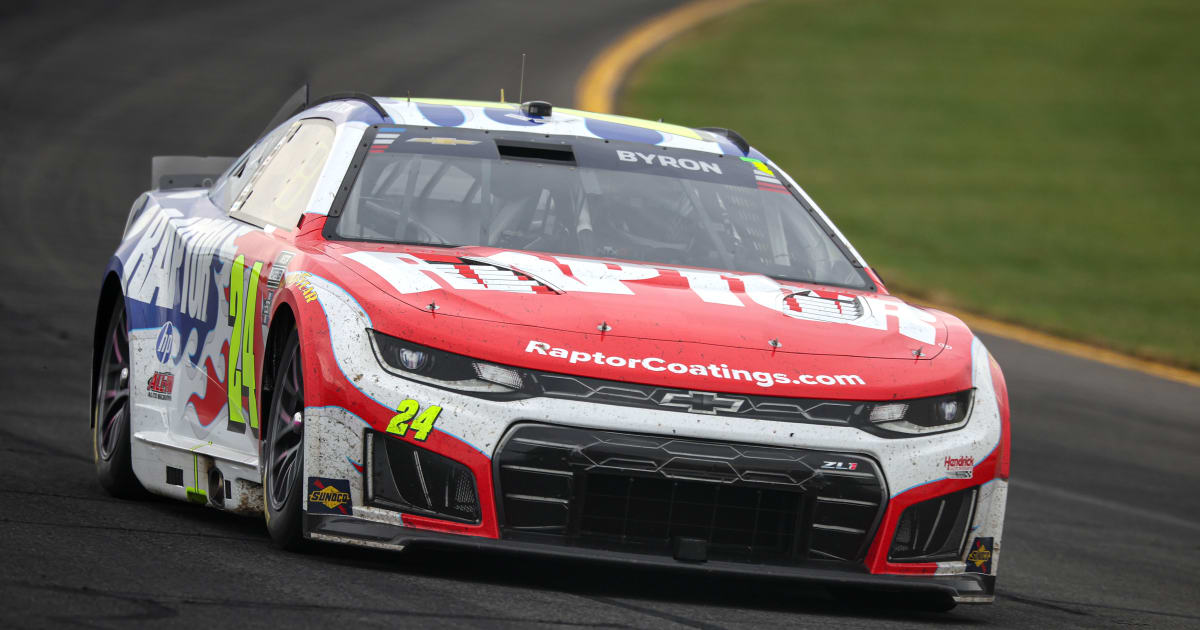
William Byron and crew chief Rudy Fugle arrived in Long Pond seeking to disrupt a nine-race performance plateau. Since their podium at Martinsville in March, the No. 24 team had struggled with mid-summer consistency—a recurring historical trend for the camp. However, Pocono’s unique aerodynamic requirements allowed the team to reset their baseline through aggressive stage-point accumulation.
By securing early track position, Fugle gained the ‘strategic elasticity’ needed to navigate split-field fuel cycles. Rapid pit service ensured Byron remained at the front of the lead-lap rotation, ultimately yielding a third-place finish. This result signifies a stabilization of the No. 24’s engineering approach, neutralizing the psychological pressure of their recent slump and securing crucial playoff leverage as the post-season looms.
Institutional Infrastructure and Pit Road ROI
The efficiency of the HMS over-the-wall crews at Pocono was not incidental; it was the direct result of the organization’s campus-based pit crew combine. This systematic investment in human capital has transformed pit service into a quantifiable performance multiplier. In an era of high-defense track position, these millisecond gains are essential.
During green-flag cycles, the ability to execute flawless four-tire stops allowed both Byron and Kyle Larson to offset the strategic gambles taken by rival organizations. By treating pit crews as elite athletes rather than mechanical support, Hendrick Motorsports maintains a structural advantage that smaller, less integrated teams cannot replicate, ensuring their drivers remain in the hunt even when raw car speed is neutralized by dirty air.
The No. 5 Team: Statistical Dominance vs. Victory Lane
Kyle Larson’s fifth-place finish further cemented his status as the series’ most consistent front-runner. Leading laps in the opening segment and securing nine stage points, the No. 5 team demonstrated a high floor of performance. While a 2026 race victory remains elusive, Larson’s seven top-five finishes illustrate a championship-caliber trajectory built on point-accumulation rather than high-risk volatility.
The result also offered a redemptive contrast to Larson’s 2021 Pocono heartbreak. By navigating the three-cornered track’s mechanical stresses—specifically the gear-shift demands of the Next Gen platform—the No. 5 team proved they have mastered the technical nuances of the venue. Their current engineering package requires only minor refinement to convert these consistent top-fives into wins.
Competitive Hierarchy and Aerodynamic Management
The final laps underscored the current Cup Series hierarchy. Race winner Denny Hamlin and runner-up Tyler Reddick showcased the Toyota camp’s superior late-run aerodynamic management. Reddick’s pass on Byron in the closing stages highlighted a critical area for HMS development: tire preservation during extended green-flag runs.
With Chase Elliott finishing 11th, HMS placed three cars inside the top 12, validating their organizational depth. The data harvested from this event will be instrumental in refining engine maps and aero-trim for upcoming high-speed intermediate tracks. While the win was missed, the strategic execution at Pocono confirms that Hendrick Motorsports remains the benchmark for operational excellence in the 2026 season.