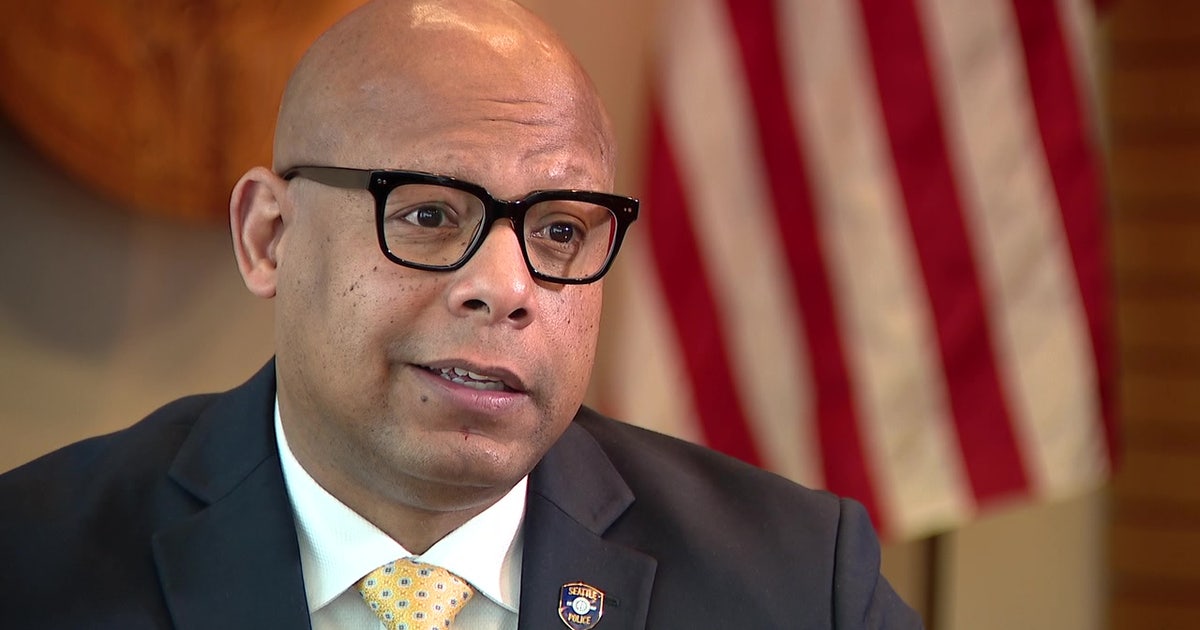
Seattle Police Chief Barnes Ousted Amidst Scrutiny Over Shooting Response and Extensive Travel
Seattle Police Chief Shon Barnes has been relieved of his duties by Mayor Katie Wilson, sources confirm. This decision follows significant public and media criticism concerning the department’s handling of the recent mass shooting at the Bite of Seattle, coupled with scrutiny of the chief’s frequent travel outside the city.
The directive to remove Barnes was reportedly communicated Wednesday evening. The chief subsequently informed individuals of his dismissal via text message. This development occurred after his office abruptly canceled a series of scheduled one-on-one interviews with Seattle media outlets. Barnes did attend a silent vigil for the shooting victims later that evening, reportedly leaving early for a meeting with the mayor.
The controversy escalated following the July 26 shooting incident. The Seattle Police Department and city officials faced backlash for a delayed official news conference. Assistant Chief Tyrone Davis provided the initial update Sunday evening, notably without Chief Barnes present. While Barnes attended a subsequent briefing Monday morning, the earlier communication gap had already amplified public concern and media scrutiny.
Barnes’s absence from critical public updates and his documented travel schedule became a focal point of media inquiry. His office released calendar excerpts detailing nearly a dozen instances of being outside the Seattle area between late March and July. These included multiple trips to Chicago for family reasons and seven work-related conferences. Significantly, the chief was attending a conference in Dallas when the fatal shooting occurred at Seattle Center on Sunday.
The cancellation of a scheduled interview with KOMO News on Wednesday, just 30 minutes prior to its commencement, highlighted the mounting pressure. Barnes had agreed to discuss the department’s response, communication deficiencies, and his travel habits, but his office ultimately chose to release calendar records instead of engaging in direct questioning.
This situation underscores a critical challenge for municipal leadership: managing public perception during crises. The delayed information dissemination following the shooting created an information vacuum, fueling speculation and criticism, which directly impacted the department’s credibility and public trust. The chief’s travel schedule, while potentially justifiable for professional development or personal reasons, became a significant liability when juxtaposed with a major public safety incident.
The strategic implications for the city’s public safety infrastructure are substantial. A leadership vacuum at the helm of the police department during an active investigation into a mass casualty event can impede operational coherence and external communication efforts. Mayor Wilson’s decision to dismiss Barnes signals a prioritization of immediate public confidence and a perceived need for visible, on-the-ground leadership during a period of heightened community anxiety.
The competitive landscape for public trust in law enforcement is increasingly demanding, particularly in urban centers grappling with complex crime challenges. The Bite of Seattle incident, characterized as gang-related, intensifies the pressure on the department to demonstrate effective control and investigative prowess. Barnes’s frequent absences, regardless of their purpose, provided ammunition for critics and potentially undermined the department’s unified front.
Potential shifts in the city’s public safety budget could be indirectly influenced by such leadership instability. Sustained public discontent can lead to increased demands for oversight, policy reforms, or even altered funding priorities, impacting resources available for essential police operations. Perceptions of leadership detachment can also affect internal recruitment and retention efforts within the police force.
The performance expectations for the incoming leadership will be immediately high. The ability to swiftly and transparently communicate investigative progress, address community concerns, and re-establish a sense of command and control will be paramount. Mayor Wilson’s office faces the challenge of selecting a successor capable of navigating these complex dynamics and restoring faith in the department’s capacity to ensure public safety.
The structural pressures on a police chief in a major city are immense, encompassing operational command, political navigation, and public relations. This incident illustrates how personal conduct and professional responsibilities become inextricably linked in the public eye, especially during moments of tragedy. The chief’s calendar, a private record, became a public artifact scrutinized for its implications on his commitment and availability.
The distribution of advantage and disadvantage in this scenario is pronounced. While the victims and their families bear the ultimate burden of the tragedy, the public discourse has centered on the institutional response. Critics of the department gain leverage through perceived leadership failures, while the city administration faces the disadvantage of managing public fallout and potential reputational damage.
Plausible future scenarios suggest a period of intense scrutiny on the interim or permanent replacement for Chief Barnes. The city will likely prioritize a leader embodying unwavering dedication to local presence and immediate responsiveness. This could lead to a more conservative approach to travel and external engagements for future police leadership, potentially affecting professional development opportunities and inter-agency collaborations.
The media’s role in this unfolding situation is critical, acting as both an informant and a catalyst for public discourse. Aggressive journalistic inquiry, while creating an uncomfortable situation for the chief, also served to unearth information regarding his travel patterns. This dynamic highlights the symbiotic, and at times adversarial, relationship between law enforcement leadership and the press in shaping public narratives.
The institutional culture of the Seattle Police Department may also undergo examination. Questions may arise regarding internal communication protocols, the delegation of authority during the chief’s absences, and the overall responsiveness of the command staff. The incident could prompt a review of departmental policies concerning leadership visibility and community engagement during critical incidents.
From a strategic standpoint, Mayor Wilson’s office must recalibrate its approach to public safety leadership. The swift dismissal of Barnes indicates a willingness to make decisive changes to address public concerns, necessitating a robust plan for selecting and onboarding a new chief who can effectively lead the department through this challenging period.
The economic implications, while not immediately apparent, could manifest in the long term. A sustained perception of compromised public safety or ineffective leadership can deter investment and impact the city’s economic vitality. Conversely, a strong and visible response to the shooting and subsequent leadership transition could bolster confidence among businesses and residents.
The competitive positioning of Seattle as a desirable place to live and work could be affected by prolonged negative coverage of its public safety leadership. Maintaining a reputation for effective governance and security is vital for attracting and retaining talent and businesses.
The historical continuity of leadership challenges in major urban police departments suggests that this situation is not entirely unique. However, the specific confluence of a high-profile shooting, documented extensive travel by the chief, and a perceived communication failure creates a particularly potent narrative. The city’s response will set a precedent for future management of such issues.
Mayor Wilson’s political capital is also at stake. Her decisive action to remove Barnes may be viewed positively by some, while others may question the timing or underlying reasons. The effectiveness of her subsequent leadership choices will ultimately determine the long-term impact on her administration’s standing.
The city administration’s performance leverage hinges on its ability to not only appoint a competent new chief but also implement systemic improvements addressing communication and responsiveness issues. This includes potentially revising departmental protocols and enhancing transparency mechanisms.
The structural pressures on police leadership are inherently demanding, requiring a delicate balance between operational command, community engagement, and personal life. The Seattle incident underscores the unforgiving nature of public scrutiny when this balance is perceived to be disrupted during critical moments.
The distribution of advantage and disadvantage extends to the broader civic discourse. Advocates for greater police accountability will find validation in these events, while proponents of more lenient approaches to leadership travel may find their arguments challenged.
Plausible evolution scenarios for the Seattle Police Department include a renewed emphasis on community policing initiatives and a more visible leadership presence at local events and public forums. The selection of a new chief will likely be a highly scrutinized process, prioritizing candidates demonstrating deep community ties and a commitment to transparency.
The institutional culture of the SPD may shift towards a greater emphasis on accountability and responsiveness, potentially involving revised policies on leadership conduct and public communication. This could include establishing clearer performance metrics for leadership beyond traditional crime statistics.
Strategically, the city administration’s focus will be on rebuilding trust and articulating a clear path forward for public safety. This involves not only filling the chief’s position but also fostering a collaborative environment between the police department, city hall, and community stakeholders to address complex public safety challenges.
Economic implications could include increased demand for community-based public safety programs, as the city diversifies its approach to crime prevention and intervention. This could lead to new partnerships and funding streams for non-profit organizations and social services.
Seattle’s competitive positioning in the national conversation about urban policing and public safety will be shaped by how effectively it navigates this leadership transition. A successful resolution could establish the city as a model for effective crisis management and reform, while prolonged instability could have detrimental effects.
The historical continuity of leadership turnover in major police departments often reflects the intense pressures and public expectations placed upon these roles. The Seattle case, with its specific circumstances, adds another chapter, highlighting the critical importance of leadership presence and communication in times of crisis.
Mayor Wilson’s political capital will be significantly influenced by the public’s perception of her handling of this situation. Her ability to select a strong, credible leader and implement meaningful reforms will be crucial for her administration’s success and her own political future.
The city government’s performance leverage lies in its capacity to translate this crisis into an opportunity for positive change. This means not only replacing the chief but also implementing systemic reforms that enhance the department’s effectiveness, transparency, and accountability, ultimately strengthening public trust.