
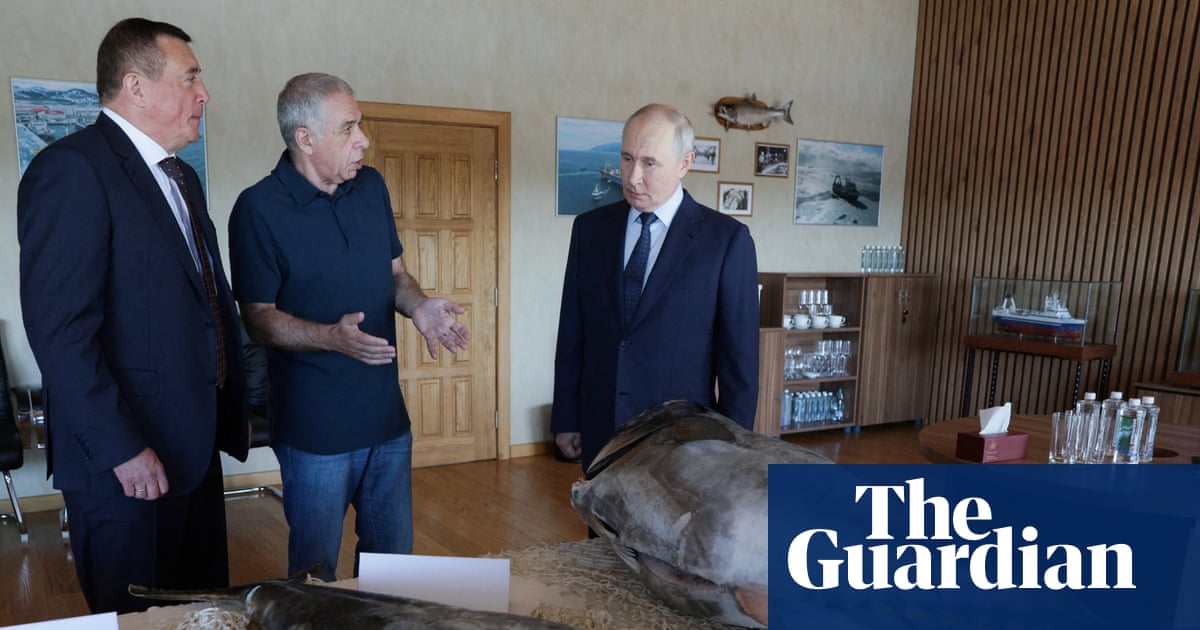
A severe diplomatic rupture has emerged between Tokyo and Moscow following Russian President Vladimir Putin’s official visit to the disputed Kuril Islands. Japanese Prime Minister Sanae Takaichi denounced the trip as “absolutely unacceptable,” underscoring that high-level Russian presence on the contested archipelago directly contradicts Japan’s sovereign claims and damages bilateral relations.
The diplomatic friction centers on Iturup—designated in Japan as Etorofu—the largest of four southern Kuril islands administered de facto by Russia but claimed by Japan as its Northern Territories. Takaichi noted that the presidential itinerary exacerbates public sentiment in Japan while challenging international legal norms.
Diplomatic Escalation and the Summoning of Moscow’s Envoy
In response to the visit, Japanese Foreign Minister Toshimitsu Motegi summoned Russian Ambassador Nikolay Nozdrev to register a formal protest. Tokyo’s Ministry of Foreign Affairs emphasized that state-level Russian delegations to the islands constitute an unlawful attempt to normalize administrative jurisdiction over sovereign Japanese territory.
Summoning the Russian ambassador serves as a direct diplomatic instrument to counter Moscow’s administrative consolidation. By formally rejecting high-profile state visits, Tokyo seeks to block any precedent that could imply tacit recognition of Russian sovereignty over the archipelago.
Historical Origins of the Kuril Islands Impasse
The territorial dispute originates in the closing days of World War II. The Soviet Union declared war on Japan in August 1945, launching an offensive across the region shortly before Tokyo’s surrender. Following the cessation of hostilities, Soviet forces occupied the four southernmost Kuril islands and deported approximately 17,000 Japanese civilian residents.
This post-war seizure remains the primary barrier to the normalization of bilateral ties. Because of competing sovereignty claims over Etorofu, Kunashiri, Shikotan, and the Habomai islets, Tokyo and Moscow have never signed a formal peace treaty concluding World War II. Japan maintains that resolving the sovereignty issue is a non-negotiable prerequisite for broad diplomatic and economic agreements, whereas Moscow regards its control as an irreversible consequence of post-war settlements.
Geostrategic Positioning and Administrative Posturing
The Kuril chain forms a critical maritime choke point linking the Sea of Okhotsk with the Pacific Ocean, situated between northern Hokkaido and Russia’s Kamchatka Peninsula. Due to the islands’ immediate proximity to Japanese territory, Russian political and military activity in the sector triggers immediate national security scrutiny in Tokyo.
During the Iturup itinerary, Russian state media broadcast President Putin inspecting civilian infrastructure, including a regional hospital and a seafood processing facility where he sampled fish roe. Japanese broadcasters aired the footage alongside government statements condemning the visit as an orchestrated projection of domestic sovereignty over internationally contested land.
Photo by Takatoshikun on Pixabay.