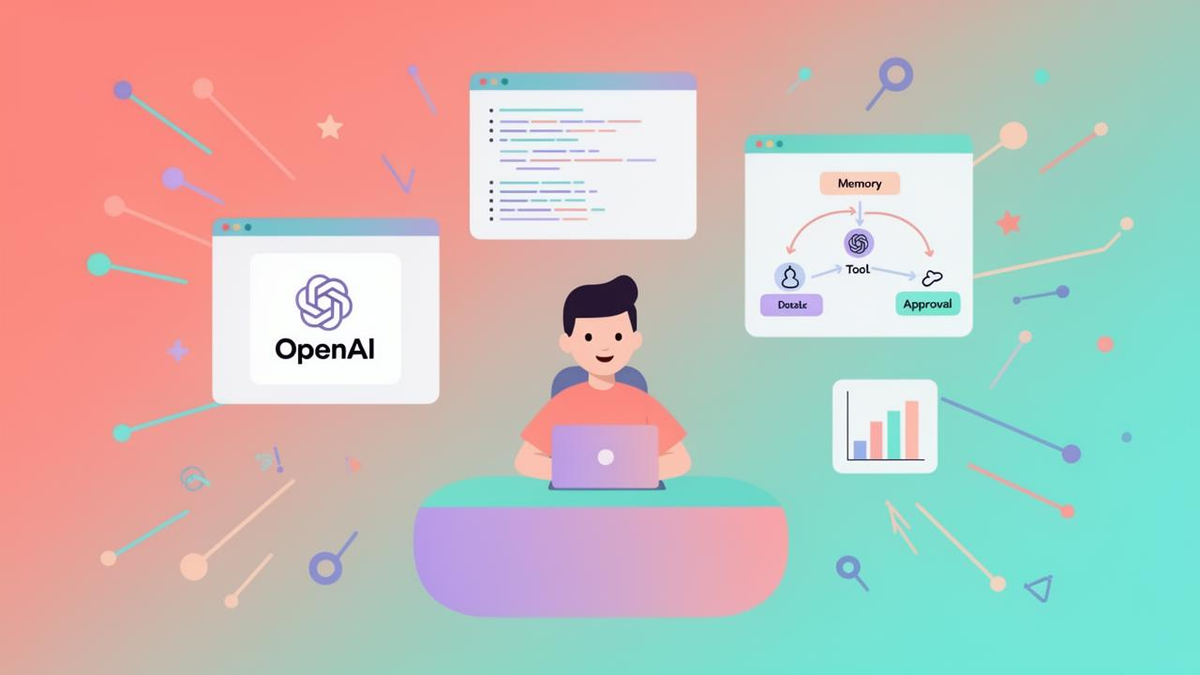
On August 20, OpenAI open-sourced Harness—the core runtime engine underpinning its flagship Codex agent—under the permissive Apache 2.0 license. The release marks a structural inflection point in autonomous software engineering, shifting autonomous systems away from interactive conversational wrappers toward embeddable, headless execution runtimes. Built on Node.js, the framework establishes the foundational orchestration layer required to deploy, observe, and automate deterministic multi-step agent loops inside enterprise continuous integration (CI) pipelines and production environments.
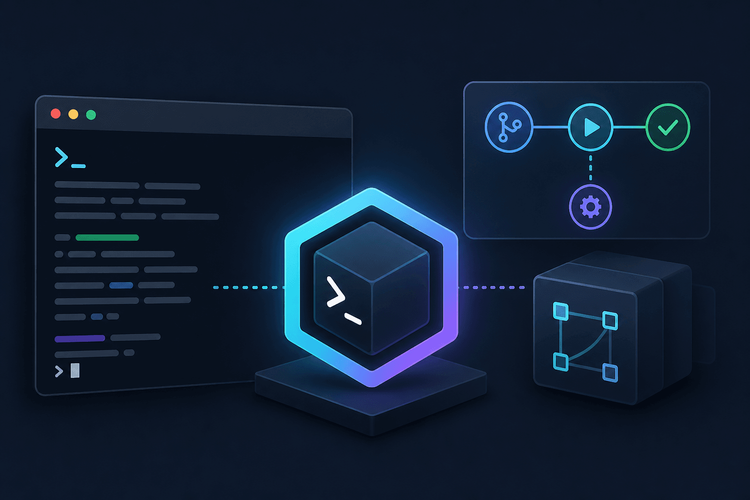
The open-source repository packages three core components: a terminal-native CLI client, a stateful execution daemon designated as app-server, and an official software development kit (SDK). By decoupling model inference from closed consumer interfaces, the release enables engineering teams to execute tasks programmatically via non-interactive subcommands like codex exec, providing granular infrastructural control over automated reasoning loops.
OpenAI President Greg Brockman framed the strategic rationale behind the open-source distribution, stating that Codex’s capabilities extend far beyond coding utilities. The initiative indicates an institutional roadmap designed to embed autonomous execution engines across enterprise operations, financial transaction systems, and administrative control surfaces. This shift transitions the primary competitive perimeter from front-end conversational interfaces to programmatic back-end execution mechanics.
Architectural Mechanics and Runtime Orchestration
Harness operates as an execution exoskeleton rather than an inference model. The system orchestrates the entire agent runtime loop: context compression, tool invocation registries, dynamic exception recovery, and real-time state synchronization across distributed architectures. By abstracting execution controls from core model weights, the architecture standardizes how reasoning models interface with local filesystems, shell environments, and external APIs.
Headless automation is driven by the codex exec subcommand alongside the app-server module, which ingests real-time event streams while preserving state across multi-stage operations. This decoupled design enables developers to integrate autonomous pull-request reviews, regression detection, and automated patching directly into CI pipelines without requiring persistent human terminal intervention.
Memory retention mechanisms dynamically manage subtask lifecycles. When an operational failure occurs, the engine’s deterministic hierarchy intercepts runtime exceptions and recalculates resolution pathways before an automated routine terminates. This exception-handling architecture preserves state continuity throughout long-horizon refactoring tasks and multi-tiered transactional workflows.
Computational Economics and Token Optimization
Architectural optimizations within Harness demonstrate significant token efficiency gains, delivering a sixfold (83.3%) reduction in output token consumption. By compressing intermediate operational context and pruning redundant reasoning trajectories, the framework accomplishes complex tasks using one-sixth of the previous token volume. This overhead reduction directly lowers operational expenditure at enterprise scale.
These context-structuring efficiencies translate into measurable performance gains on standardized benchmarks. Operating on the ARC-AGI-3 benchmark, the GPT-5.6 Sol model improved its performance from 13.3% to 38.3% when deployed through the optimized Harness runtime. Because this performance leap was achieved without altering underlying model weights, the results empirically validate the leverage provided by context preservation and execution harness optimization.
Retained reasoning mechanisms preserve intermediate deduction states across sequential steps, preventing the model from re-executing redundant validation passes. This compression protects the context window from degradation during sustained multi-step tasks, simultaneously maximizing task completion rates and reducing inference costs.
Governance Protocols, Interruptibility, and Enterprise Deployment
Harness incorporates programmatic human-in-the-loop (HITL) approval gates directly into its execution loop. When an agent approaches high-risk operations—such as destructive file mutations or privileged API calls—the runtime suspends execution to await explicit administrative authorization. Complementing this, interruptibility protocols allow engineers to pause, inspect, and modify runtime states dynamically via real-time status streaming.
The Apache 2.0 licensing model allows enterprises to embed, customize, and commercialize the Harness engine without proprietary vendor lock-in. Early pilot deployments showcase domain adaptability beyond traditional software engineering, including complex tax preparation and compliance workflows. By abstracting lower-level networking and command-routing protocols, the app-server framework enables domain specialists to deploy auditable, autonomous reasoning workflows across highly regulated enterprise sectors.