Strategic Cultural Localization: Depth over Breadth
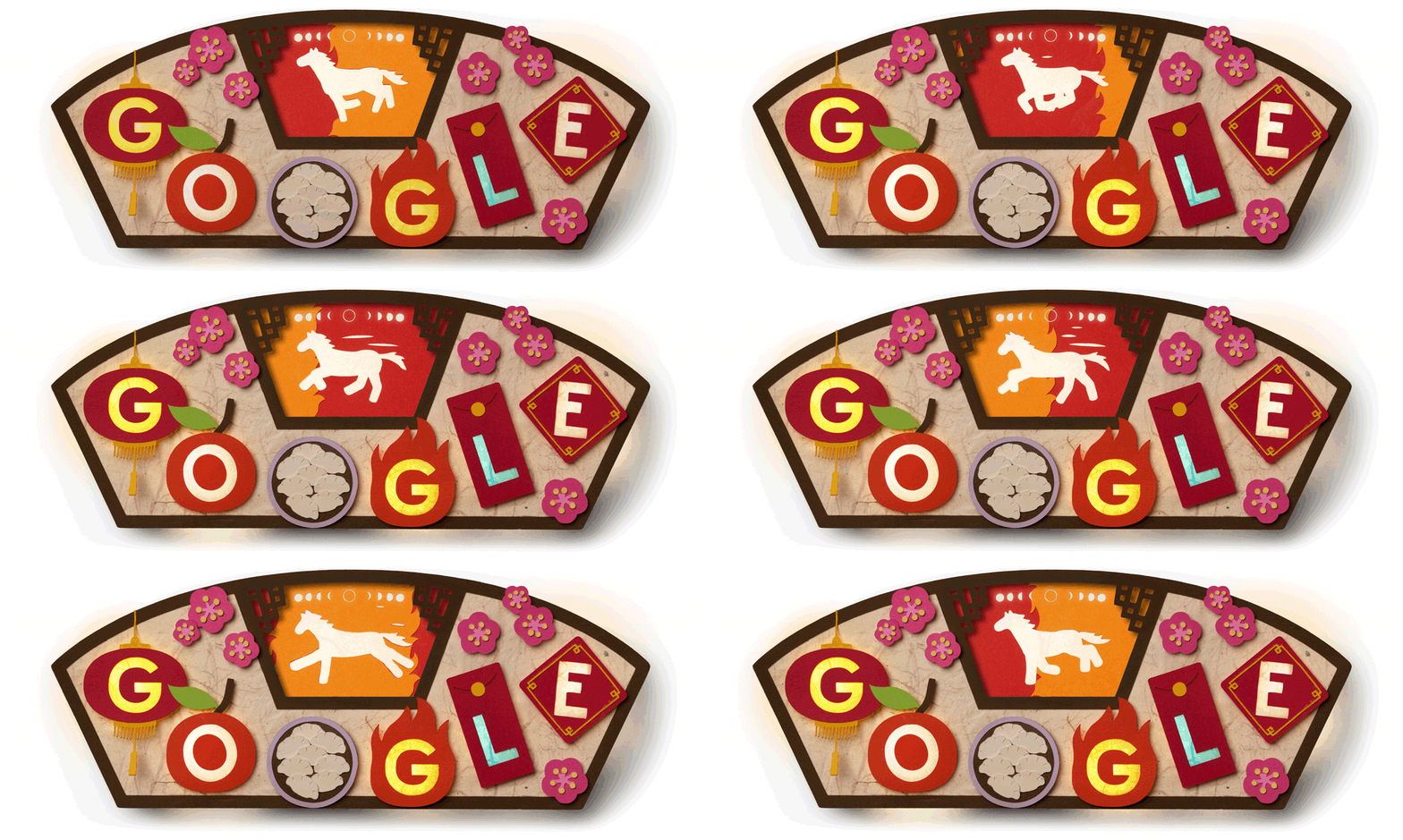
Google’s decision to feature the Year of the Fire Horse for its 2026 Lunar New Year Doodle represents a highly nuanced strategic choice in cultural localization. The Fire Horse, occurring only once every 60 years, signifies a deeper engagement with the Chinese lunisolar calendar’s elemental cycle, moving beyond a standard, generic 12-year animal rotation. This specific focus demonstrates a sophisticated approach to cultural engagement, aiming for resonance with a highly informed audience rather than a superficial acknowledgment of the holiday.
By highlighting the specific traits associated with the Fire Horse—passion, drive, and independence—the platform implicitly aligns its brand identity with these characteristics. This strategic alignment aims to build cultural capital and reinforce brand relevance in key markets where Lunar New Year holds substantial social and economic significance. The selection of this rare zodiac sign serves to differentiate Google’s cultural strategy from competitors who might employ more superficial or repetitive content, establishing Google as a platform that prioritizes cultural depth over mere participation.
Operational Complexity and Content Governance
The operational execution of such a specific cultural reference requires substantial internal coordination and research, highlighting the complexity of Google’s content governance framework. The source notes that Doodles can take years to develop, suggesting a long-term strategic planning process for major cultural events like the Fire Horse cycle. This proactive approach ensures that the platform maintains its position as a central information hub that anticipates and reflects significant global cultural shifts. Managing a global content calendar requires significant resource allocation for research, design, and localization teams.
The volume of content—hundreds of Doodles launching globally each year—necessitates a robust governance framework to manage cultural sensitivities, regional variations, and legal compliance across diverse jurisdictions. The contrast between long-term projects and rapid-response events, such as the first same-day Doodle (water discovered on the moon in 2009), highlights a flexible and highly responsive operational model. This capability is critical in maintaining relevance in a fast-paced media environment, where timely content can significantly impact user engagement and platform authority.
Brand Narrative, User Engagement, and Data Leverage
The Doodles program acts as a powerful tool for shaping Google’s brand narrative and enhancing user engagement. The historical context of the Chinese zodiac, which shaped life for centuries, reinforces Google’s core mission as an information provider. By acknowledging this history, Google positions itself as a curator of cultural knowledge. The specific traits associated with the Fire Horse—forward movement and endurance—align with the platform’s long-term strategic goals, serving as a subtle communication tool for reinforcing its commitment to innovation and sustained growth.
The program’s origin story, specifically the first Doodle as an “out of office” message from the founders, reinforces a brand narrative of innovation, informality, and user-centricity. This human element fosters a connection with users, while initiatives like the “Doodle for Google student contest” extend this narrative into community engagement and talent development. The integration of cultural events like Lunar New Year enhances the overall user experience, increasing engagement metrics and generating valuable data on user preferences, which can be leveraged for future product development and service optimization.
Competitive Advantage and Institutional Maturation
In the highly competitive global search and digital platform market, cultural content serves as a key differentiator. While core search functionality remains paramount, the ability to integrate seamlessly into local cultural contexts provides a significant competitive advantage against regional rivals. The Fire Horse Doodle specifically targets markets where the Chinese zodiac holds deep cultural significance, reinforcing Google’s commitment to these regions.
The strategic value of cultural capital in a globalized economy cannot be overstated. By investing in highly specific and nuanced cultural content, Google establishes itself as a platform that understands and respects local traditions. This approach contrasts sharply with platforms that adopt a one-size-fits-all strategy, potentially alienating users in culturally diverse markets. The Doodles program functions as a form of non-invasive brand advertising, maintaining top-of-mind awareness and reinforcing the platform’s role as a daily habit. This “soft power” approach provides a buffer against reputational risks and strengthens stakeholder relationships, contributing to the long-term resilience and institutional maturation of the brand.