
Geographic Anchoring: Leveraging Historical Legitimacy
The decision to initiate the promotional cycle for the Michael Jackson biopic, Michael, in Gary, Indiana, is a calculated maneuver in geographic anchoring. By selecting the Jackson family’s ancestral home, the production team establishes a baseline of narrative legitimacy. This ‘homecoming’ strategy utilizes the city’s inherent historical value to frame the film as an authentic restoration of identity rather than a mere commercial product.
The presence of Prince Jackson and the singer’s brothers at the Gary high school screening serves as a visual endorsement by the Estate. This involvement is critical for neutralizing external skepticism, as it positions the film as a definitive, family-sanctioned account. For the city of Gary, the event represents the intersection of municipal branding and economic positioning, leveraging the ‘2300 Jackson Street’ legacy to stimulate local tourism and cultural capital.
Institutional Sanitization and Risk Mitigation
A core component of the rollout’s strategic architecture is the deliberate omission of long-standing allegations regarding sexual predation. Mayor Eddie D. Melton’s public alignment with the production’s focus—eschewing controversial discourse in favor of celebratory legacy—reflects a symbiotic relationship between local governance and the film’s commercial objectives. This institutional silence is a risk mitigation tactic designed to compartmentalize Jackson’s artistic achievements from his legal and ethical controversies.
This sanitization strategy is not merely cosmetic; it is a fiscal imperative. By creating a controlled environment that minimizes adversarial scrutiny, the producers aim to maximize the film’s appeal across global markets. However, this approach ensures the film remains a polarizing artifact, directly challenging critics who argue that a comprehensive biography cannot ignore the most significant legal challenges of the subject’s life.
The Synergy of Bloodline: Casting as a Structural Shield
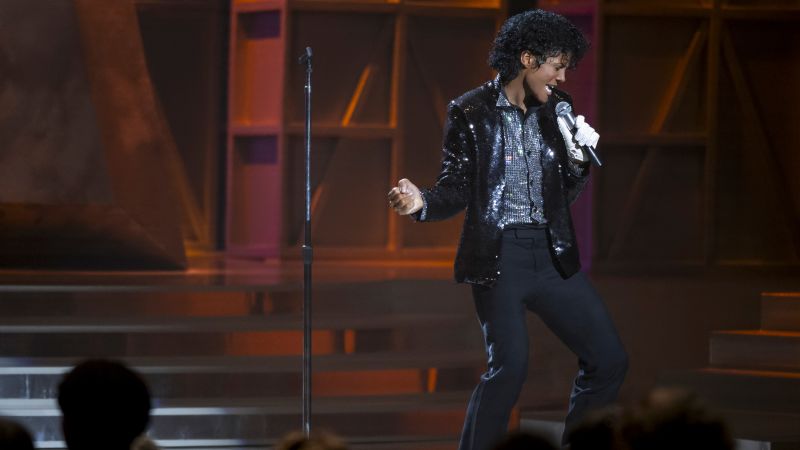
Producer Graham King’s decision to cast Jaafar Jackson, Michael’s nephew, provides a layer of biological authenticity that serves as a structural shield. Jaafar’s performance is marketed through the lens of hereditary talent, a move that complicates critical reception. It is harder for audiences or critics to dismiss a performance that carries the weight of a direct familial connection, thereby securing the ‘authorized’ status of the narrative.
From a market perspective, this casting is the ultimate intellectual property play. It ensures the Estate’s absolute control over the portrayal while facilitating access to Jackson’s extensive music catalog—the project’s primary economic driver. The synergy between the lead actor’s bloodline and the subject’s creative output creates a high-value, reputationally sensitive asset that is designed to endure beyond the initial box office cycle.
Conclusion: Legacy Management in a Polarized Market
The strategic foundation laid in Gary indicates that Michael is less a traditional biopic and more an exercise in global brand management. By prioritizing legacy preservation over investigative rigor, the production seeks to stabilize the financial value of the Jackson brand. Whether this celebratory narrative can successfully navigate a modern media landscape characterized by intense scrutiny of public figures remains the film’s primary commercial gamble.

Photo by GregReese on Pixabay.