Missouri’s 78-72 defeat against Kentucky in the SEC Tournament second round in Nashville acts as a decisive inflection point, immediately shifting their postseason calculus from potential seeding optimization to securing an outright at-large bid.
Entering the tournament with a contested conference record (10-8), Missouri occupied a volatile position—potentially seeding 4th or slipping to 10th. This single-elimination loss magnifies the fragility of their resume components under the selection committee’s rigorous evaluation.
Analysis: Operational Failures in High-Leverage Moments
The structure of the SEC Tournament mandated a win to solidify tournament standing; the loss reverts evaluation pressure back to assessing quality wins versus concerning execution patterns.
Kentucky’s advancement leverages the win significantly, contrasting sharply with Missouri’s immediate necessity to defend its status against comparable bubble teams nationally. The narrative pivot is stark: from securing a bid to proving resilience against elimination.
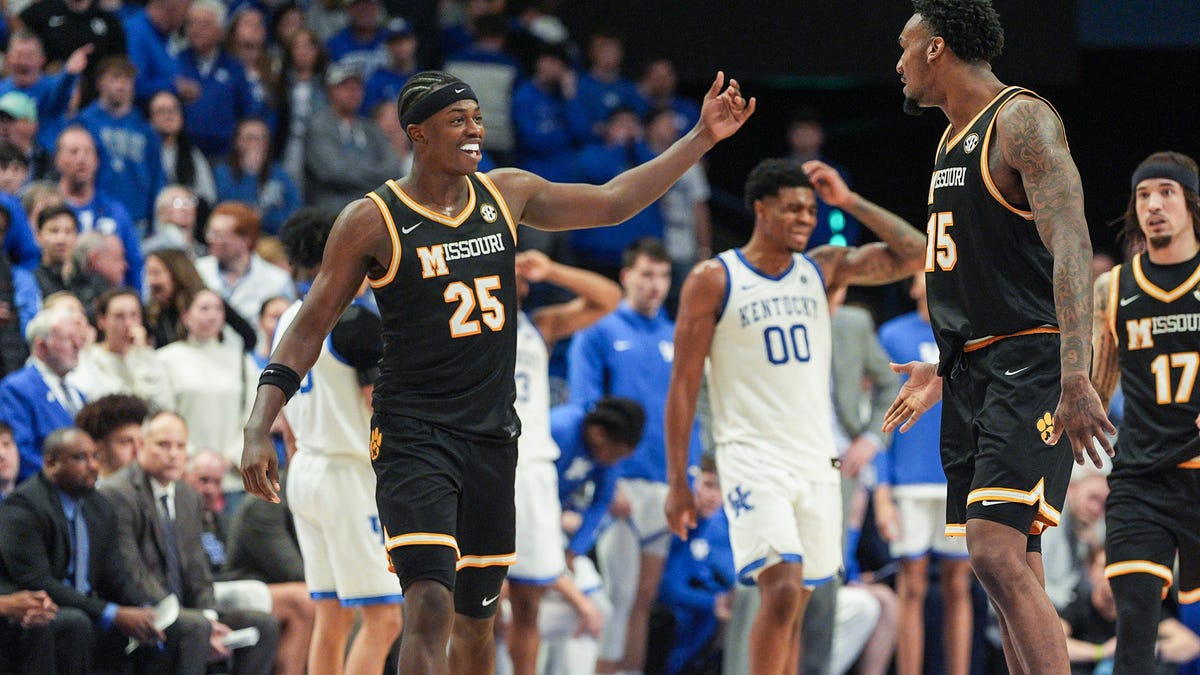
Missouri demonstrated significant competitive mettle, erasing a 16-point second-half deficit to briefly lead 70-69 with 2:34 remaining, heavily fueled by Mark Mitchell’s explosive 23 second-half points.
However, the subsequent offensive drought—failing to score another field goal after Mitchell’s go-ahead basket—exposes a critical vulnerability: systemic failure in late-game shot selection and execution when facing elite defensive intensity.
Coaching Scrutiny and Offensive Concentration
Head Coach Dennis Gates faces intensified scrutiny regarding the program’s proven capacity to close high-leverage contests, a key committee assessment criterion.
The heavy reliance on Mitchell’s singular surge suggests an over-dependence on individual heroics rather than a sustained, adaptable offensive system capable of manufacturing efficient shots when the primary option is neutralized.
Conversely, Kentucky’s resilience, validated by Otega Oweh’s 21 points and Denzel Aberdeen’s decisive late-game contributions (including the key basket with 22.5 seconds left), underscores superior personnel deployment under duress.
Crucially, the turnover forced by Oweh on Mitchell immediately following Missouri’s brief lead served as the definitive leverage point, illustrating how proactive defensive aggression directly dictates offensive opportunity at this competitive level.
Contextualizing Regular Season Precedent
Missouri’s earlier regular-season victory over Kentucky at Rupp Arena (January 7th) establishes a necessary baseline, suggesting talent parity exists, but highlighting that execution in neutral-site, high-stakes environments remains conditional.
Their 10-8 conference standing earned a single bye, reflecting a respectable but non-dominant mid-tier SEC performance, inherently leading to precarious bubble scenarios lacking definitive high-seed insulation.
The volatility within the SEC’s middle section, where marginal differences in conference play resulted in vastly different tournament exposures, is clearly illustrated by Missouri’s near-miss.
Operational Gaps and Performance Metrics
The operational breakdown—inability to convert field goals after seizing the lead—points to deficiencies in offensive set execution when the opponent maximizes defensive resources against known plays.
Kentucky’s defensive sequence forcing an airball against a key player in the final minutes demonstrates superior scouting translating into tangible performance leverage.
For Missouri, the near-comeback is a double-edged sword: showing competitive spirit while simultaneously exposing the systemic lapses that necessitated a 16-point recovery effort earlier in the half.
The concentration of scoring (Mitchell’s 32 points) limits adaptability when defensive schemes successfully contain the focal point.
Structural Assessment and Selection Committee Navigation
The game’s broadcast visibility (SEC Network, FUBO) placed this execution gap under maximum national review, affecting institutional narratives leading into Selection Sunday.
The challenge shifts from proving competence to defending the overall 20-11 portfolio against the context of the final, decisive offensive collapse.
The competitive advantage now belongs entirely to Kentucky, securing another day of national exposure against a top-four seed, reinforcing program momentum. Missouri must pivot to strategic portfolio management, emphasizing resilience while addressing the specific late-game deficiencies exposed.
The difference between an at-large bid and a lower seed often hinges on executing two or three possessions in the final three minutes of a conference tournament game—a dynamic this contest vividly illustrated. The failure to convert the final lead into points confirms that while Missouri is competitive, the operational refinement required to transition into a consistent contender remains the primary institutional focus.