Michigan Governor Demands Federal Probe into Weather Service Alert Failure
Michigan Governor Gretchen Whitmer’s office has formally requested a federal investigation into the National Weather Service’s (NWS) failure to issue a tornado watch preceding a devastating storm that caused fatalities in southwest Michigan. The inquiry aims to determine if budgetary decisions enacted by the previous administration may have compromised the NWS’s ability to provide timely severe weather alerts.
The governor’s office specifically raised concerns about a potential correlation between federal funding reductions at the NWS and the absence of a tornado watch. Spokeswoman Stacey LaRouche emphasized the NWS’s core mission is public safety through severe weather monitoring and warnings, stating that a failure to issue a watch when lives were lost is deeply concerning and warrants scrutiny of the agency’s operational effectiveness under fiscal constraints.
Governor Whitmer had previously declared a state of emergency for Branch, Cass, and St. Joseph counties and surveyed the storm’s aftermath. The tornado outbreak is officially linked to four fatalities, with three victims identified in Union City, Michigan, by the Branch County Sheriff’s Office. The focus on the NWS alert system suggests an examination of systemic failures in preparedness and response.
Branch County Devastation Highlights Alert System Deficiencies
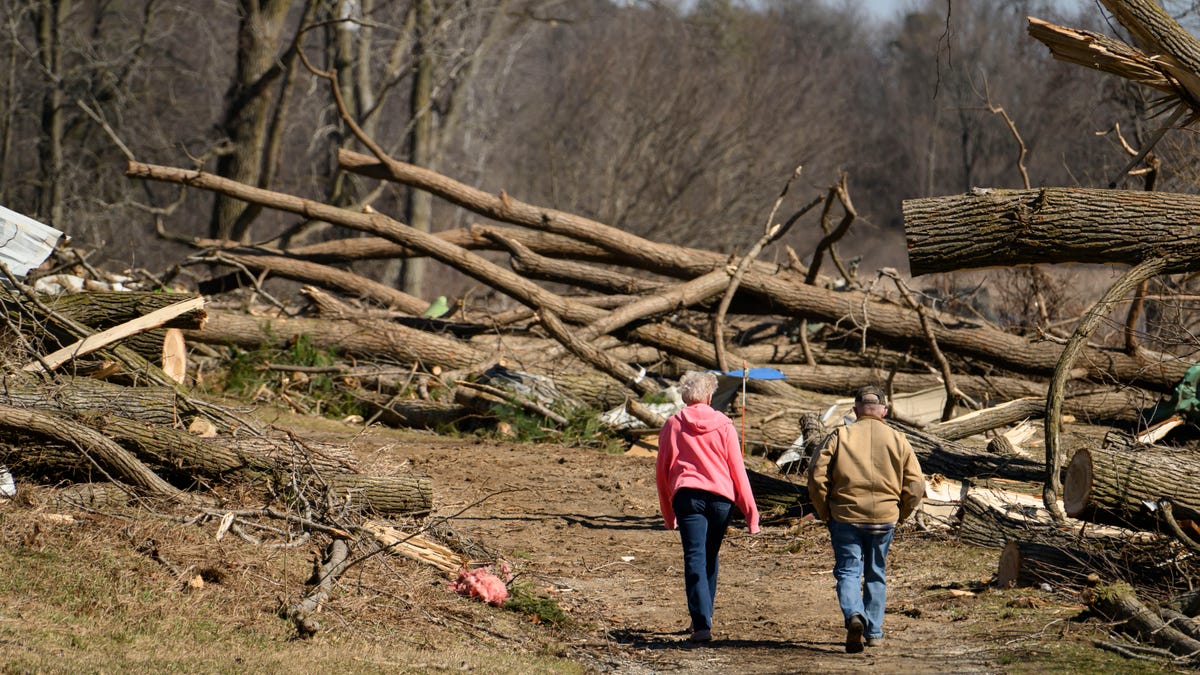
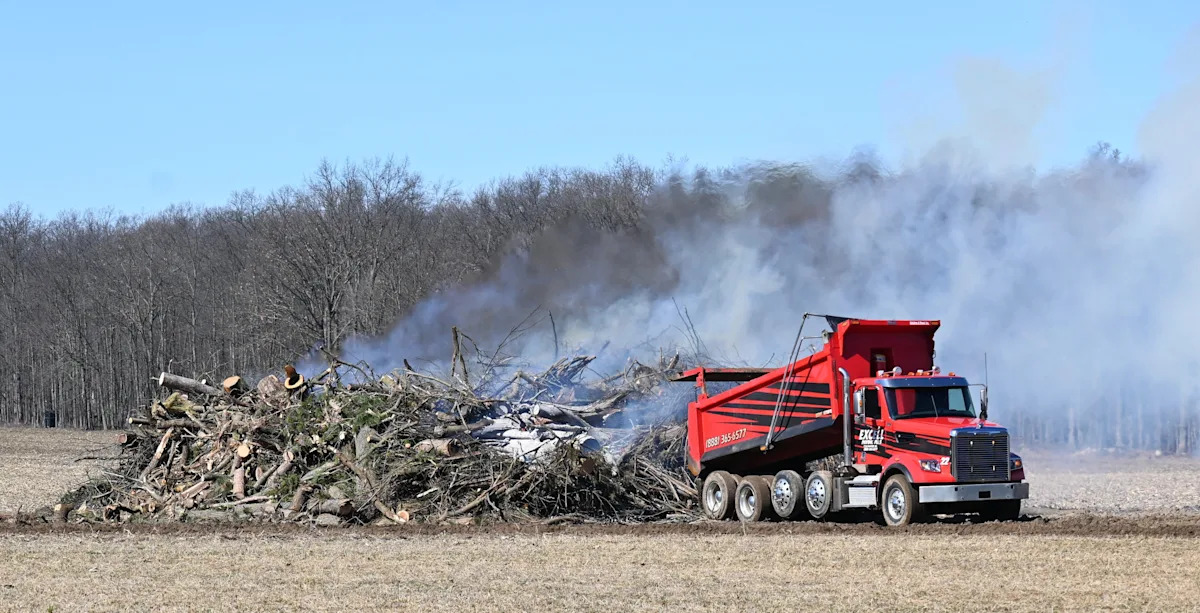
Cleanup operations are ongoing in Union City, Michigan, following a tornado on March 6, 2026, which resulted in significant destruction and three confirmed fatalities on Prairie Rose Lane. The victims, identified by the Branch County Sheriff’s Office, were William Andrew Akers, 63, Keri Ann Johnson, 54, and Penni Jo Guthrie, 65. The storm’s intensity is evidenced by only two of 21 surveyed dwellings on Prairie Rose Lane remaining partially intact.
A preliminary damage assessment from Branch County Emergency Management is pending. However, visual evidence from Tuttle Road and Prairie Rose Lane indicates widespread structural damage. Tuttle Park Drive sustained scattered but severe damage to 57 dwellings, with at least two destroyed and others significantly impacted, underscoring the localized and unpredictable nature of tornado damage.
Immediate challenges include accessing affected areas due to downed trees and ongoing power line repairs, disrupting recovery efforts and residents’ ability to assess losses. These operational disruptions have cascading economic and social consequences.
Federal Funding and NWS Operational Capacity Under Scrutiny
The demand for a federal investigation scrutinizes the NWS’s alert issuance process, linking it to resource allocation and public safety infrastructure. Governor Whitmer’s office explicitly hypothesized that funding cuts under the Trump administration may have degraded the NWS’s predictive and warning capabilities, impacting its operational resilience.
This assertion questions the NWS’s ability to maintain full functionality under budgetary pressures. Reduced federal investment could translate to fewer personnel, outdated technology, or diminished analytical capacity, all critical for issuing accurate and timely severe weather watches.
The Detroit News’s outreach to the White House for comment indicates the allegations have reached the executive branch, potentially igniting a broader debate on federal funding priorities for scientific agencies and their role in mitigating natural disaster impacts, especially amid increasing climate volatility.
Strategic Implications for Forecasting and Disaster Preparedness
This incident carries significant strategic implications for weather forecasting and national disaster preparedness. Confirmation of a link between funding cuts and the failure to issue a tornado watch could necessitate a reassessment of federal investment in meteorological services, potentially leading to increased NWS budgets for infrastructure, research, and staffing.
For the NWS, this event marks a critical juncture, highlighting vulnerability to political and economic shifts. The agency’s response to such an inquiry is vital for maintaining public trust and securing future funding, potentially driving advancements in forecasting technology and resilience.
The competitive landscape may also be affected. Increased scrutiny on the NWS could create opportunities for private sector forecasting firms, but the federal government’s core responsibility for issuing official warnings remains paramount, making any perceived weakness a public safety concern.
Downstream Effects on Public Trust and Policy
Public trust in the NWS is intrinsically linked to its ability to provide reliable warnings. Systemic failures, especially those linked to resource constraints, could erode this trust, potentially leading to a less responsive public during future severe weather events and increasing casualty risks.
Politically, the situation may galvanize support for increased funding for scientific agencies and disaster preparedness. It offers a concrete example of how federal policy decisions directly impact community safety, potentially influencing legislative priorities and electoral discourse.
The incident could also prompt a review of intergovernmental coordination protocols between federal agencies like the NWS and state/local emergency management bodies. Ensuring seamless communication and data sharing is critical during crises.
Economic and Insurance Sector Ramifications
The economic impact of severe weather extends beyond immediate property damage. The destruction of homes and infrastructure represents a significant loss of wealth, requiring substantial investment in reconstruction, impacting local economies and supply chains.
The insurance industry faces substantial payouts for property damage claims. This could lead to increased premiums in tornado-prone areas, reflecting higher risk profiles and escalating costs associated with climate-related disasters.
Furthermore, the investigation into the NWS’s alert system might influence insurance actuarial models. Inadequate warnings could lead insurers to adjust risk assessments and pricing, promoting more sophisticated risk management strategies and resilient infrastructure development.
Broader Context of Climate Change and Extreme Weather
The increasing frequency and intensity of extreme weather events, linked to climate change, form the underlying context for this incident. Scientific research suggests a correlation between a warming planet and more volatile weather patterns, underscoring the urgency for robust disaster preparedness and effective warning systems.
This event highlights the need for meteorological agencies to be equipped for a changing climate, requiring advanced technology, financial resources, and human capital for data interpretation and dissemination. The NWS funding debate is therefore intrinsically linked to broader climate adaptation strategies.
Long-term implications for infrastructure planning include the adoption of stricter building codes, investment in storm shelters, and comprehensive evacuation plans in vulnerable communities. The effectiveness of these measures critically depends on reliable early warning systems.
Institutional Accountability and Future Preparedness
The call for a federal investigation signifies a push for institutional accountability, holding federal agencies and their funding mechanisms responsible for public safety outcomes. The probe’s findings could set a precedent for evaluating governmental preparedness and response to natural disasters, particularly when budgetary decisions are implicated.
For the NWS, the investigation presents an opportunity to demonstrate commitment to continuous improvement and advocate for necessary resources. Transparency throughout the process is crucial for maintaining public confidence and shaping future policy on operational capacity and technological advancements.
Ultimately, the Michigan tornado incident and the ensuing investigation highlight the complex interplay between federal policy, scientific infrastructure, and community resilience. It underscores the vital importance of adequately funded and operationally sound meteorological services in protecting lives and property against the growing threat of extreme weather.