Logistical Friction and Regional Supply Chain Disruption
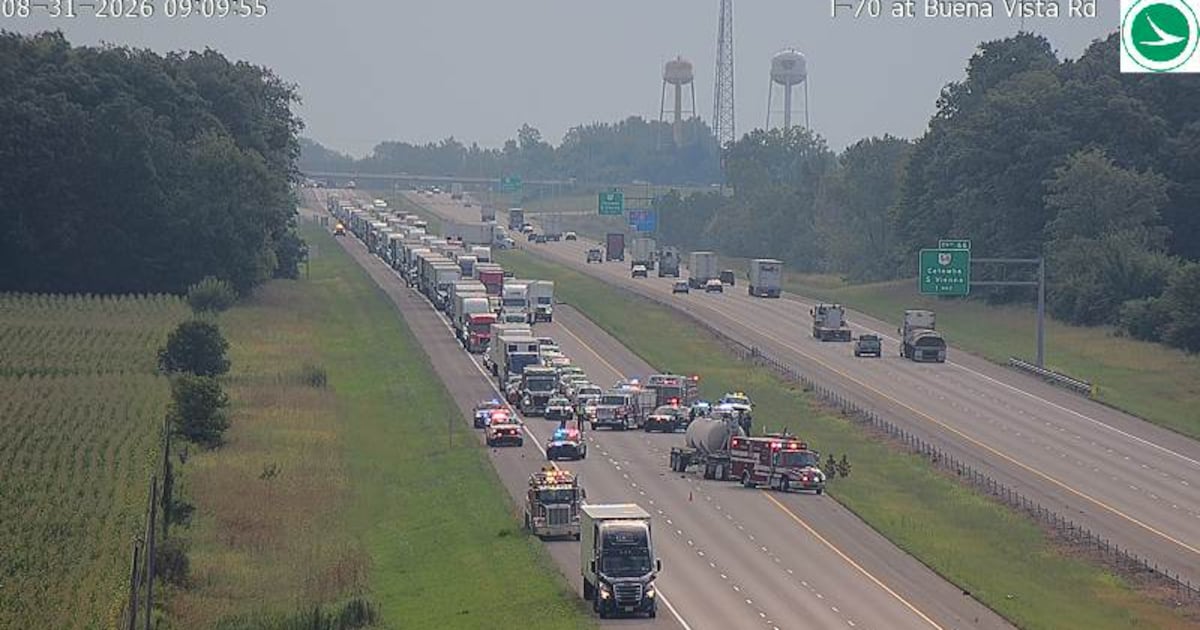
The fatal incident on Interstate 70 Westbound near mile marker 66 introduced immediate operational friction into Ohio’s primary east-west freight corridor. The resulting three-hour closure on Monday morning necessitated a total redirection of commercial traffic at the State Route 54 interchange. For regional logistics providers, this stoppage during the peak transit window (approx. 08:40) represents a measurable degradation in hours-of-service efficiency, potentially triggering a cascade of missed delivery windows across the Columbus-Dayton industrial axis.
Inter-Agency Forensic Coordination and Investigative Protocols
The Ohio State Highway Patrol (OSHP) Springfield Post spearheaded a multi-agency response, integrating resources from the Clark County Sheriff’s Office and the Ohio Department of Transportation (ODOT). This collaborative framework transitioned rapidly from emergency traffic mitigation to formal death investigation following the arrival of the Clark County Coroner’s Office. Preliminary findings confirm that 20-year-old Pierre Damas Bel was deceased at the scene after entering the travel lanes from the right shoulder, where his 2006 Toyota Avalon remained stationary.
Vehicle Dynamics and Technological Disparities
The collision involved a 2001 Kenworth tanker, operated by 41-year-old Jack Harry Buhring, and a pedestrian. From a technical standpoint, the 2001 Kenworth represents a generation of heavy-duty machinery lacking the integrated collision-avoidance sensors standard in modern automated fleets. The physics of a tanker-style commercial vehicle—characterized by high center-of-gravity and extended braking requirements—further complicated the reactive window available when the pedestrian entered the high-speed thoroughfare.
Regulatory Framework and Liability Assessment
Investigative efforts are currently focused on the Electronic Logging Device (ELD) data from the Kenworth to verify speed and braking patterns at the 08:45 timestamp. Under Ohio law, pedestrian presence on interstates is strictly prohibited, placing the legal focus on the contributory factors leading to the victim exiting his vehicle. The final report from the Clark County Coroner will provide the medical context necessary to conclude the forensic file, serving as the definitive record for insurance adjustments and potential litigation.
Infrastructure Safety and Long-Term Policy Implications
This fatality underscores the vulnerability of the ‘refuge zone’ provided by highway shoulders. While designed for disabled vehicles, these areas remain high-risk environments for motorists who transition into pedestrians. The Harmony Township segment of I-70 may now face secondary review by ODOT to evaluate if lighting or signage enhancements at the SR 54 interchange could mitigate future pedestrian-vehicle conflicts. For commercial carriers, the incident serves as a critical case study in the psychological and operational impact of unavoidable roadway hazards on professional drivers.