
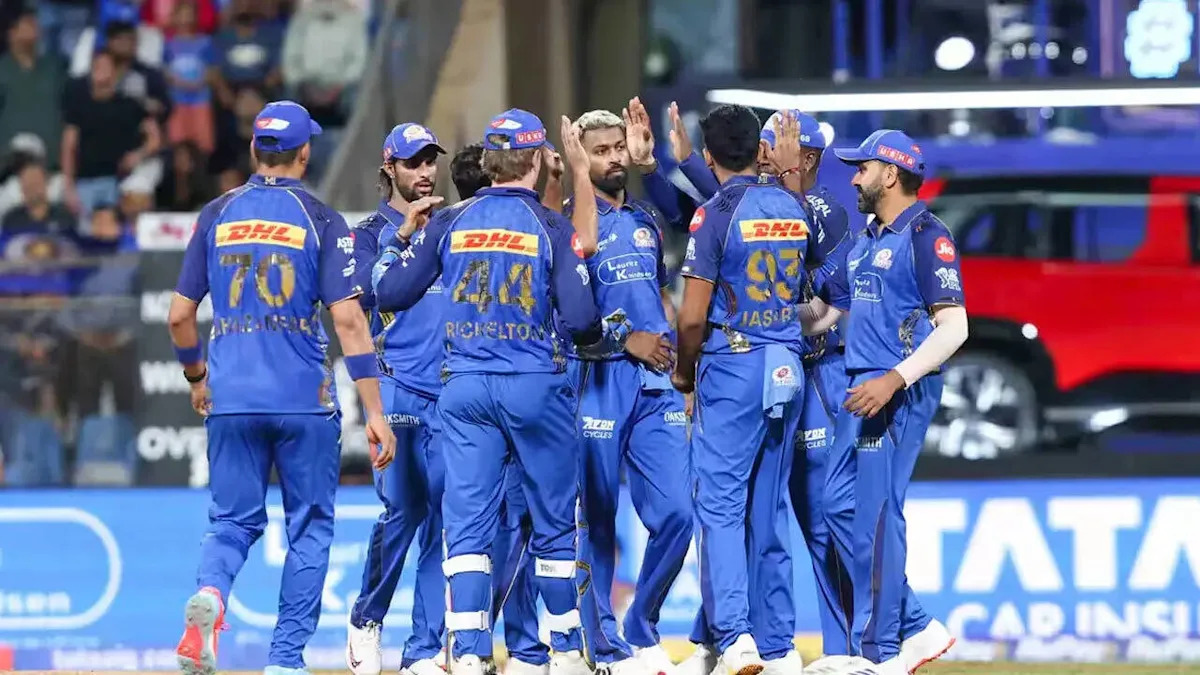
Systemic Fragility and the Operational Crisis
The Mumbai Indians (MI) approach their fixture against the Gujarat Titans (GT) at the Narendra Modi Stadium navigating a profound operational crisis. With a 20% win rate across five matches, the franchise’s bottom-tier placement is less a statistical anomaly and more a symptom of systemic failure across core functional units. Internal rhetoric of “panic stations” reflects an urgent need to address the tactical misalignment that has marginalized a historically dominant roster.
The encounter in Ahmedabad transcends point acquisition; it is a confrontation with the ‘Motera Jinx’—a venue where MI has yet to secure a victory against the Titans. This historical deficit compounds the psychological pressure on a squad already struggling with internal cohesion. To salvage the 2026 campaign, the organization must move beyond reliance on historical surges (2014, 2015) and confront the reality that their current competitive model is failing to meet modern IPL performance benchmarks.
The Regression of New-Ball Penetration
The primary driver of Mumbai’s defensive collapse is the loss of efficacy in their primary attack axis. The Deepak Chahar and Trent Boult pairing—strategically curated for powerplay breakthroughs—has failed to generate meaningful lateral movement or early wickets. This lack of penetration forces a defensive field-setting posture, surrendering the initiative and allowing opposition top-orders to establish unsustainable scoring rates before the first powerplay concludes.
This cascading inefficiency has even compromised Jasprit Bumrah’s utility. Navigating a period of rhythmic inconsistency, Bumrah is no longer able to mask the failures of his peers. When a premier asset loses the ability to exert ‘menace with control,’ the team’s defensive ceiling drops precipitously, leaving the middle-overs transition vulnerable to high-leverage scoring surges.
High-Variance Bowling and the Overseas Spin Constraint
Shardul Thakur’s performance profile epitomizes the squad’s current volatility. Despite leading the wicket-tally, his economy rate of 13.57 represents a net-negative impact on run containment. This ‘wicket-at-any-cost’ dynamic prevents the build-up of pressure, forcing the batting unit to perform at elite levels merely to maintain parity. Tactical discipline is being sacrificed for desperate, high-variance breakthroughs that rarely stabilize the game state.
Compounding this is the strategic decision to occupy overseas slots with Mitchell Santner and Allah Ghazanfar. While Santner provides economic stability, his recent absence highlighted a lack of domestic spin depth. Ghazanfar, much like Thakur, offers wicket-taking potential at the expense of containment. This roster construction limits flexibility, preventing MI from bolstering a dysfunctional middle order or providing cover for injury-prone specialists.
Batting Instability and the Leadership Pivot
Mumbai’s difficulties extend to a middle-order core that has failed to provide late-innings impetus. The probable absence of an experienced opener has exacerbated this, exposing the central lineup to the new ball prematurely and forcing them into unoptimized defensive roles. This creates a negative feedback loop: the bowling unit feels pressured to over-attack, while the batting unit is burdened by the knowledge that they must compensate for a porous defense.
Captain Hardik Pandya’s public call for “tough decisions” following the loss to Punjab Kings signals a shift toward radical personnel reassessment. While such rhetoric can destabilize dressing-room morale, the severity of the current slump suggests that the risk of institutional inaction is greater. Pandya’s leadership is now at a crossroads; his ability to execute these changes while maintaining brand equity will define the franchise’s trajectory through the 2026 season and beyond.
The Motera Stronghold: Titans’ Strategic Advantage
Conversely, the Gujarat Titans have optimized the Narendra Modi Stadium as a tactical fortress. Their data-driven approach to exploiting local conditions contrasts sharply with Mumbai’s current lack of adaptability. For GT, this match represents an opportunity to consolidate their playoff standing by exploiting MI’s psychological and structural vulnerabilities. Unless Mumbai can disrupt the Titans’ home-field leverage with immediate, high-leverage tactical shifts, their path to recovery remains mathematically and strategically improbable.

Photo by muralinath on Pixabay.