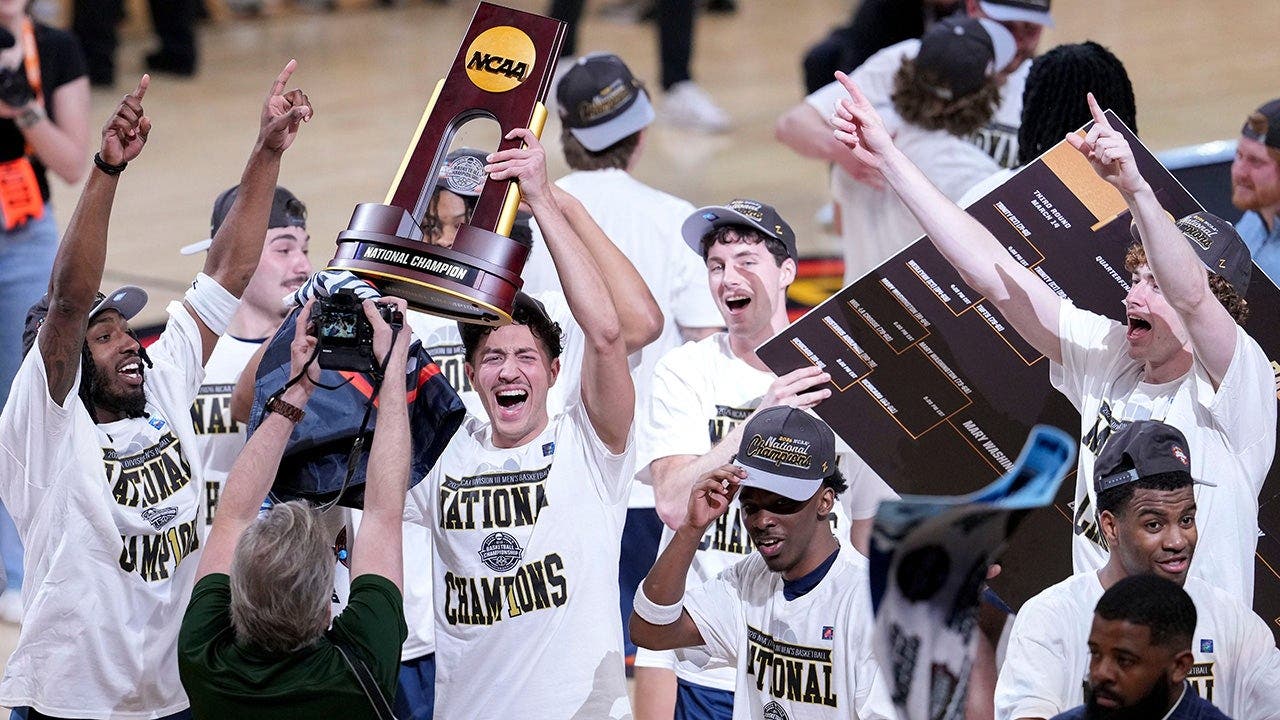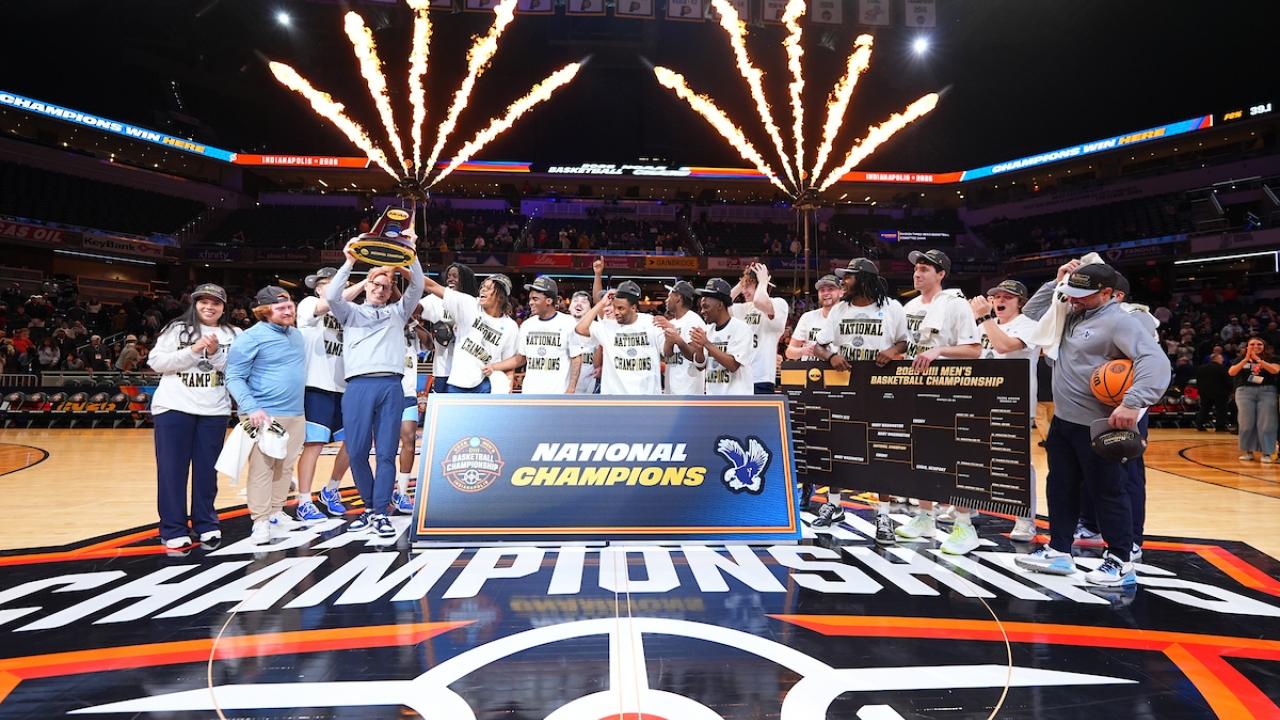
The University of Mary Washington secured its inaugural NCAA Division III Men’s Basketball Championship on April 5, 2026, defeating Emory University 75-73 at Gainbridge Fieldhouse. The contest was defined by high-variance endgame dynamics and a significant shift in win probability during the final minutes. Mary Washington (30-3) concluded a historic campaign by navigating a high-leverage sequence in the closing 12 seconds, illustrating the thin margins inherent in single-elimination tournament structures.
Tactical Volatility and the 23-10 Regression
The championship narrative centered on Mary Washington’s struggle to maintain a 13-point lead established with 4:49 remaining. Emory utilized a high-pressure offensive surge—spearheaded by Ethan Fauss and Jair Knight—to systematically dismantle the 63-50 deficit. This 23-10 run erased the scoring cushion, culminating in a Fauss three-pointer that neutralized the lead at 73-73. This collapse forced Mary Washington into a final, unscripted possession where structured offensive sets devolved into contingency-based playmaking.
Guard Kye Robinson, the offensive anchor for the Eagles, initiated the decisive sequence with a fallaway attempt as his physical stability faltered. Robinson’s reported leg fatigue underscores the physiological toll of the tournament’s final stages. Forward Colin Mitchell’s optimal positioning facilitated the subsequent putback as time expired, capitalizing on a defensive lapse where Emory failed to box out, thereby converting a low-percentage shot into second-chance points.
Statistical Efficiency and Usage Metrics
Kye Robinson’s performance was the primary driver of the Mary Washington offense. He recorded 27 points on 12-of-22 shooting (54.5% efficiency) while contributing eight rebounds, four assists, and four steals. This high-usage role allowed the Eagles to sustain momentum during two separate 14-2 runs. Conversely, Emory’s offensive architecture was hampered by the uncharacteristic inefficiency of Ben Pearce. The program’s all-time leading scorer missed his first seven attempts, failing to convert from the floor until 90 seconds remained. While Pearce mitigated this through an 11-attempt free-throw volume, the lack of early rhythm placed an unsustainable scoring burden on Fauss and Knight, who each finished with 24 points.
Possession Value and Rebounding Disparity
A critical structural element was the rebounding dominance of Emory’s Mario Awasum, who secured 19 boards. This outlier performance granted Emory a significant possession advantage, fueling their late-game comeback by limiting Mary Washington’s second-chance opportunities until the final play. Mary Washington counterbalanced this interior deficit through the dual contributions of Jay Randall (14 points) and Kaden Bates, who recorded a 10-point, 10-rebound double-double. The outcome suggests that Mary Washington’s victory was predicated on maximizing scoring efficiency during high-leverage intervals rather than winning the raw possession battle.
Institutional Impact and Competitive Landscape
The 2026 tournament showcased the broad competitive distribution of the 64-team field, featuring 43 automatic qualifiers. Mary Washington’s emergence as a first-time champion indicates a shift in the division’s power dynamics, overcoming an Emory squad (27-4) that entered as the statistical favorite. For the University of Mary Washington, this title validates strategic investments in athletic infrastructure and recruitment. The success on a professional-grade stage like Indianapolis’s Gainbridge Fieldhouse elevates the program’s national profile, providing a catalyst for future institutional growth and student-athlete engagement.