Dolan Counters Nap Allegations, Defends Trump’s Game 3 Presence
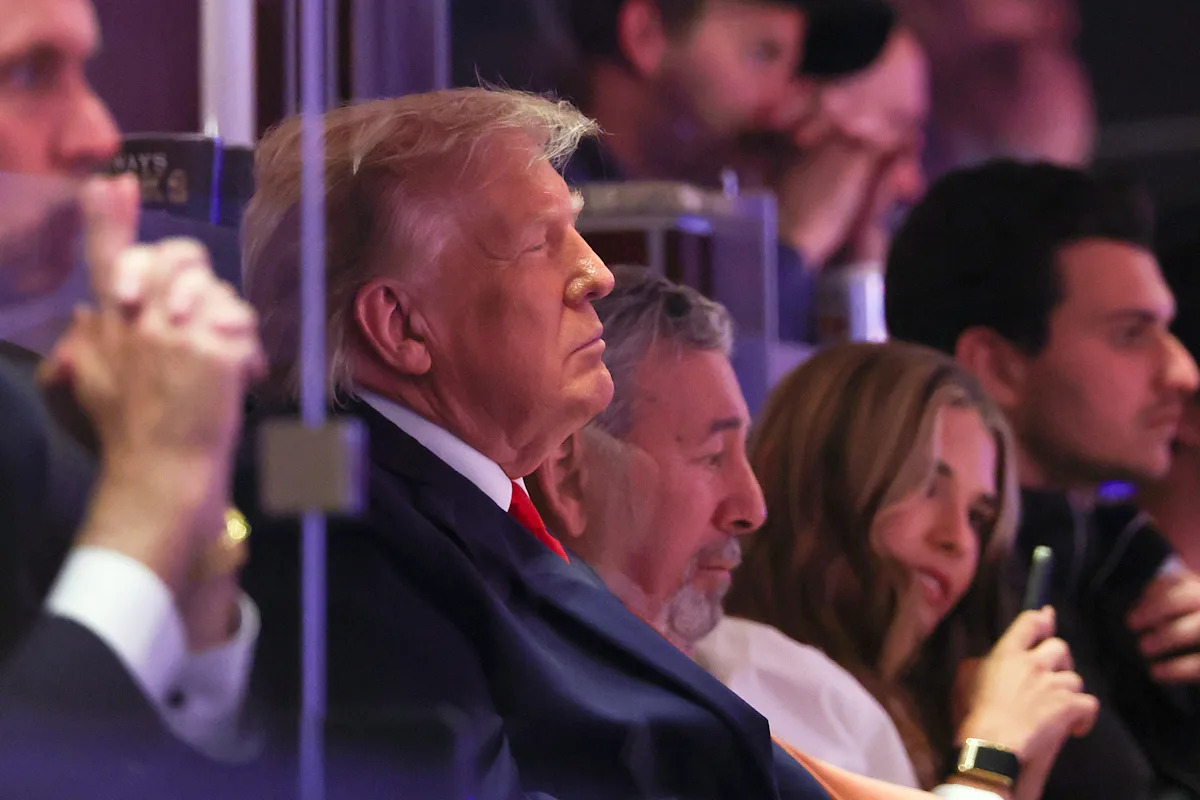
New York Knicks owner James Dolan publicly stated that President Donald Trump was attentive and engaged throughout Game 3 of the 2026 NBA Finals, directly countering social media speculation that the President had been asleep. Speaking on WFAN’s “The Carton Show,” Dolan asserted he was in conversation with Trump for the entire game, emphasizing the President’s active participation.
Dolan’s defense challenges visual evidence from a widely shared video that appeared to show Trump’s head nodding. The Knicks owner’s insistence on Trump’s sustained engagement directly confronts the narrative derived from the footage, suggesting a discrepancy between public perception and Dolan’s firsthand account.
Dolan framed the presence of a sitting U.S. President at an NBA Finals game as a significant honor, highlighting Trump’s New York roots and self-proclaimed Knicks fandom. This positioning aimed to legitimize Trump’s attendance as a supportive gesture, rather than a politically charged event.
Dolan’s personal relationship with Trump, spanning over three decades, underpins his defense, though he avoided extensive public endorsement. His statement focused on the enjoyment of Trump’s company and the distinction of hosting a sitting president, underscoring the event’s significance from a hospitality perspective.
Trump’s Attendance Correlates with Home Team Losses in Sports History
A recurring pattern suggests President Trump’s attendance at major sporting events often precedes losses for the home team. This trend was observed in the Knicks’ 115-111 defeat to the San Antonio Spurs in Game 3 of the NBA Finals, occurring after the Knicks had won two consecutive games.
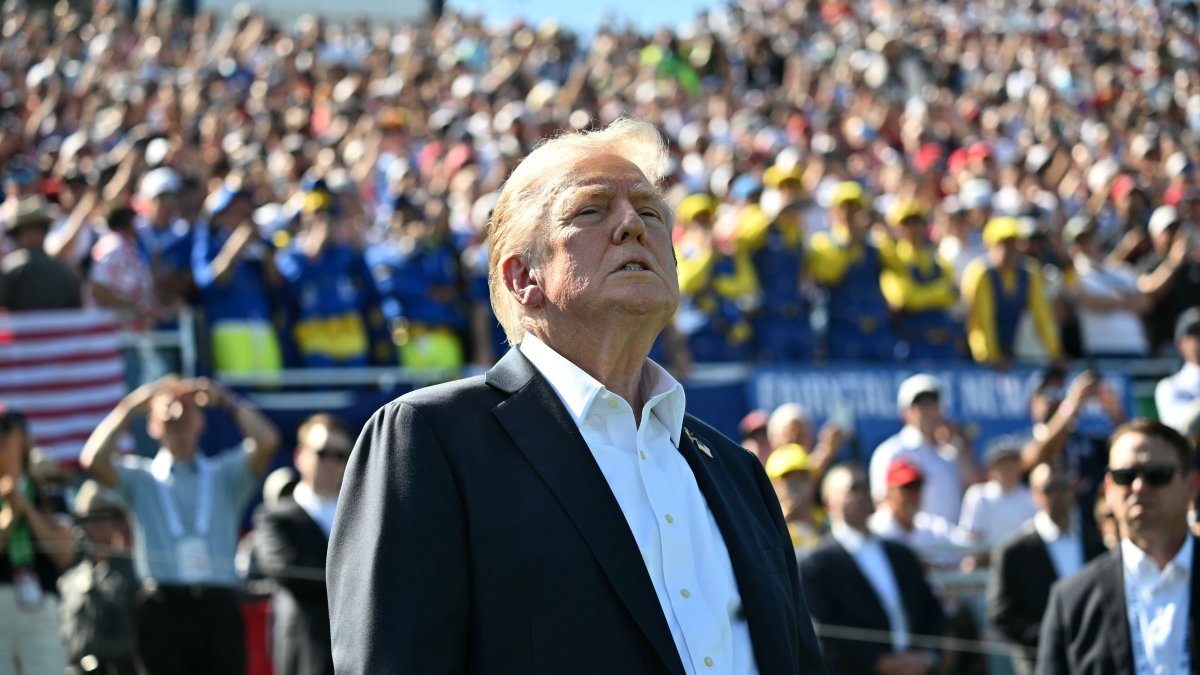
This perceived “jinx” effect extends to other professional sports. Historical instances include the Washington Nationals’ Game 5 World Series loss to the Houston Astros during Trump’s first term, a game where the home team was heavily favored. Further examples include the Washington Commanders’ 44-22 loss to the Detroit Lions during Trump’s attendance, and the U.S. team’s defeat to Europe in the Ryder Cup.
These recurrent outcomes across different leagues contribute to a narrative of misfortune associated with the President’s presence at competitive events. This pattern starkly contrasts with Trump’s documented emphasis on winning and frequent references to electoral victories.
Strategic Implications of Presidential Attendance in Sports
The correlation between President Trump’s attendance and home team losses carries strategic implications for sports franchises, leagues, and betting markets. For teams, the perceived jinx can create psychological pressure, potentially influencing player and coaching decisions during high-stakes games.
From a league perspective, the narrative surrounding presidential attendance can become a distraction, diverting focus from athletic performance. This can impact fan engagement and the overarching narrative of championship series, influencing media coverage.
For the sports betting industry, such patterns can influence public perception and betting behavior. While oddsmakers rely on statistical data, the psychological impact of a perceived jinx on bettors can subtly shift market dynamics.
James Dolan’s defense of President Trump’s engagement during Game 3 can be interpreted as an effort to mitigate potential negative publicity for both the Knicks and the President. By emphasizing Trump’s active participation, Dolan aimed to decouple the President’s presence from the game’s outcome and the jinx narrative, protecting the team’s image and the event’s integrity.
Media Framing and Public Perception Dynamics
The media plays a crucial role in amplifying or dispelling narratives surrounding President Trump’s sporting event attendance. Social media speculation about Trump’s nap during Game 3, coupled with established jinx patterns, created a potent, easily disseminated narrative.
Dolan’s public statement served as a counter-narrative, directly challenging visual interpretation and historical trends. The effectiveness of his defense depends on his credibility and the media’s willingness to prioritize his account over visual evidence and patterns.
This dynamic highlights how public perception is shaped by visual cues, anecdotal evidence, and established narratives. The media ecosystem, from traditional news to social media, is instrumental in constructing and reinforcing these perceptions.
The interplay between official statements, visual evidence, and public interpretation underscores the complexities of managing public relations in the digital age. Dolan’s intervention, while intended to clarify, also drew further attention to the speculation, illustrating the challenges of narrative control in a highly interconnected media environment.
Institutional Leverage and Stakeholder Interests
The involvement of a former President in high-profile sporting events intersects political, cultural, and commercial interests. For franchises like the Knicks, hosting a figure of Trump’s stature offers significant visibility and prestige, as Dolan noted by calling it a “huge honor.”.
However, as the jinx narrative indicates, this visibility can carry reputational risks. This presents a delicate balance for team owners and league officials, weighing the benefits of high-profile attendance against the risk of negative association.
Economic implications are also relevant, particularly for hospitality and luxury suite sectors. The presence of high-profile individuals can drive demand and influence revenue streams and operational strategies.
Dolan’s defense of Trump’s engagement can be seen as an effort to protect the commercial interests of the Knicks and Madison Square Garden. By attempting to neutralize the jinx narrative and nap allegations, he aimed to preserve the venue’s reputation as a premier entertainment destination, free from perceived superstitions or political controversies.
Competitive Landscape and Performance Leverage
In professional sports, perceived superstitions can subtly influence performance and strategy. The psychological impact of a widely discussed “jinx” associated with a prominent figure’s presence can create an intangible disadvantage for a home team.
The Knicks, having won two consecutive games against the Spurs, were poised to capitalize on home-court advantage in Game 3. The subsequent loss, amplified by the narrative of Trump’s attendance and nap speculation, could be leveraged by opponents or analysts to question the team’s mental fortitude.
For the San Antonio Spurs, the narrative surrounding Trump’s presence could serve as a psychological boost or a distraction for the opposing team—a common tactic in competitive environments.
Dolan’s intervention, therefore, is a strategic move to protect the competitive integrity and psychological environment of his team. By attempting to inoculate the Knicks against the jinx narrative, he sought to ensure external perceptions did not unduly influence on-court performance.
Capital Movement and Investment Implications
While direct capital movement is not explicitly detailed, the underlying dynamics of high-profile event attendance and associated narratives can indirectly influence investment decisions in the sports and entertainment sectors. Franchise and venue stability are critical for investors.
A consistent narrative of misfortune linked to high-profile attendees could impact a franchise’s brand value and investment appeal. Conversely, the prestige of hosting significant figures, as Dolan emphasizes, can enhance marketability.
The sports betting market is particularly sensitive to perceived trends and psychological factors. While regulated markets rely on statistical probabilities, broader sentiment influenced by such narratives can affect liquidity and betting patterns.
Dolan’s narrative management efforts can be interpreted as an attempt to safeguard the long-term financial health and investment attractiveness of the Knicks and Madison Square Garden, essential for sustained capital inflow and valuation.
Downstream Effects on Media Ecosystem and Public Discourse
The incident and Dolan’s comments have a tangible downstream effect on the media ecosystem, fueling discussion and analysis across platforms. The contrast between visual evidence, Dolan’s assertion, and the historical jinx narrative provides ample material for sports commentary, political analysis, and social media discourse.
This creates a feedback loop where media coverage of the event and Dolan’s response can reinforce or challenge public perceptions of both Trump and the Knicks. The narrative’s persistence demonstrates the media’s power to shape public understanding of events involving high-profile personalities.
The discourse also touches upon broader themes of political polarization, sports fandom, and celebrity influence. Differing interpretations of Trump’s presence and behavior highlight the subjective nature of media consumption and the tendency to interpret events through pre-existing ideological lenses.
Dolan’s strategic intervention reflects an understanding of how public discourse can cascade into effects on brand reputation, fan engagement, and the perceived legitimacy of sporting outcomes, influencing the broader cultural conversation.
Future Implications for High-Profile Attendance
The recurring pattern of home team losses coinciding with President Trump’s attendance, alongside the Game 3 incident, may prompt a recalibration of how such appearances are managed. Sports organizations and leagues might become more circumspect about the optics and potential narrative fallout of hosting high-profile, politically charged figures.
This could lead to a more strategic approach to seating, public relations management, and potentially a more cautious invitation process to mitigate perceived negative influences and keep focus on the athletic competition.
For figures like James Dolan, publicly defending or clarifying the actions of high-profile guests may become a more frequent aspect of public relations duties, underscoring the interconnectedness of sports, politics, and celebrity.
The long-term consequence could be a more nuanced understanding of the symbiotic relationship between sports, politics, and public perception, leading to more controlled and strategically managed interactions between these spheres to preserve the integrity and narrative of sporting events.