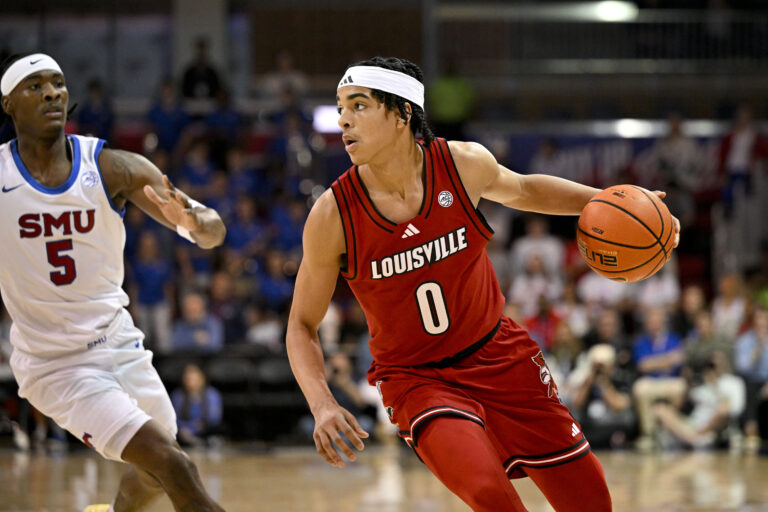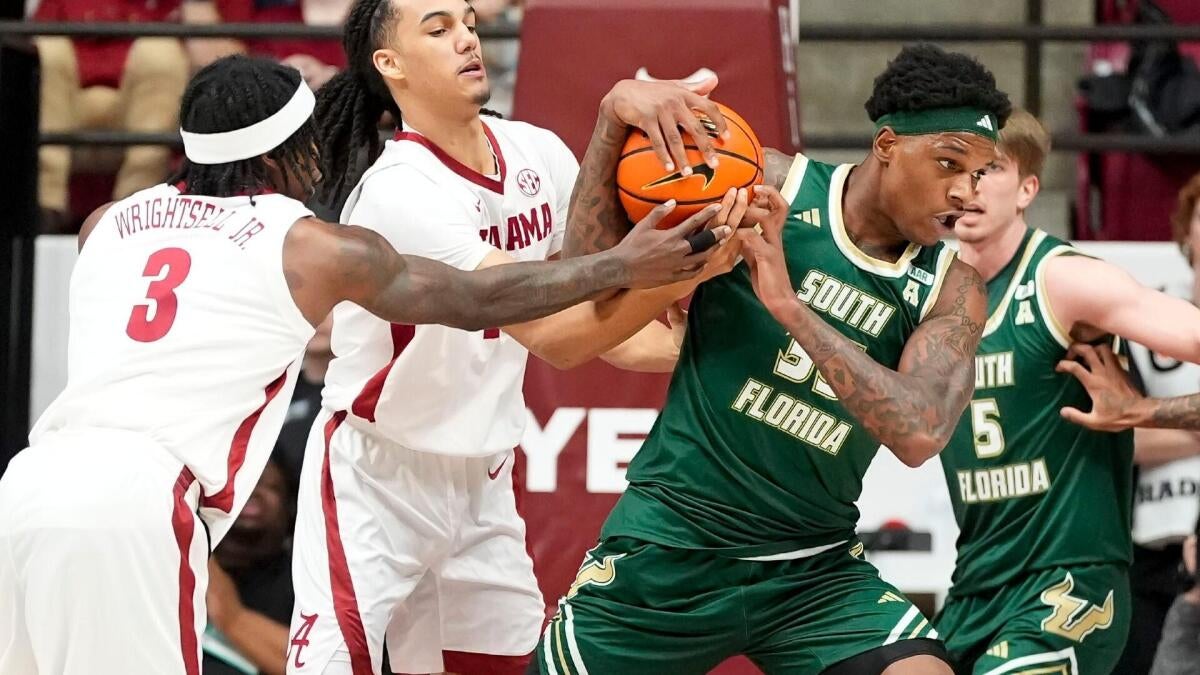
The 2026 NCAA Tournament opening round at Buffalo’s KeyBank Center presents a high-leverage collision between the No. 6-seeded Louisville Cardinals and the No. 11-seeded South Florida (USF) Bulls. This matchup serves as a definitive case study in the shifting landscape of collegiate basketball, where institutional pedigree faces the quantifiable surge of mid-major optimization. For Louisville, the stakes transcend a single advancement; it is an existential bid to terminate a tournament winless streak dating back to 2017 and validate Pat Kelsey’s rebuilding architecture.
Personnel Volatility: The Brown-Clark Pivot
The tactical calculus of this engagement shifted fundamentally with the confirmed deactivation of Louisville’s star freshman, Mikel Brown Jr. His absence creates a structural deficit in the Cardinals’ perimeter rotation, necessitating a spike in usage rate for guard Skyy Clark. To maintain the ‘pace-and-space’ efficiency that fueled their 23-10 season, Clark must optimize transition opportunities to circumvent USF’s set defense. Failure to dictate tempo will force Louisville into half-court attrition—a domain where their reduced depth becomes a primary vulnerability.
Conversely, USF’s defensive identity is anchored by forward Kobe Knox. The Bulls’ strategy centers on interior physical dominance and a disciplined, low-possession rhythm designed to neutralize Louisville’s athletic delta. Entering Buffalo on an 11-game win streak, including a dominant 70-55 conference-clinching victory over Wichita State, USF possesses the defensive cohesion to exploit any lack of secondary playmaking in the Cardinals’ backcourt.
Narrative Asymmetry and Psychological Posturing
The psychological dimension of this matchup favors the Bulls, driven by a compelling homecoming narrative. USF head coach Bryan Hodgson, a Western New York native, returns to Buffalo with a program that has effectively leveraged the transfer portal to achieve veteran-heavy roster stability. This emotional resonance, coupled with USF’s status as the quintessential ‘trendy’ upset pick, forces Louisville to adopt a ‘villain’ posture. By embracing this role, the Cardinals intend to insulate their roster from the high-variance pressure inherent in neutral-site NCAA Tournament environments.
NIL Parity and Market Projections
The 3.5-point betting spread indicates a near-parity projection, reflecting the narrowing talent gap in the Name, Image, and Likeness (NIL) era. South Florida’s 25-8 record is not a statistical outlier but a manifestation of modern roster construction that allows programs to rapidly aggregate experienced talent. This 6-11 seed dynamic is no longer defined by a disparity in raw talent, but by tactical execution and the ability to manage high-pressure volatility. For Louisville, a victory is a mandatory step in re-establishing its brand as an elite national contender; for USF, it is a validation of its ascension within the American Conference hierarchy.