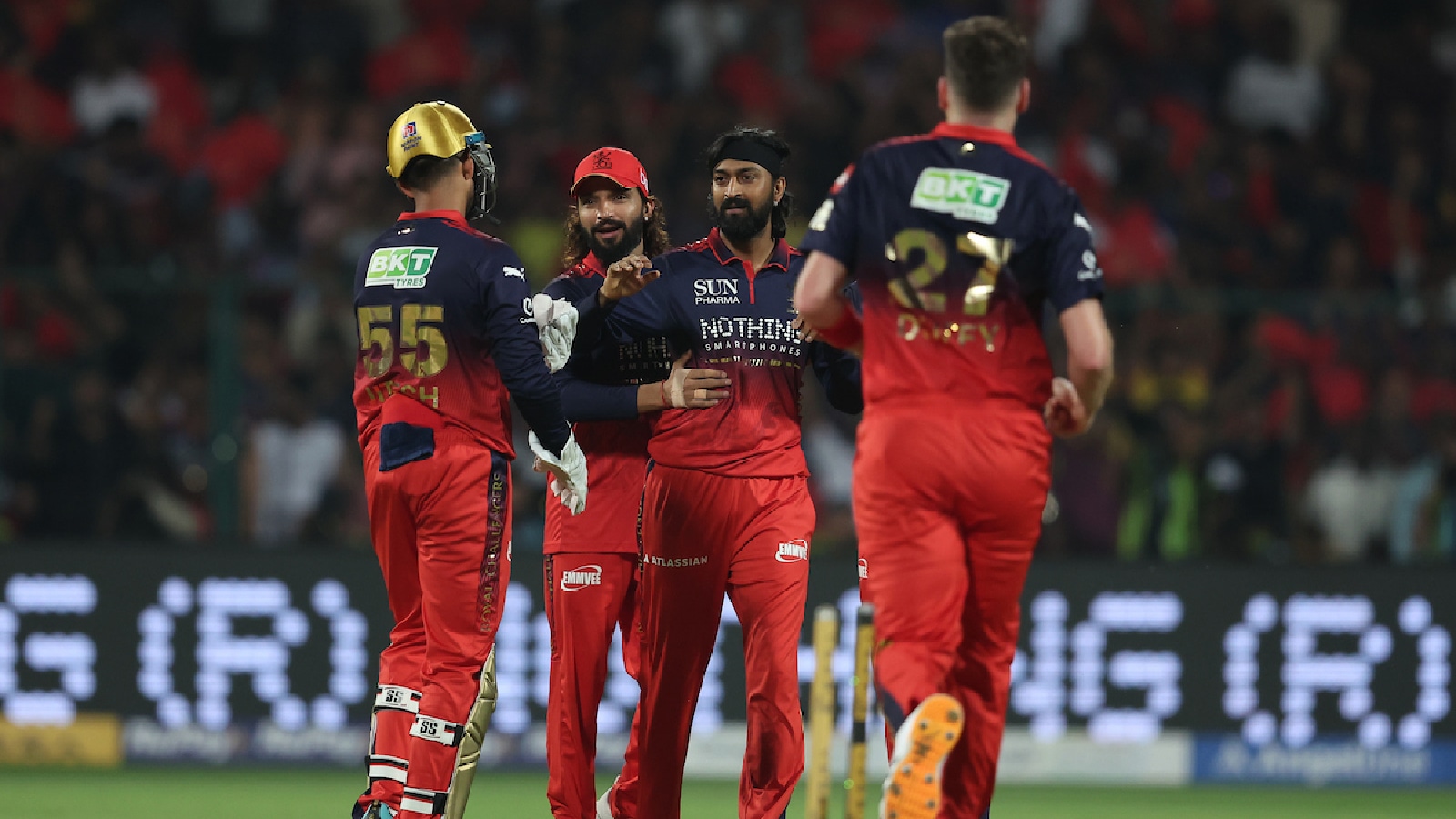
The recent fixture between Royal Challengers Bengaluru (RCB) and Chennai Super Kings (CSK) at the M Chinnaswamy Stadium serves as a definitive case study in the evolving competitive hierarchy of IPL 2026. RCB’s 43-run victory was not merely a result of individual brilliance but a manifestation of superior tactical alignment, contrastingly sharply with the systemic inefficiencies currently plaguing the five-time champions.
Offensive Efficiency: Establishing the 250-Run Benchmark
RCB’s batting blueprint prioritized high-velocity accumulation, resulting in a formidable 250 for 3. This performance was underpinned by a sophisticated utilization of home-ground conditions, maintaining a scoring rate above 12 runs per over throughout the innings. The tactical synergy between the top and middle order effectively neutralized CSK’s defensive schemes from the outset.
Devdutt Padikkal (50 off 29) provided the necessary operational stability, while his 56-run partnership with Phil Salt forced CSK into reactive field placements. This early pressure compromised Chennai’s strategic flexibility, creating a compounding deficit in their bowling efficiency. The acceleration phase was dominated by Tim David, whose 70 runs off 25 balls demonstrated elite situational awareness and the ability to exploit specific bowling matchups, rendering the opposition’s primary tactical plans obsolete.
The Patidar Catalyst and Death-Over Disparity
Rajat Patidar’s unbeaten 48 off 19 balls served as the finishing pivot, ensuring no deceleration during the death overs. The 58-run stand between Patidar and David in just 21 deliveries highlighted a significant disparity in power-hitting metrics between the two rosters. This late-innings efficiency has become a cornerstone of RCB’s 2026 identity.
Conversely, CSK’s inability to contain this surge suggests a personnel crisis in their bowling department. The failure to adapt to RCB’s high-risk/high-reward approach indicates a breakdown in both individual execution and collective strategic response. For a franchise historically anchored by tactical discipline, this lack of defensive cohesion is a significant outlier.
Institutional Crisis: The Super Kings’ Performance Bottleneck
Following consecutive losses to Rajasthan Royals and Punjab Kings, this third straight defeat underscores a departure from CSK’s historical performance standards. The failure of established assets has triggered a top-order collapse that fundamentally destabilizes their chase architecture. The departures of Sanju Samson and Ruturaj Gaikwad for 9 runs each forced the middle order into a reactive stance, stifling the required run rate from the opening powerplay.
The underwhelming performance of Ayush Mhatre (1 run) exacerbated this powerplay deficit. When the foundational pair fails to capitalize on fielding restrictions, the mathematical burden on the middle order becomes unsustainable. This recurring bottleneck is the primary driver of CSK’s current position at the bottom of the league table.
The Sarfaraz Resistance and Operational Disconnect
While Sarfaraz Khan offered a solitary point of resistance, the lack of support from Kartik Sharma (14) and Shivam Dube (18) confirmed a systemic failure in batting depth. In modern T20 cricket, a 250-run chase cannot be sustained by isolated performances; it requires synchronized partnerships. The lack of role clarity within the CSK batting unit suggests a growing disconnect between technical preparation and match execution.
Strategic Outlook: Competitive Implications for 2026
While the historical head-to-head record still favors CSK (22-13), the current momentum shift toward Bengaluru is undeniable. Following their 2025 championship, RCB has successfully aligned roster construction with home-ground characteristics. Their strategy of prioritizing high-strike-rate batters is yielding consistent dividends, reinforcing their status as the 2026 title favorites.
For CSK, the challenge is now remedial. The franchise must address the psychological impact of a winless start while recalibrating their bowling rotations. Without immediate tactical innovation, the legacy powerhouse faces the risk of a mathematically restricted path to the playoffs. This encounter has set a clear tone for the season: RCB is operating with modern T20 efficiency, while CSK is struggling to navigate a period of difficult transition.