Elite Precision and the Mechanics of the Photo Finish
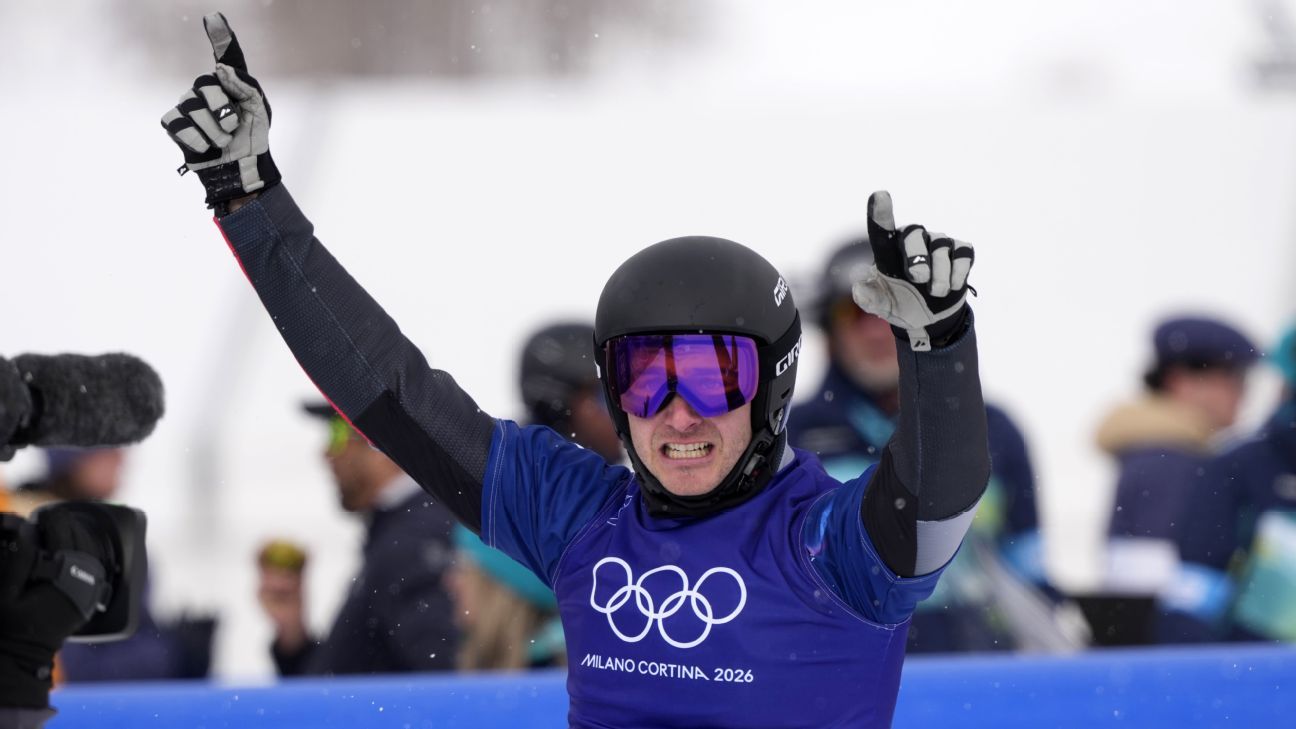
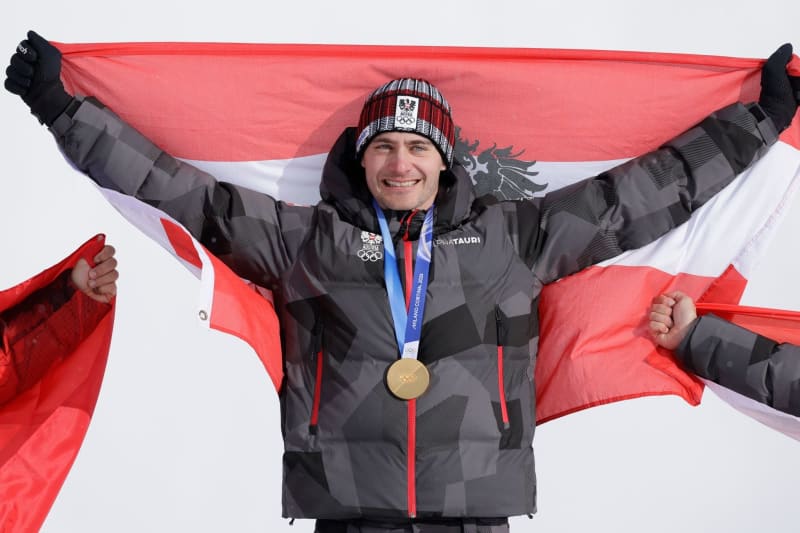
The men’s snowboard cross final at the Winter Olympics in Livigno concluded with a margin of victory that underscores the extreme convergence of physical conditioning and technical execution in winter sports. Alessandro Haemmerle of Austria successfully defended his Olympic title, surpassing Canada’s Eliot Grondin by a mere 0.03 seconds. This result mirrors their previous encounter in Beijing four years ago, where the gap was an even tighter 0.02 seconds, establishing a consistent pattern of high-stakes rivalry between the two premier athletes in the discipline.
The race logic on the Livigno course required riders to navigate a series of banks and rolling bumps designed to test both aerodynamic efficiency and reactive balance. Grondin, who entered the event as the reigning 2025 world champion and the 2024-25 Crystal Globe winner, maintained a leading position through the majority of the final heat. However, the closing meters saw Haemmerle execute a tactical board thrust, a specific maneuver used to advance the lead edge of the equipment across the finish plane, which ultimately secured the gold.
The System of Olympic Bracket Progression
The snowboard cross competition operates through a rigid elimination system where four riders compete simultaneously in each heat. Under the official Olympic protocol, only the first two racers from each bracket advance to the subsequent round, a format that prioritizes consistency and risk management over sheer top-end speed in early heats. This administrative structure ensures that the final four competitors represent a survivor set that has successfully managed multiple high-speed physical interactions and variable course conditions.
In the final heat, the depth of the field was evidenced by the proximity of all four riders approaching the finish line. While Haemmerle and Grondin battled for the top two spots, Austrian Jakob Dusek secured the bronze medal, narrowly edging out France’s Aidan Chollet. This collective performance by the Austrian contingent points toward a highly effective national development program, further supported by Benjamin Karl’s recent gold medal defense in the parallel giant slalom.
Statistical Risk and Market Expectations
Prior to the final, the betting markets reflected the volatile and unpredictable nature of snowboard cross, with Eliot Grondin listed as the favorite at +220. Analytical projections gave the favorite less than a 32% probability of victory, highlighting the inherent variables of a sport where physical contact and course deviations are frequent. Haemmerle’s victory at +500 odds suggests that while he was a top-tier contender, his success was viewed as less certain by market analysts, particularly following reports of his illness earlier in the week.
The presence of 44-year-old American Nick Baumgartner in the semifinals provides a data point for the longevity of elite athletes within the current training and recovery environment. Baumgartner, the 2022 mixed team Olympic champion, reached the penultimate stage before elimination, demonstrating that veteran experience can still compete effectively against younger cohorts despite the high-impact nature of the sport. His performance adds to the historical continuity of an event that has been part of the Olympic program since 2006.
Historical Continuity and Institutional Legacy
Haemmerle now joins an exclusive group of athletes who have achieved consecutive Olympic victories in this discipline, following in the footsteps of Seth Wescott of the United States and Pierre Vaultier of France. This achievement cements his role in the sport’s history, although the athlete has indicated that a third consecutive attempt is unlikely. This statement marks a potential transition phase for the Austrian snowboarding program as it looks toward future talent cycles to maintain its current dominance.
The significance of these results extends to the broader organizational landscape of international snowboarding. The repeated success of specific athletes and nations reinforces the importance of integrated coaching models and the technical mastery of equipment. As the sport continues to evolve, the razor-thin margins seen in Livigno serve as a benchmark for the level of precision required to reach the Olympic podium in the modern era.