
Non-State Actor Governance and Geopolitical Leverage: The Kittleson Incident
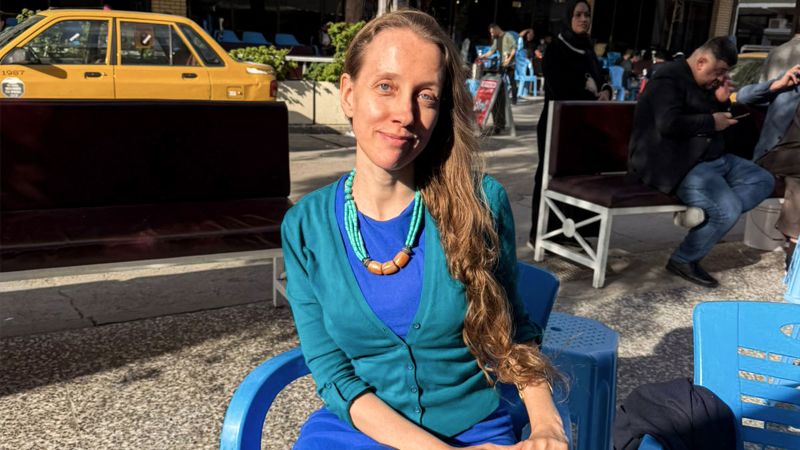
The release of American journalist Shelly Kittleson by Kataib Hezbollah (KH), a pro-Iran militia in Iraq, serves as a sharp illustration of asymmetrical power dynamics and strategic information control in contested zones. Rather than a simple act of ransom or humanitarian gesture, the conditional release—requiring Kittleson’s immediate departure from Iraq—is a calculated exercise in governance and geopolitical leverage by a non-state actor. This incident highlights how militias can effectively dictate foreign policy and manage international presence within their operational spheres, bypassing and diminishing the authority of the central government.
Kataib Hezbollah’s statement framing the release—citing a “state of war waged by the Zionist-American enemy against Islam”—redefines the operational environment for foreign nationals. By explicitly linking the journalist’s presence to a perceived enemy, KH elevates the stakes from a security matter to a strategic move within a regional proxy conflict. This framing establishes a clear precedent for future actions against individuals perceived as representing opposing interests, regardless of their professional status, effectively positioning journalists as strategic assets rather than objective observers.
The Erosion of State Sovereignty in Contested Zones
The circumstances surrounding Kittleson’s release underscore the fundamental erosion of Iraqi state sovereignty in managing internal security and international relations. The journalist was received by the Iraqi government, which processed her travel arrangements, yet the terms of her release were dictated entirely by Kataib Hezbollah. This arrangement illustrates a functional power dynamic where the state acts primarily as a facilitator for the militia’s decisions, rather than as the primary authority capable of enforcing security or protecting foreign nationals within its borders.
Kittleson’s reporting focus on “lawless corners of Iraq where militia rule outweighs government control” is central to understanding the operational reality. In these areas, non-state actors like Kataib Hezbollah function as de facto authorities. The militia’s ability to dictate terms for the release of a foreign national, bypassing traditional diplomatic channels and state authority, demonstrates a consolidation of power by armed groups that challenges the core functions of the central government. For international organizations and foreign governments, this situation necessitates a re-evaluation of risk models that rely on state-level security guarantees, which may prove meaningless against local power structures.
Information Warfare and Strategic Deterrence
The militia’s decision to release Kittleson on the condition of immediate departure functions as a powerful form of information warfare and strategic deterrence. By forcing the journalist to leave immediately, Kataib Hezbollah achieves its objective of removing external scrutiny from its operations without incurring the full international diplomatic pressure associated with prolonged detention or execution. The explicit warning in the militia’s statement—that “This initiative will not be repeated again in the coming days”—reinforces this strategic calculation, signaling a new, more aggressive policy toward foreign journalists.
This action creates an information blackout in areas controlled by the militia, allowing non-state actors to operate with greater impunity. The targeting of journalists who specialize in covering these specific “lawless corners” effectively limits the flow of independent information regarding the militia’s activities, human rights abuses, or operational maneuvers. This strategic information control is vital for non-state actors seeking to maintain local influence and avoid external accountability.
Vulnerability of Freelance Journalism and Risk Arbitrage
Kittleson’s profile as a freelance journalist operating on a “shoestring budget” and without formal assignments from editors highlights a critical structural vulnerability within the modern media industry. As traditional news organizations reduce their foreign bureaus and decrease investment in high-risk conflict reporting, a vacuum is created, often filled by independent journalists who accept significantly higher personal risk for lower financial compensation. This model, often described as risk arbitrage, allows non-state actors to target individuals with fewer institutional protections and resources for extraction or negotiation.
The US government’s prior warning to Kittleson regarding a plot by Kataib Hezbollah to kidnap or kill her underscores the severity of the threat environment and the limitations of protective measures available to independent journalists. The fact that the kidnapping occurred despite the warning highlights the challenge of providing effective security for individuals operating independently in high-risk zones. This incident serves as a stark reminder that in the absence of institutional support, non-state actors strategically exploit the operational limitations of the freelance model to achieve specific information control objectives.

Photo by KathyHelenPike on Pixabay.