G7 Summit Dynamics Under Strain Amid Diplomatic Friction
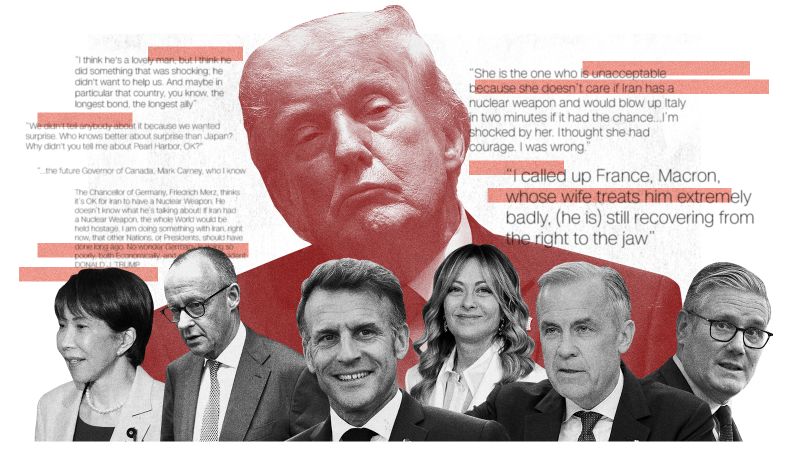
The Group of 7 summit in Évian-les-Bains, France, is characterized by strained relationships, notably due to President Donald Trump’s recent remarks challenging his counterparts. These interactions have amplified existing disputes and introduced new tensions, signaling a potential erosion of diplomatic capital and impacting cohesive allied strategies.
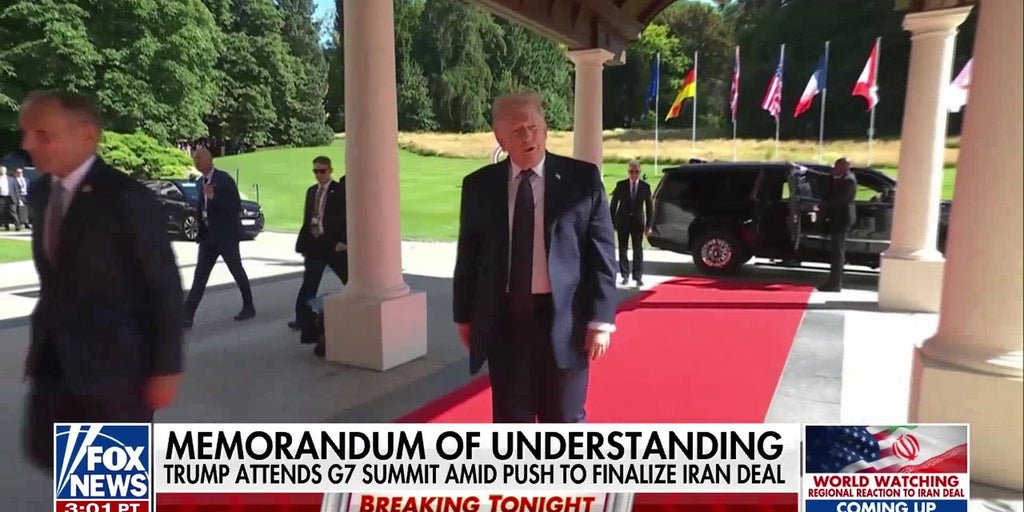
A significant point of contention is the G7 leaders’ reluctance to fully align with the U.S. and Israel’s posture regarding Iran. President Trump’s pre-summit announcement concerning an agreement with Tehran underscores this strategic divergence, highlighting a fundamental disagreement on regional security approaches and potentially placing the U.S. on a unilateral path.
This friction represents a continuation of recurrent patterns of challenging interactions between President Trump and G7 leadership. The consistent tension observed across multiple summits during his term indicates persistent operational challenges in maintaining a unified allied front on critical global issues.
While allied leaders have often absorbed or downplayed presidential rhetoric, there is a discernible shift towards more direct responses. This evolving dynamic suggests a growing collective fatigue with established diplomatic approaches and may precipitate more assertive countermeasures or a strategic recalibration of engagement.
The relationship with host nation President Emmanuel Macron exemplifies the broader complexities. Interactions have shifted between apparent mutual respect and pointed exchanges, illustrating the difficulty in fostering stable, trust-based partnerships within the G7 framework.
The strategic implications of these strained relationships extend beyond interpersonal dynamics, affecting the G7’s collective capacity to address multifaceted global challenges. A fractured diplomatic front diminishes the bloc’s leverage in international negotiations and its ability to project unified policy on crucial economic and security matters.
The summit’s agenda, particularly the focus on Iran, acutely highlights the immediate consequences of diplomatic fissures. Divergent approaches to regional stability and security threats can create strategic vacuums, potentially inviting opportunistic actions by adversaries and undermining collective deterrence efforts.
A perception of diminished G7 unity could embolden other global actors to challenge established international norms and institutions. This environment necessitates a re-evaluation of alliance structures and a potential shift towards more resilient, albeit perhaps less centralized, forms of international cooperation.
The core operational challenge for the G7 lies in reconciling differing national interests and leadership styles within a multilateral framework. The current climate tests foundational principles of consensus-building and mutual respect, potentially leading to a reassessment of the bloc’s operational effectiveness.
Capital markets are also sensitive to alliance stability. A perceived weakening of the G7 alliance can influence global investment flows and risk assessments. Investors and corporations often rely on the predictability of major international blocs, and uncertainty can lead to capital reallocation.
Individual member states’ performance leverage is impacted as well. Nations historically relying on the G7’s collective economic and political weight may need to develop alternative strategies to achieve foreign policy objectives.
Stakeholders, including businesses and citizens within G7 nations, face potential impacts from diminished global influence and increased geopolitical instability. A less cohesive G7 can translate into a less predictable international environment, affecting trade, security, and diplomatic engagement.
The media’s role in framing these interactions is critical, with reporting on rhetoric and responses shaping public perception and potentially influencing diplomatic outcomes. The summit’s narrative can either exacerbate or mitigate perceived divisions among allies.
The G7’s future relevance and efficacy hinge on its ability to navigate these internal tensions. The current trajectory suggests a critical juncture requiring adaptation of operational and diplomatic strategies to accommodate divergent leadership styles, or risk further fragmentation of influence.
Strategic decisions made during or after this summit will likely shape the future of multilateralism. The challenge is to preserve core tenets of allied cooperation while acknowledging and managing the complexities of diverse national interests and leadership approaches.
The historical role of G7 summits as a barometer for global economic and political health faces an unprecedented test. The current discord suggests that traditional alliance management mechanisms may require significant adaptation for efficacy in an evolving geopolitical landscape.
Incentives for leaders to confront or accommodate President Trump’s diplomatic style involve balancing immediate alliance cohesion against the long-term costs of perceived weakness or capitulation. This dynamic is central to understanding evolving G7 relationships.
The distribution of risk is broad, encompassing economic stability, security alliances, and the international order. A fractured G7 could lead to increased global volatility, impacting markets and national security interests.
Sector-wide implications are evident, particularly in areas demanding G7 coordination like trade policy, climate initiatives, and global health responses. Lack of consensus can stall progress and allow non-aligned actors to gain influence.
Forward-looking strategic evaluation must consider how the G7 can rebuild trust and reaffirm its collective purpose. This may involve new communication protocols, clearer diplomatic boundaries, and reaffirming shared values to navigate future challenges.
Underlying structural drivers of these tensions are multifaceted, including shifts in global power, evolving national interests, and the impact of domestic politics on foreign policy. Understanding these drivers is crucial for a comprehensive analysis of the G7’s predicament.
The G7’s institutional depth, built over decades of cooperation, is being tested. Its resilience depends on adapting to new leadership paradigms and reinforcing shared commitments that underpin collective action.
The cultural context of international diplomacy, emphasizing respect and mutual understanding, is also challenged. Current interactions suggest a departure from these norms, necessitating a re-examination of diplomatic engagement at the highest levels.
Systemic tensions revealed by these events highlight the fragility of multilateral alliances when confronted with significant leadership-driven disruptions. The G7’s future effectiveness hinges on managing these disruptions and reaffirming its foundational principles of cooperation and shared responsibility.