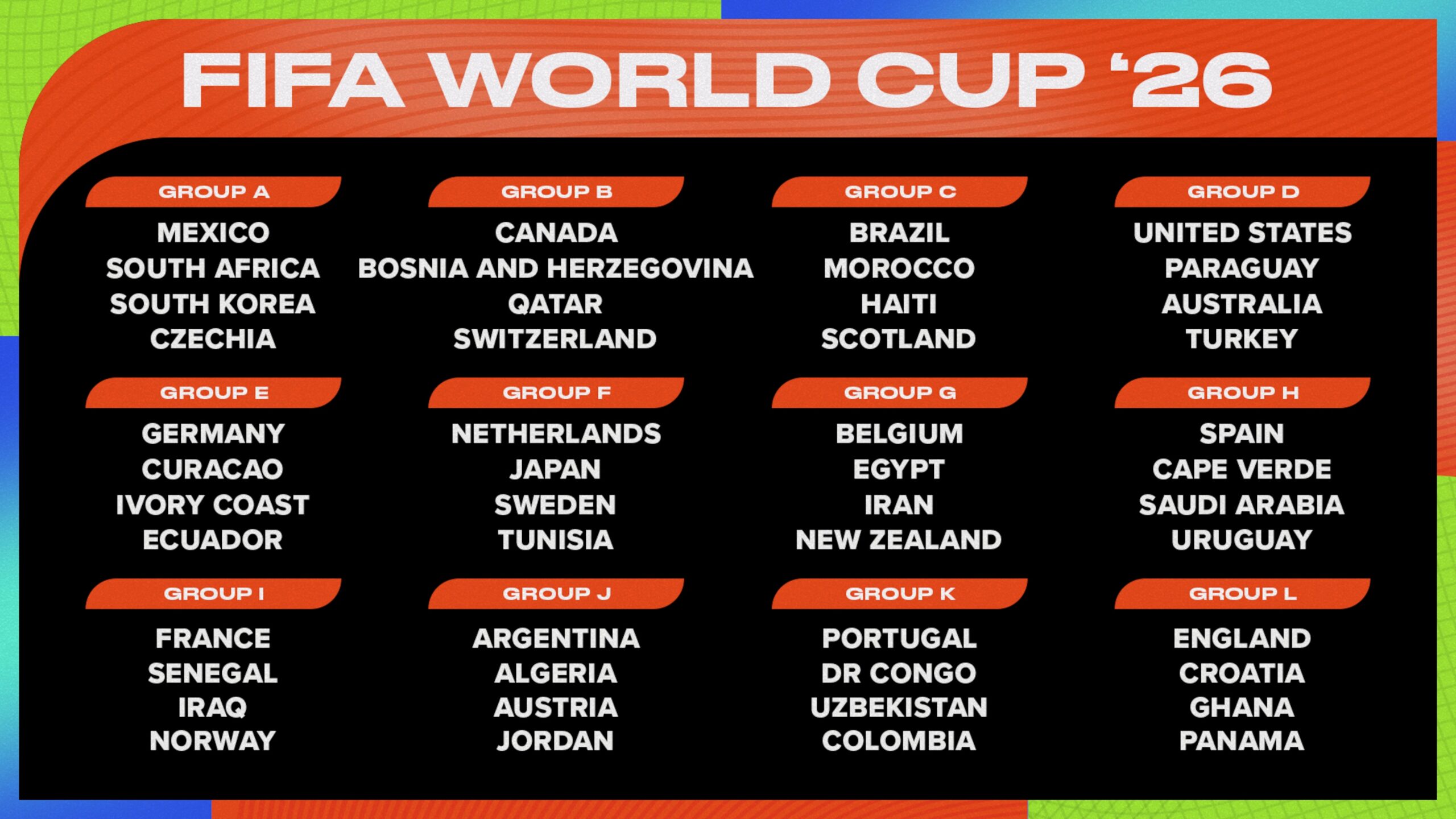
The 2026 FIFA World Cup represents a paradigm shift in international sports, transitioning from a centralized model to a decentralized, tri-national architecture across the United States, Canada, and Mexico. This expansion to 48 teams is not merely a quantitative increase in fixtures; it is a structural recalibration designed to integrate emerging footballing markets into the global elite. Early results suggest that the ‘narrowing gap’ between traditional powerhouses and developing federations is no longer a theoretical projection but a functional reality of the expanded format.
Competitive Convergence: Group B and C Dynamics
Statistical parity in the opening rounds has disrupted traditional win-loss hierarchies. In Group B, Qatar’s 94th-minute equalizer against Switzerland in Santa Clara serves as a definitive case study in competitive resilience. By securing their inaugural World Cup point, Qatar has effectively neutralized the tactical leverage of the European side, leaving Bosnia and Herzegovina, Canada, Qatar, and Switzerland in a dead heat. This equilibrium increases the premium on defensive metrics and goal differential as the primary determinants for knockout progression.
Group C exhibits a more stratified yet equally complex landscape. Scotland’s 1-0 victory over Haiti in Foxborough provides the Scottish side with a critical operational cushion, allowing for optimized player recovery and tactical rotation in subsequent matches. Meanwhile, the 1-1 stalemate between Brazil and Morocco in East Rutherford underscores the rising defensive sophistication of CAF representatives, who successfully stifled South American offensive transitions through disciplined low-block organization.
Strategic Efficiency: The Saudi Arabian Model
The performance of Saudi Arabia against Uruguay highlights the influence of managerial oversight under the expanded tournament’s high-pressure conditions. Under Giorgos Donis, Saudi Arabia demonstrated a commitment to set-piece optimization. Abdulelah Al-Amri’s decisive tap-in from a corner—his first on the world stage—revealed a systemic failure in Uruguayan marking. This result exemplifies a broader trend: lower-ranked nations are increasingly utilizing high-percentage scoring opportunities to neutralize the individual technical superiority of traditional giants.
Broadcasting and Digital Monetization Strategies
The 2026 tournament marks a milestone in omnichannel sports media. In the United States, the bifurcated rights agreement between Fox/FS1 (English) and Telemundo/Universo (Spanish) addresses the host nation’s complex linguistic demographics. The integration of direct-to-consumer streaming via Fox ONE and Peacock reflects a strategic shift toward digital-first consumption. Furthermore, the 12-hour daily broadcasting window (12 p.m. to 12 a.m. ET) is a calculated effort to maintain continuous global engagement, maximizing commercial value across diverse time zones from Europe to Asia.
Macro-Logistics of the Tri-Nation Footprint
Operating across 16 host cities introduces unprecedented logistical variables, ranging from the high-altitude conditions of Mexico to the coastal humidity of Vancouver and New Jersey. Iconic venues like SoFi Stadium and AT&T Stadium serve as commercial anchors, while MetLife Stadium’s selection for the final positions the New York metropolitan area as the tournament’s symbolic epicenter. This multi-nodal framework requires a sophisticated cross-border security and transport infrastructure to facilitate the movement of teams and spectators across a continental supply chain of services.
Institutional Implications for Global Football
The financial and reputational success of this 48-team experiment will dictate the future trajectory of international sports hosting. For FIFA and national federations, increased match inventory translates to higher media rights leverage and expanded ticket revenue. More importantly, the competitive viability shown by nations like Qatar and Morocco validates the institutional decision to broaden the field. As the tournament moves toward the knockout bracket, the focus shifts to the scalability of these logistical and tactical frameworks in the pursuit of the 2026 title.