
Group K Equilibrium: High-Stakes Dynamics in Guadalajara
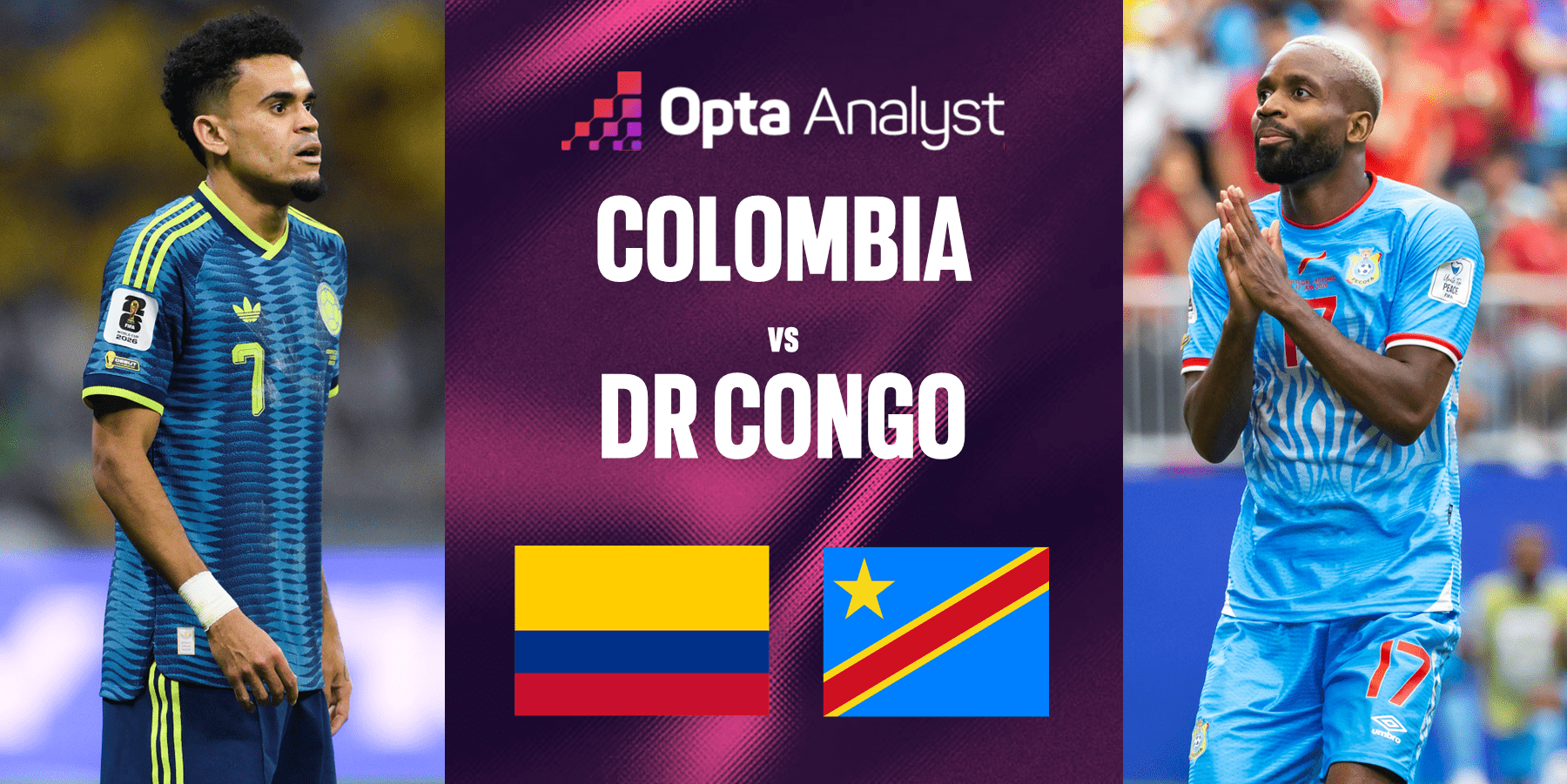
The upcoming Group K fixture between Colombia and the Democratic Republic of the Congo in Guadalajara represents a critical tactical pivot in the 2026 World Cup group stage. Following Colombia’s commanding 3-1 victory over Uzbekistan and DR Congo’s historic 1-1 draw against Portugal, both squads enter this match with highly defined operational agendas. For Colombia, victory guarantees an expedited path to the knockout phase, securing crucial leverage for manager Néstor Lorenzo ahead of their final group stage match against Portugal. Conversely, DR Congo enters with unprecedented psychological momentum after securing their first-ever World Cup point and goal—a milestone that eluded the nation during their inaugural 1974 campaign as Zaire.
Systemic Profiles: Possession Fluidity vs. Transitional Low Blocks
This match is the first-ever meeting between Colombia and DR Congo in men’s senior international football. This lack of historical head-to-head data elevates the importance of real-time tactical adjustments over historical patterns. Colombia’s contemporary group-stage record is statistically imposing, yielding six wins from their last seven matches. This run indicates highly developed tournament maturity, though historical anomalies like their 2018 opening defeat to Japan underscore the risks of early-game volatility. Tactically, Colombia relies on high-tempo positional rotations designed to stretch defensive lines.
To counter this, DR Congo’s tactical setup focuses on a highly disciplined, compact mid-to-low block. Their performance against Portugal demonstrated an ability to restrict half-spaces and execute rapid transitions. By limiting space between their defensive and midfield lines, the Leopards successfully frustrated a European giant, proving their defensive system can disrupt possession-oriented opponents.
Mathematical Projections and Logistical Anomalies
The Opta supercomputer models project a 58.0% win probability for Colombia, reflecting their squad depth and historical pedigree. However, predictive models struggle to quantify the psychological impact of DR Congo’s breakthrough point against Portugal. For tournament stakeholders, this match serves as a case study in competitive parity under the expanded tournament format, showing how developmental investments can disrupt traditional confederation hierarchies.
Adding to the tactical complexity, a severe storm disrupted Colombia’s final training session in Guadalajara. While elite squads are built to handle environmental disruptions, losing valuable tactical preparation time could affect their early passing rhythm and give a defensive, highly organized side like DR Congo an early advantage.
Group K Permutations
The outcome of this match will shape the competitive dynamics of Group K. A Colombian victory shifts the pressure to Portugal, potentially altering bracket pathways for the knockout rounds. If DR Congo frustrates Colombia’s attack and secures another result, the group remains wide open. This scenario would validate their defensive approach and make the final matchday a high-stakes, multi-team battle for qualification.

Photo by Nordseher on Pixabay.