High-Leverage Execution: Lakers’ Sudden-Death Tactical Analysis
The 2026 California Classic opening phase served as an immediate stress test for the Los Angeles Lakers’ revamped developmental pipeline. Their 93-91 victory over the Miami Heat, secured in a high-stakes sudden-death overtime, offered a critical diagnostic of the roster’s composure. Beyond the box score, the game highlighted the franchise’s shift toward prioritizing players capable of maintaining structural discipline under unique regulatory constraints. This sudden-death format, often utilized as a laboratory for league-wide engagement, demands immediate high-percentage execution, validating the Lakers’ focus on situational basketball readiness.
Institutional Heritage and the Recruitment of Cameron Carr
The professional introduction of first-round selection Cameron Carr carries significant institutional weight. By selecting Carr—the son of former NBA guard Chris Carr—and assigned him jersey No. 43, the Lakers are strategically leveraging legacy narratives to anchor their newest asset. Historically, No. 43 has seen limited usage in the franchise’s Los Angeles history, last worn by Brian Cook in 2007. This choice, framed as a tribute to his father, serves a dual purpose: it humanizes the prospect while aligning him with high-achieving professional archetypes like Pascal Siakam and Jack Sikma.
Analytically, the Lakers are utilizing Carr’s internal motivation to exceed his father’s professional benchmarks as a performance lever. This father-son dynamic provides the front office with a psychological hedge; Carr enters the league with a pre-existing familiarity with professional rigors, theoretically reducing the volatility typically associated with high-profile rookies. His performance in the California Classic suggests that this maturity translates into efficient, high-IQ decision-making in transition and half-court sets.
Developmental Disparity: Warriors Gold vs. San Antonio Spurs
The Golden State Warriors Gold squad demonstrated superior roster depth in a 98-69 dismantling of the San Antonio Spurs. This 29-point margin highlights a clear disparity in developmental readiness. Golden State’s scouting efficiency was evidenced by the synergistic play of Yaxel Lendeborg (11 points, 8 rebounds) and Lachlan Olbrich (13 points, 4 assists). Their ability to execute complex offensive rotations early in the summer circuit suggests a highly effective integration process within the Warriors’ developmental system.
Conversely, the San Antonio Spurs’ performance, led by Emanuel Miller’s 12 points, revealed a roster in a diagnostic phase. The inability to contain the Warriors’ interior dominance serves as a data point for San Antonio’s coaching staff to refine defensive rotations before the Las Vegas circuit. For the Spurs, the California Classic is less about immediate victory and more about identifying which fringe prospects can adapt to the physicality and accelerated pace of professional basketball.
Comparative Results and Market Implications
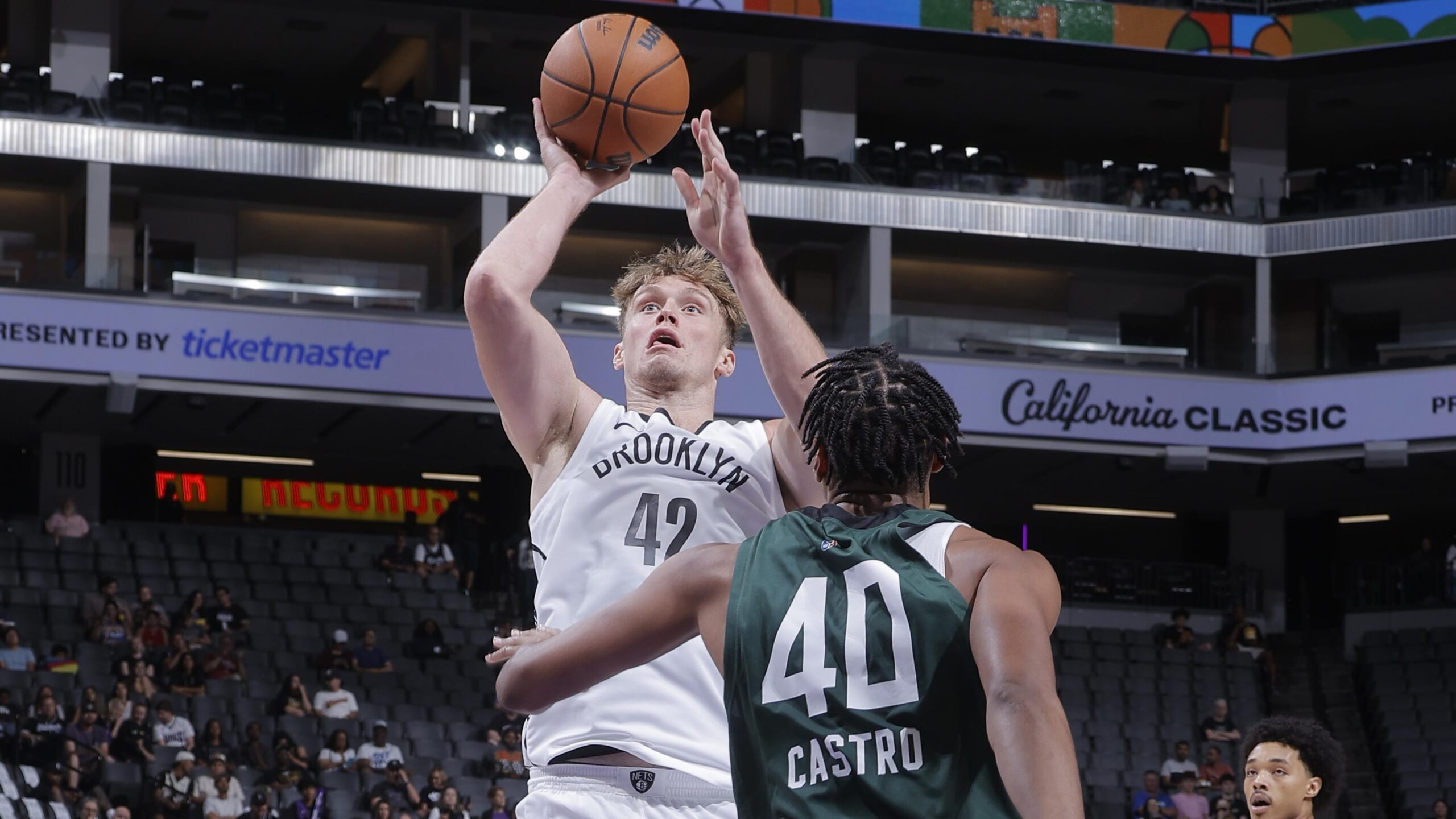
Elsewhere in the Sunday slate, the Brooklyn Nets established defensive dominance in an 89-69 victory over the Milwaukee Bucks, while the Sacramento Kings secured a 91-85 win over the Warriors Blue. These results indicate a trend where organizations with established G-League synergies are outperforming those in transitional phases. For the athletes, these games function as a marketplace; efficient statistical outputs from unheralded players like Lendeborg significantly increase their valuation for two-way contracts or international recruitment. As the tournament shifts toward Las Vegas, the 2026 California Classic has successfully established the primary narrative: a league-wide emphasis on composure, legacy, and tactical versatility.