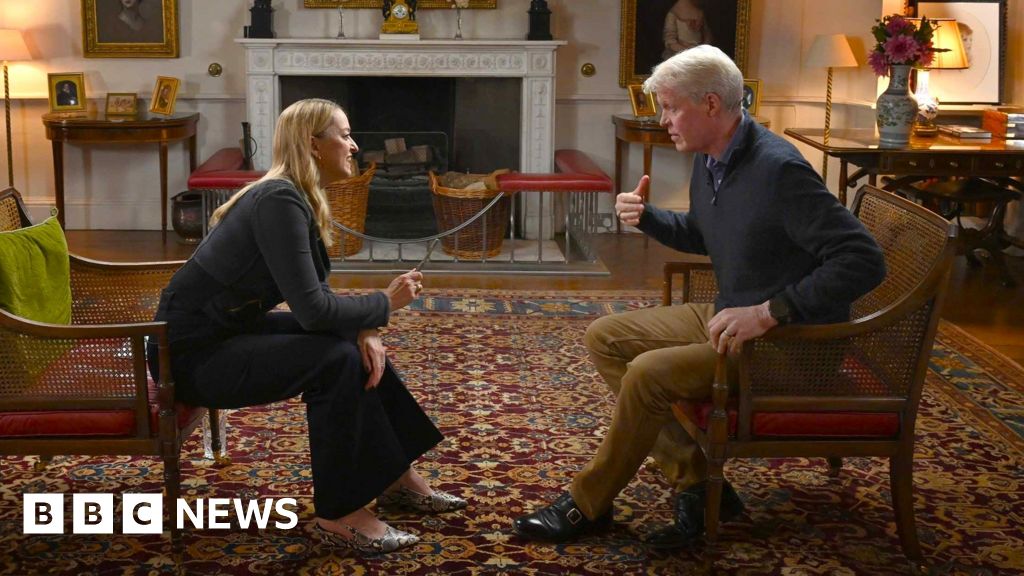
The public confrontation between Earl Charles Spencer and Buckingham Palace marks a significant breach in the royal household’s communications orthodoxy. Triggered by disclosures in Spencer’s memoir, Swan Song: Diana, My Sister, the exchange moves beyond traditional biographical friction into a direct evidentiary contest between primary eyewitness testimony and institutional historiography. Historically anchored to an operational doctrine of non-engagement, the palace’s decision to issue an explicit counter-statement underscores the reputational threat posed to King Charles III.
The Cortège Dispute and the Epistemological Rebuttal
At the center of the dispute is a contentious administrative negotiation from September 1997 regarding the inclusion of young Princes William and Harry in their mother’s funeral cortège. Spencer alleges that the then-Prince of Wales asserted that Diana would be forgotten soon enough. The disclosure directly interrogates the Sovereign’s historical domestic posture during a formative crisis for the modern monarchy.
Departing from institutional silence, Buckingham Palace deployed a targeted psychological counter-framing rather than a categorical documentary denial. The palace stated that the King remained mindful of how fraternal grief can cloud reason, alter judgement, and colour memory decades after a catastrophic bereavement. Strategically, this response seeks to neutralize Spencer’s credibility by classifying his assertion not as historical perjury, but as a cognitive distortion born of long-term trauma.
Broadcast Escalation and Media Disintermediation
Rather than absorbing the palace’s framing, Spencer escalated the discourse during an appearance on ABC News’ Good Morning America, directly accusing the monarch of gaslighting. By utilizing major American and British broadcast networks, Spencer effectively bypassed the palace’s domestic media arrangements, neutralizing the institution’s ability to manage the narrative through conventional royal rota channels.
This media strategy was further consolidated during an interview with the BBC’s Laura Kuenssberg. Spencer framed the memoir as a non-negotiable historical duty to correct the public record before it permanently calcifies. In detailing his own recollection of August 31, 1997—including the initial, misleading briefings received in South Africa that minimized the Parisian car crash—Spencer provided granular, procedural context designed to reinforce the authority of his personal archive over official omissions.
Historiographical Fragility and Reputational Exposure
The controversy exposes the structural vulnerabilities of the monarchy’s post-1997 public rehabilitation. Diana’s 15-year marriage to Charles, their 1996 divorce, and her death at age 36 remain foundational fault lines in the contemporary royal profile. Historical correspondence, such as Prince Philip’s documented ultimatum urging Charles to either formalize his relationship with Lady Diana Spencer or sever ties, reinforces the pattern of institutional coercion framing the era.
Spencer expanded the temporal scope of the dispute by connecting historical press dynamics to modern controversies, explicitly referencing the contemporary media treatment of the Duke and Duchess of Sussex. This strategic pivot links historical operational practices with ongoing institutional friction, preventing the palace from isolating Diana’s death as a closed historical chapter.
Strategic Dilemmas for Crown Communications
The palace’s defensive intervention introduces profound operational risks. Because the 1997 funeral arrangements were deliberated within private administrative meetings without published verbatim transcripts, neither the crown nor Spencer can present definitive contemporaneous proof. Consequently, the dispute settles into an unmediated contest of personal character and institutional authority.
By directly challenging Spencer’s account, Buckingham Palace magnified the commercial and editorial reach of Swan Song, inadvertently validating the memoir’s disruptive capacity. For an institution that relies on perceived detachment and continuity, sustaining a public dialectic with an intimate familial witness fractures the sovereign’s administrative distance, proving that control over the modern royal historical record remains highly contested.