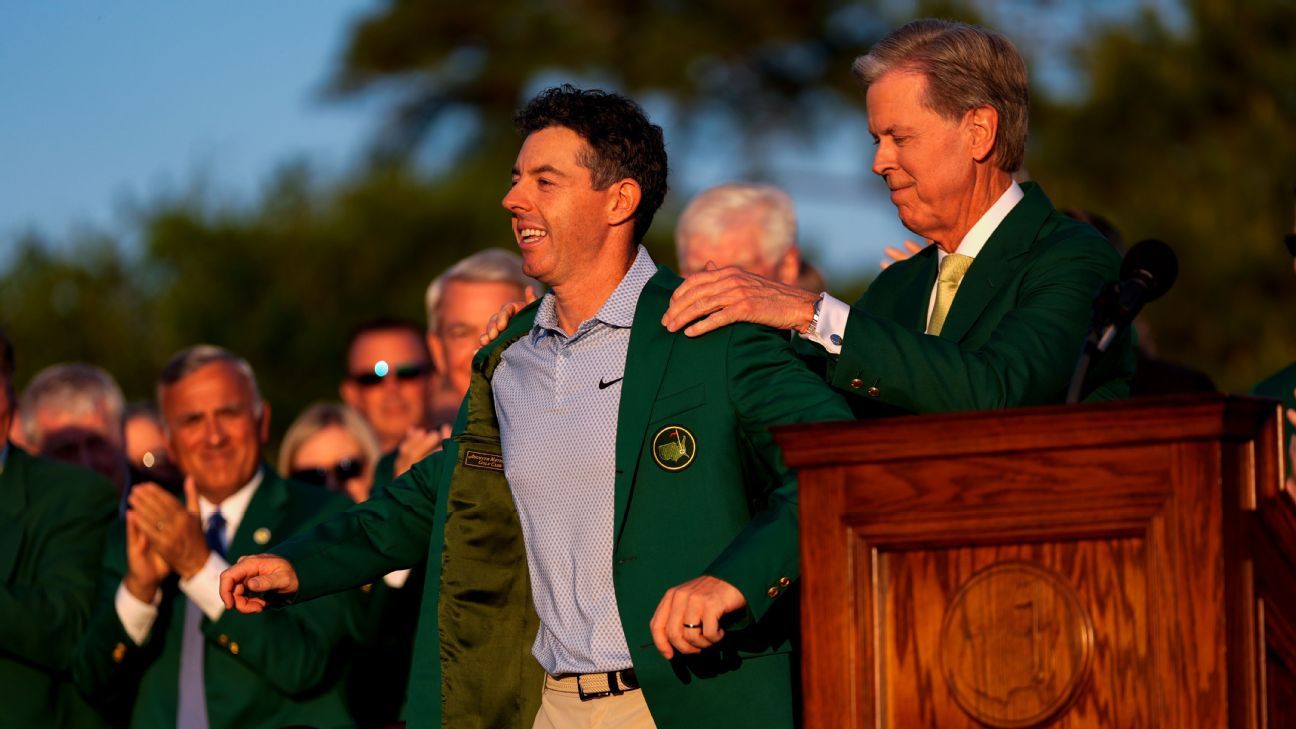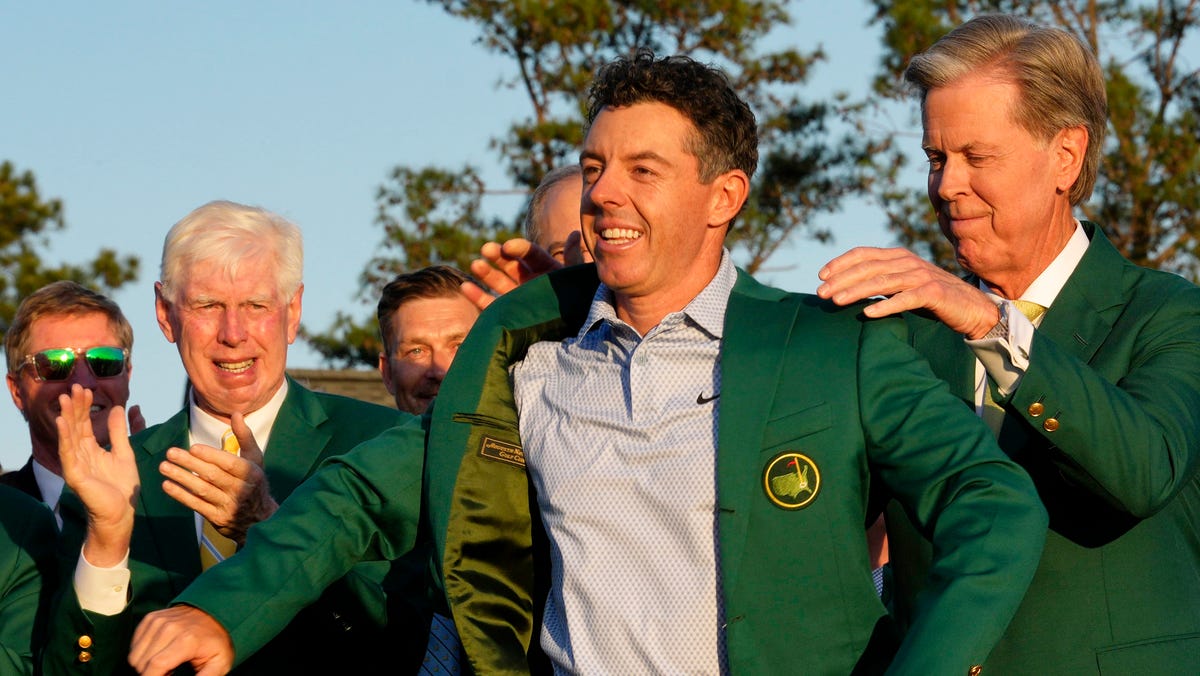
The 90th Masters Tournament marked a profound recalibration of professional golf’s elite hierarchy, as Rory McIlroy not only defended his title but also etched his name into a rarefied stratum of sporting achievement. Concluding at 12-under 276, the Northern Irishman became the first player in 24 years to secure consecutive Green Jackets, a feat previously accomplished solely by Jack Nicklaus, Nick Faldo, and Tiger Woods. This triumph, McIlroy’s sixth major championship, transcends mere numerical accumulation; it signifies the definitive resolution of long-standing conjectures regarding his capacity for sustained dominance under the unique pressures of Augusta National.
Performance Trajectory: Volatility and Strategic Resilience
McIlroy’s path to this historic victory was characterized by a performance profile that initially suggested vulnerability before culminating in a display of profound mental fortitude. After establishing a record-setting six-stroke lead during Saturday’s third round, a 1-over 73 threatened to deconstruct his campaign, injecting a palpable tension into the final day’s dynamics and inviting a host of challengers. This operational setback, however, catalyzed a critical strategic recalibration. Despite briefly ceding his advantage on Sunday morning, McIlroy demonstrated an enhanced capacity for mid-round adjustments, particularly on the second nine, a historically challenging phase where previous major aspirations have faltered.
A final-round 71 proved sufficient for a one-stroke margin of victory, even with a strategic bogey on the 18th hole. McIlroy’s post-round reflections highlighted a crucial psychological shift: a conscious decoupling of the Masters’ inherent difficulty from the broader narrative of the career Grand Slam. This reframed perspective, focusing on the immediate operational demands of the course, underpinned his final-day strategy. Furthermore, his achievement of maintaining a lead or co-lead after every round—a rarity accomplished by only four golfers in the last four decades—underscores a level of consistent, albeit volatile, dominance that aligns with the statistically significant eras defined by Nicklaus and Woods.
European Supremacy and Historical Benchmarking
With six major titles, McIlroy now draws level with Nick Faldo as the second-most decorated European golfer in major championship history. This milestone intensifies the debate concerning the greatest European player, as McIlroy’s career Grand Slam status offers a distinct competitive differentiator over Faldo’s impressive resume. The next logical benchmark for McIlroy’s career trajectory is the pursuit of Harry Vardon’s record of seven major wins. Surpassing the five-major threshold elevates him into a tier alongside legends like Lee Trevino and Phil Mickelson, while placing him within tangible reach of Arnold Palmer’s seven major titles.
Beyond statistics, McIlroy’s impact is profoundly stylistic, drawing parallels to Seve Ballesteros. His audacious execution of high-risk recovery shots, notably the visualized play from the forest on the final day, reinforces a brand of golf that prioritizes creative problem-solving and an almost improvisational brilliance over conservative course management. This characteristic ‘addictive’ style generates significant global appeal and media value.
Competitive Dynamics and Field Analysis
The 2026 Masters also served as a critical diagnostic of the elite field’s current state. Scottie Scheffler’s second-place finish reaffirmed his consistent major championship threat, yet his inability to capitalize on McIlroy’s intermittent fluctuations suggests a persistent gap in late-round execution. Justin Rose’s tied-third finish extends a pattern of high-level Augusta performances without ultimately securing the Green Jacket, highlighting the institutional challenge this venue presents to veteran contenders.
Conversely, the tournament exposed significant vulnerabilities among other high-profile competitors. Bryson DeChambeau’s unexpected failure to make the cut, despite prior expectations, and Sergio Garcia’s struggles contrasted sharply with Patrick Reed’s surprisingly strong start and high finish. These outcomes collectively signal a potential shifting of the guard, where established champions are encountering increasing difficulty in matching the scoring requirements and psychological fortitude demanded by the modern Augusta layout.
Operational Implications and Long-Term Strategic Outlook
McIlroy’s consecutive Masters victories provide a vital stabilizing force for professional golf’s commercial and competitive narratives. As the first back-to-back champion in over two decades, he offers a compelling focal point for media and sponsorship interests, fulfilling the sport’s ongoing search for a definitive successor to the era of Tiger Woods. The dramatic, recovery-shot-laden nature of his win delivers an inherently captivating product for global galleries and television audiences, ensuring McIlroy remains a central figure in golf’s strategic landscape for the foreseeable future.
For Augusta National, the 2026 tournament reinforces its reputation as a venue that rigorously tests both technical precision and psychological resilience. The rapid evaporation of a six-stroke lead serves as an enduring cautionary tale for future competitors regarding the inherent volatility of the Masters’ iconic second-nine layout. Looking ahead, McIlroy’s focus will likely pivot toward Gary Player’s non-U.S. record of nine majors. This ambition, once seemingly distant, now appears distinctly attainable given his current performance trajectory and the successful defense of his most elusive major title. By effectively decoupling personal milestones from the operational necessities of the course, McIlroy appears to have discovered a sustainable competitive framework that could redefine the upper limits of European golf achievement.
Stakeholder Impact and Concluding Assessment
The commercial ramifications of a dual-defending Masters champion are substantial for the PGA Tour and its global partners. McIlroy’s status as a reigning champion at golf’s most prestigious event generates unparalleled marketing leverage. Broadcasters and tournament organizers benefit immensely from the ‘thrilling style’ McIlroy brings to the course, driving engagement across both digital and traditional platforms. The imagery of him orchestrating galleries for a recovery shot from the trees encapsulates the high-value content that defines the modern sports media landscape. Furthermore, the underperformance of other ‘big names’ served to concentrate the narrative on McIlroy’s singular dominance, a critical factor for maintaining the institutional prestige of the Masters as it approaches its centennial milestones.
The 2026 Masters will be remembered not only for crowning a champion but for setting a new standard for sustained greatness in the modern era. Rory McIlroy’s journey from a decade-long major drought to consecutive Green Jackets represents a definitive and transformative chapter in the history of the sport, underscoring his mastery of both self and course under extreme pressure.