
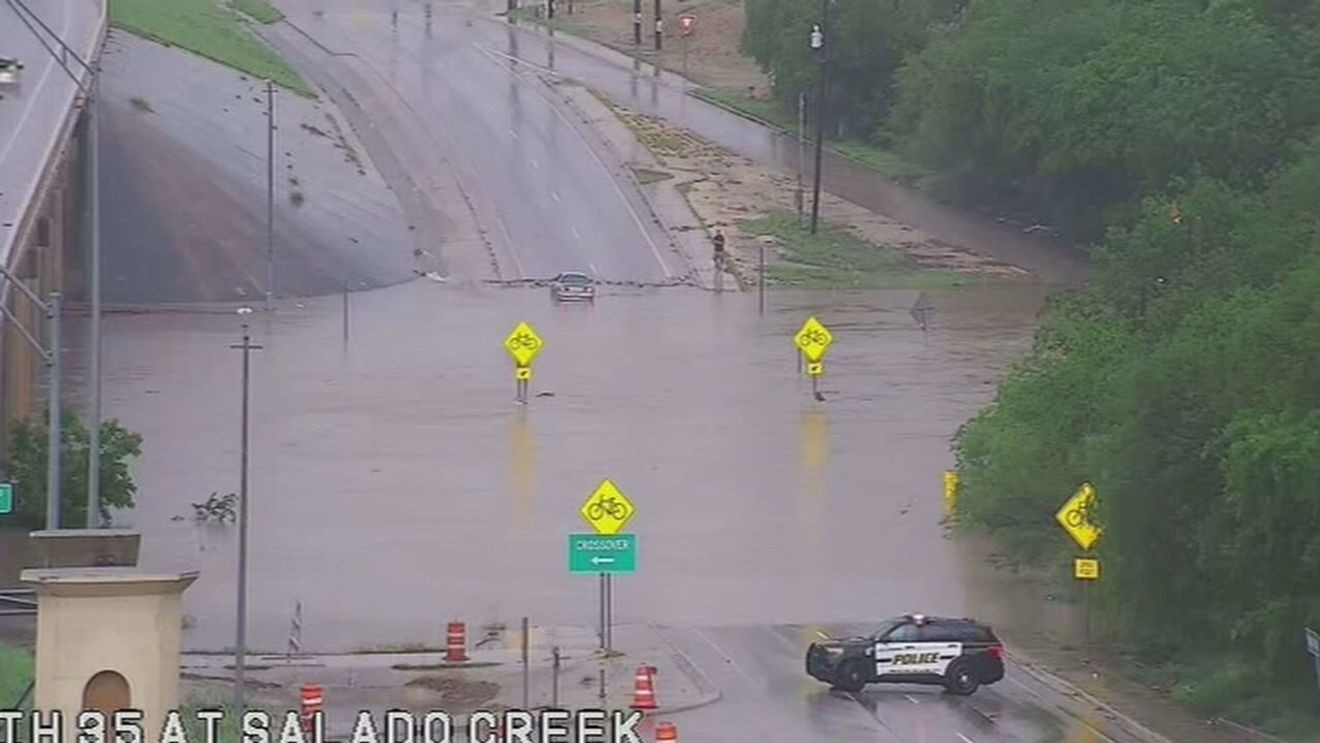
The flash flood event of May 1, 2026, has transitioned from a routine meteorological disturbance to a critical case study in infrastructure limitations. Concentrated precipitation—peaking at 6 inches in isolated sectors—exhausted the capacity of the San Antonio metropolitan drainage network, revealing systemic vulnerabilities in regional transport arteries and civil engineering standards.
Hydrological Stress and Engineering Disparity
The saturation of northeast San Antonio, particularly Woodlake Park, highlights an increasing disparity between legacy engineering parameters and contemporary environmental volatility. The localized failure of drainage systems suggests that historical runoff models no longer accommodate the intensity of modern hydrological surges. This mismatch forces a shift from routine maintenance to high-cost crisis management, placing an immediate fiscal burden on Bexar County municipal budgets.
Logistical Paralysis of Transit Arteries
The closure of critical junctions, such as FM 1976 at Gibbs Sprawl Road and the intersection of Knuepper Road and FM 78, effectively decapitated the northeastern logistical corridor. These are not merely transit delays but structural disruptions to the regional supply chain and labor mobility. In Schertz, the isolation of hubs like John Paul Catholic High School via FM 482 closures underscores how topographical reliance on low-water crossings creates predictable points of failure. The decision to seal all Cibolo Creek crossings represents a necessary but reactive strategic move to mitigate vehicle-related casualties, the primary risk factor in flash flood scenarios.
Economic Volatility and Institutional Resilience
Beyond physical transit, power grid instability introduced a secondary layer of economic friction. Saturated ground and high winds compromised overhead utility infrastructure, leading to measurable productivity losses for industrial and residential sectors. While institutional risk communication—coordinated via KSAT 12 and Bexar County officials—leveraged the ‘Turn Around, Don’t Drown’ nudge to manage public behavior, the event confirms that risk messaging cannot substitute for physical resilience.
Strategic Assessment for Regional Hardening
The May 1 data indicates that future capital improvements must prioritize the elevation of FM system crossings and the expansion of pluvial capacity in the northeast corridor. Until structural interventions replace reactive closures, San Antonio’s regional economic continuity remains tethered to the agility of its emergency response frameworks rather than the robustness of its physical assets.