Atlas V Achieves Payload Milestone in Satellite Deployment Race
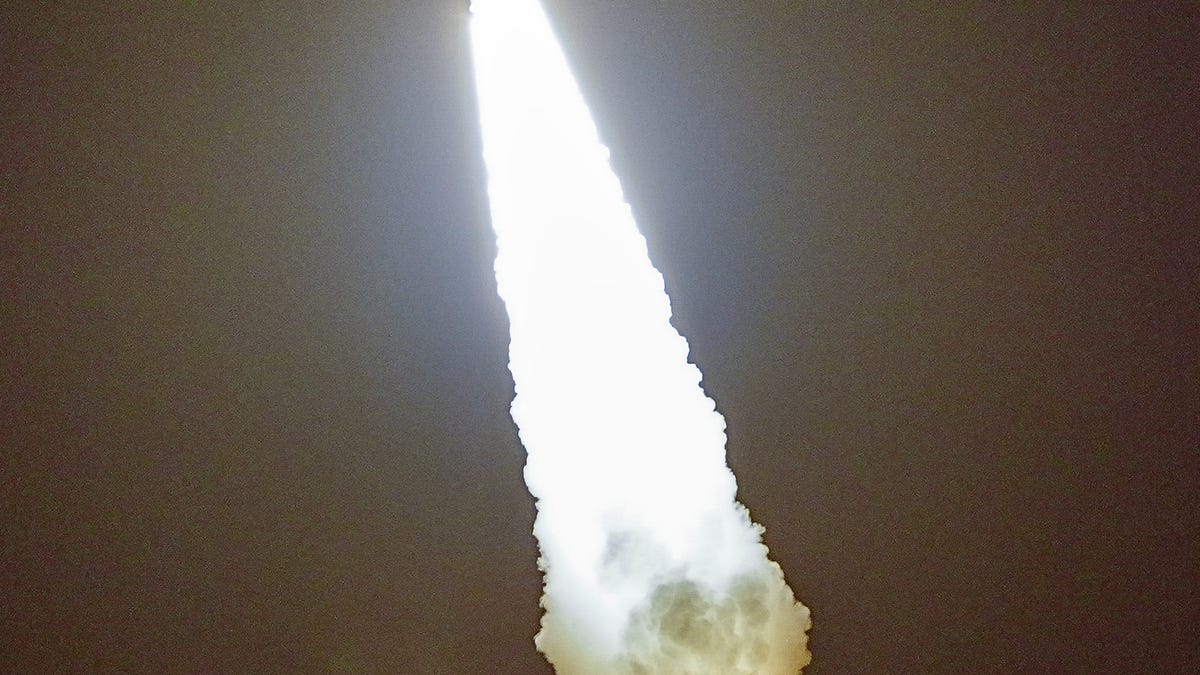
United Launch Alliance’s (ULA) Atlas V rocket successfully launched 29 of Amazon’s Project Kuiper internet satellites on Monday night, April 27, 2026. The mission also saw the rocket tie its record for the heaviest payload ever flown. Liftoff from Cape Canaveral Space Force Station at 8:53 p.m. EDT demonstrated the Atlas V’s continued capability in delivering substantial payloads to low Earth orbit (LEO).
This deployment is a critical step for Amazon’s ambitious Project Kuiper, a constellation intended to comprise over 3,200 satellites. Designated Amazon Leo 6, this was ULA’s sixth launch for the initiative, underscoring a strategic partnership leveraging ULA’s established infrastructure for rapid constellation build-out.
The Atlas V’s ability to carry such a heavy payload to LEO is a testament to its engineering and ULA’s operational expertise. The mission successfully managed ten separate satellite deployments over a 30-minute period post-liftoff, directly addressing the growing demand for rapid constellation deployment in the burgeoning satellite internet market.
Intensified Competition Drives Constellation Build-Outs
The Amazon Leo 6 mission highlights the escalating competition in satellite internet, with Project Kuiper directly rivaling SpaceX’s Starlink megaconstellation. To date, Project Kuiper has utilized ULA’s Atlas V for six launches, SpaceX’s Falcon 9 for three, and Arianespace’s Ariane 6 for one, demonstrating a strategic mix of launch providers driven by capacity, cadence, and cost.
ULA’s consistent role in these early deployments signifies a strong performance record and a foundational contribution to Amazon’s orbital infrastructure. The sheer scale of Project Kuiper, requiring over 80 launches for completion, indicates Amazon’s long-term commitment to establishing a significant global internet service presence, necessitating sustained launch capacity and reliability from its partners.
Public Engagement and Operational Context of Payload Records
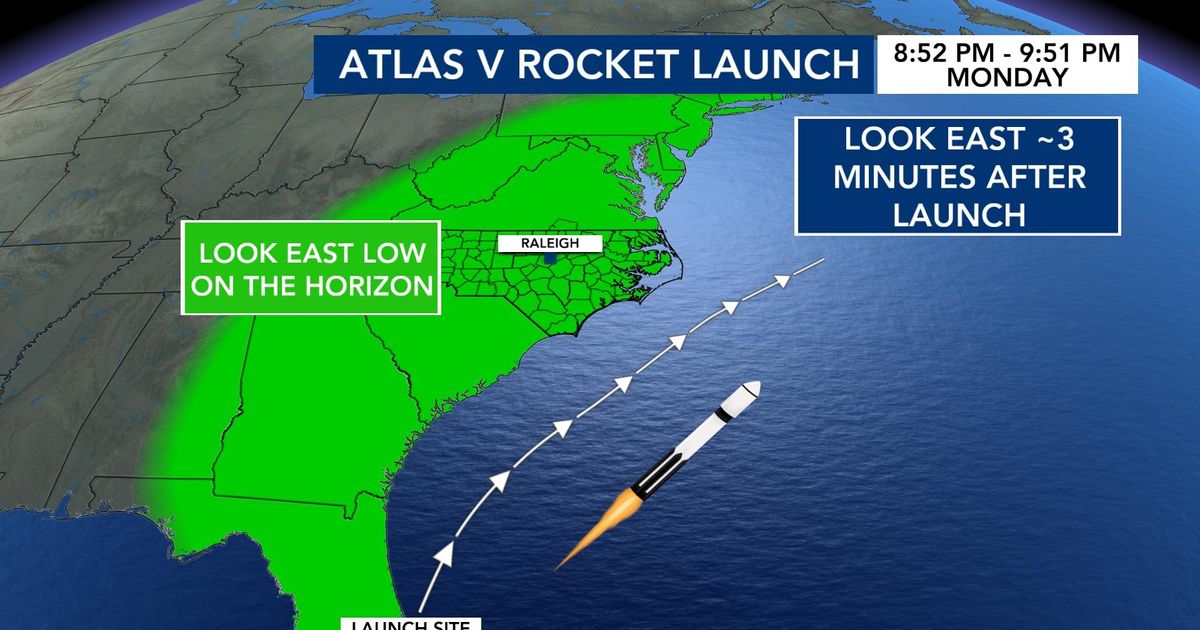
Beyond its operational significance, the Atlas V launch generated considerable public interest due to its wide geographical visibility. The mission was anticipated to be visible across much of the East Coast. The launch timing, just before 9 p.m. ET, coupled with the low angle of the setting sun, was expected to create a striking visual spectacle, with sunlight illuminating the rocket’s vapor trail to produce a distinctive ‘jellyfish’ appearance.
The Atlas V’s achievement of tying its heaviest payload record carries strategic implications for ULA and its clients. This capability directly impacts the economic viability of large-scale constellation deployments, potentially reducing overall mission costs by requiring fewer launches. Maximizing payload per launch is crucial for Amazon to accelerate Project Kuiper’s deployment timeline and achieve a competitive advantage.
This record-tying performance provides ULA with valuable data and operational experience. As the space industry evolves towards larger constellations and more ambitious orbital architectures, the demand for heavy-lift capabilities like the Atlas V’s is expected to remain robust.
Launch Cadence Challenges Highlighted by Concurrent Scrub
Adding context to the Atlas V launch was the concurrent scrub of a SpaceX Falcon Heavy rocket attempt scheduled for the same day, April 27, 2026. While the Falcon Heavy mission was intended to deploy a Viasat broadband satellite, its postponement underscored the inherent complexities and potential delays in launch operations.
This juxtaposition of a scrubbed launch with a successful one emphasizes the dynamic nature of the space launch industry. It highlights the importance of having multiple reliable launch providers and vehicles to ensure critical satellite deployment schedules can be maintained, even amidst unforeseen issues.
Broader Market Dynamics and the Future of Internet Constellations
The ongoing build-out of satellite internet constellations like Project Kuiper and Starlink is reshaping the global telecommunications landscape, aiming to provide high-speed internet access to underserved regions and bridge the digital divide. The success of these constellations hinges on the ability to deploy thousands of satellites efficiently and cost-effectively, pressuring launch providers to offer reliable, high-cadence, and high-capacity services.
ULA’s Atlas V, with its proven track record and heavy-lift capability, is well-positioned to capitalize on this demand. However, the evolving market necessitates continuous adaptation, with companies investing in next-generation launch vehicles to meet future requirements and maintain a competitive edge. The collaboration between commercial entities and aerospace companies exemplifies a broader trend of public-private partnerships driving advancements in space technology.
Strategic Importance and Operational Considerations
The strategic imperative to provide ubiquitous, high-speed internet access drives constellation deployments, addressing critical global needs in rural and remote areas. The success of these constellations has the potential to significantly impact global economics, education, and communication by bringing more of the world online.
The complex process of deploying 29 satellites from a single Atlas V launch involves meticulous planning and execution. Each deployment must be precisely timed and executed to ensure satellites are released into their correct orbits without interference. This operational precision is a hallmark of experienced providers like ULA, demonstrating a high degree of control and expertise essential for multi-satellite deployments.
Maximizing payload capacity on each launch offers significant economic leverage for satellite operators. By consolidating multiple satellites onto a single, heavy-lift rocket, companies can reduce the per-satellite launch cost, lowering the overall expense of building and maintaining a large constellation. ULA’s Atlas V directly contributes to this economic efficiency for Amazon, potentially accelerating its deployment schedule and market objectives.