The 2025-26 NBA regular season has transitioned into a postseason defined by the divergence between regular-season efficiency and high-leverage resilience. The Eastern Conference, traditionally characterized by established hierarchies, is currently navigating a period of profound volatility as the 60-win Detroit Pistons struggle to maintain strategic equilibrium against an opportunistic Orlando Magic squad.
The Detroit-Orlando Dissonance: Examining Top-Seed Vulnerability
Detroit’s 2-1 deficit against the eighth-seeded Orlando Magic highlights a critical failure in translating regular-season volume into postseason leverage. The performance regression of Jalen Duren, following an All-Star campaign, underscores the operational risks of relying on young cores during tactical adjustments. This struggle is compounded by psychological variables; the public interpersonal friction involving Duren and Orlando’s Wendell Carter Jr. has manifested as a tangible defensive liability for the Pistons.
Orlando’s advantage stems from the Play-In Tournament’s role as a high-pressure conditioning mechanism. By surviving elimination play, the Magic entered the series with a level of competitive urgency that has effectively neutralized Detroit’s home-court advantage, raising broader questions about the psychological ROI of elite seeding versus momentum-based entry.
Boston’s Systemic Redundancy and Risk Management
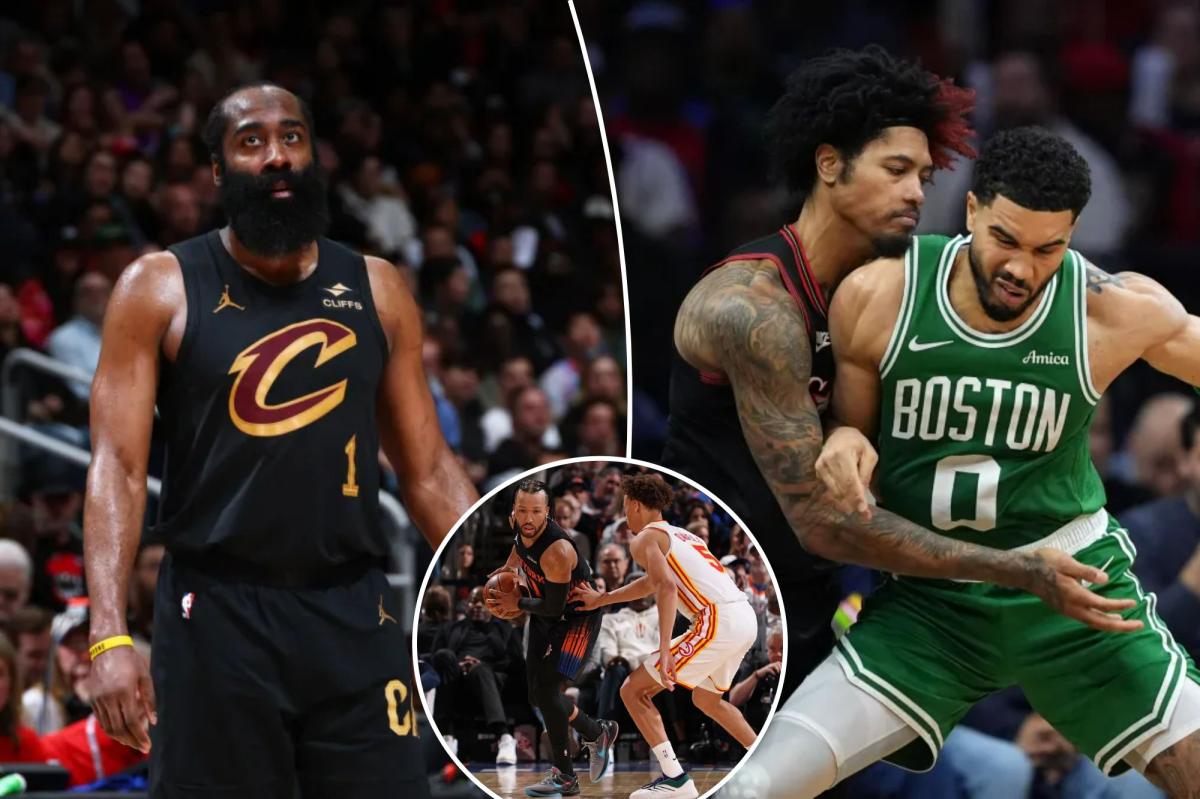
The Boston Celtics have demonstrated superior organizational stability, maintaining a 3-1 lead over the Philadelphia 76ers despite Jayson Tatum’s prolonged absence due to a prior Achilles injury. This success is not incidental but the result of deliberate roster redundancy. By building an offensive scheme that functions independently of its primary engine, Boston has mitigated the financial and competitive risks associated with superstar volatility.
Conversely, Philadelphia’s inability to exploit Boston’s injury window suggests a widening gap in bench depth and coaching execution. The betting markets reflect this disparity, with the 76ers facing long odds (22-1) as analysts increasingly view the Celtics as a stabilized asset poised for a deep run in a fragmented Eastern landscape.
The Western Conference: OKC’s Hegemony and the Wembanyama Variable
In the West, the Oklahoma City Thunder have secured the top seed for consecutive seasons, marking a definitive shift toward a sustainable model of talent development. Their dominance is being challenged primarily by the San Antonio Spurs, where Victor Wembanyama’s rapid scaling has accelerated the franchise’s competitive timeline from a developmental project to a championship-caliber disruptor.
The Western bracket remains a high-risk environment for stakeholders, as evidenced by the Phoenix Suns and Portland Trail Blazers advancing through the Play-In. This level of parity forces top seeds to account for star-heavy rosters even in the opening rounds, tightening the margin for error to historical lows.
Cleveland’s Offensive Atrophy and Reputational Liabilities
The 2-2 deadlock between the Cleveland Cavaliers and Toronto Raptors serves as a case study in postseason offensive collapse. Despite a roster featuring James Harden, Donovan Mitchell, Jarrett Allen, and Evan Mobley, Cleveland’s stagnation in high-pressure half-court sets has reactivated concerns regarding the ‘shaky playoff history’ of its veteran leadership. This failure to execute under pressure creates significant reputational risk, potentially impacting the franchise’s future trade-market leverage.
Market Sentiment and Institutional Consequences
Current BetMGM odds indicate a fundamental market correction; the Pistons being only marginal favorites (-130) against the Magic (+110) signals that institutional confidence is shifting from regular-season records to real-time momentum. This trend suggests that organizational depth and tactical health are now providing a higher return on investment than top-heavy superstar reliance. As the 2026 playoffs progress, these shifts will likely dictate future salary cap management and trade-deadline strategies across the league.