Strategic Rotation and Squad Depth Optimization
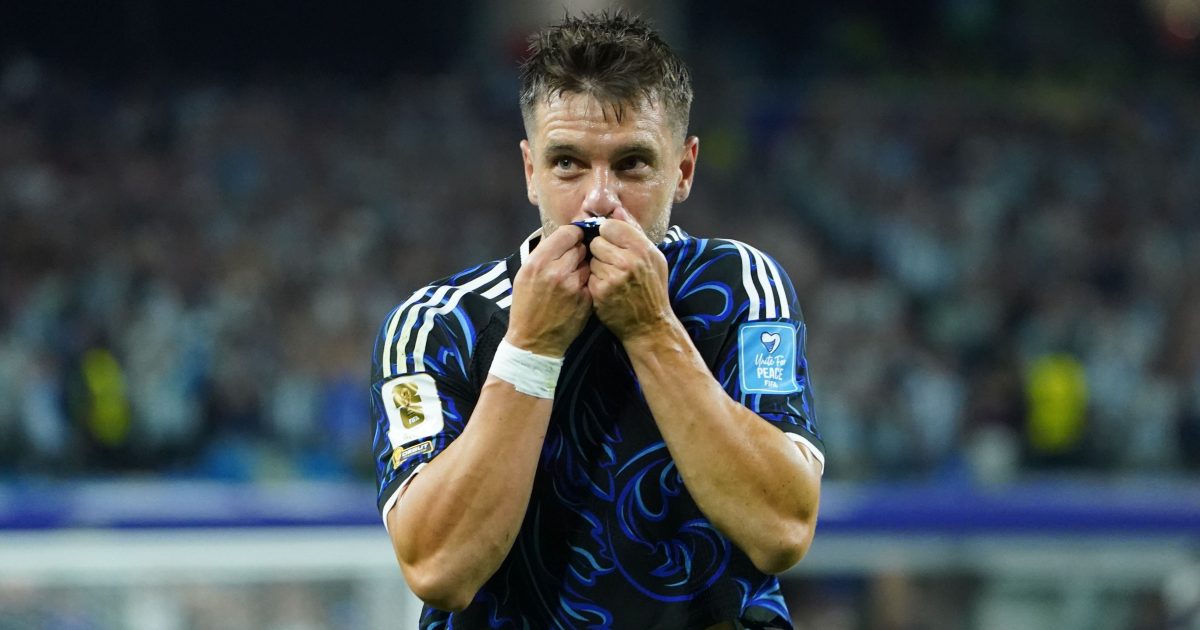
As Argentina secures its progression to the Round of 16 in the 2026 World Cup, manager Lionel Scaloni has leveraged the final group stage fixture against Jordan to implement a high-leverage rotation strategy. This administrative pivot serves a dual function: mitigating the physiological load on the primary starting XI while vetting the operational readiness of the secondary rotation. The 5-0 victory was characterized by the simultaneous introduction of five debutants—Marcos Senesi, Giuliano Simeone, Valentín Barco, José López, and Giovanni Lo Celso—signaling a structural commitment to squad redundancy ahead of the high-intensity knockout phases.
The Tactical Profile of Valentín Barco
Valentín Barco’s debut at the 66th minute, replacing Giuliano Simeone, marks the maturation of a developmental trajectory from Boca Juniors to Racing Club de Strasbourg. Barco provides a specific tactical asset: a high-speed lateral specialist with the technical remnants of his striker origins at Club Sportivo. Unlike Nicolás González, who offers aerial dominance and defensive balance, Barco introduces an aggressive offensive width. His performance against Jordan, coupled with his prior clinical reliability—notably his goal against Zambia in March 2026—positions him as a functional solution for deconstructing low-block defensive structures through technical volatility and verticality.
Giovanni Lo Celso: Technical Redemption and Asset Recovery
The match functioned as a milestone for Giovanni Lo Celso, whose career within the national team has been hampered by structural setbacks in 2018 and physical injury in 2022. His 19th-minute free-kick goal provides a benchmark for the technical standards required in Argentina’s midfield hierarchy. By converting a high-leverage set-piece, Lo Celso demonstrated the ability to generate scoring efficiency independent of open-play sequences. This recovery of human capital is vital; his integration ensures a veteran presence with elite technical proficiency, mitigating the risks of suspension or injury to the primary midfield trio during the elimination rounds.
Institutional and Market Implications
Scaloni’s decision to launch five debutants in a single match is an outlier in traditional tournament management, yet it represents a calculated expansion of the team’s battle-tested pool. Beyond the pitch, Barco’s debut serves as a global certification of his elite status, increasing the capital leverage for Racing Club de Strasbourg and reinforcing the prestige of Argentina’s youth development systems. Strategically, this rotation increases the complexity of opponent scouting; upcoming rivals must now account for a broader spectrum of tactical profiles, providing Argentina with a marginal but decisive edge in adaptability during the 16-avos.