
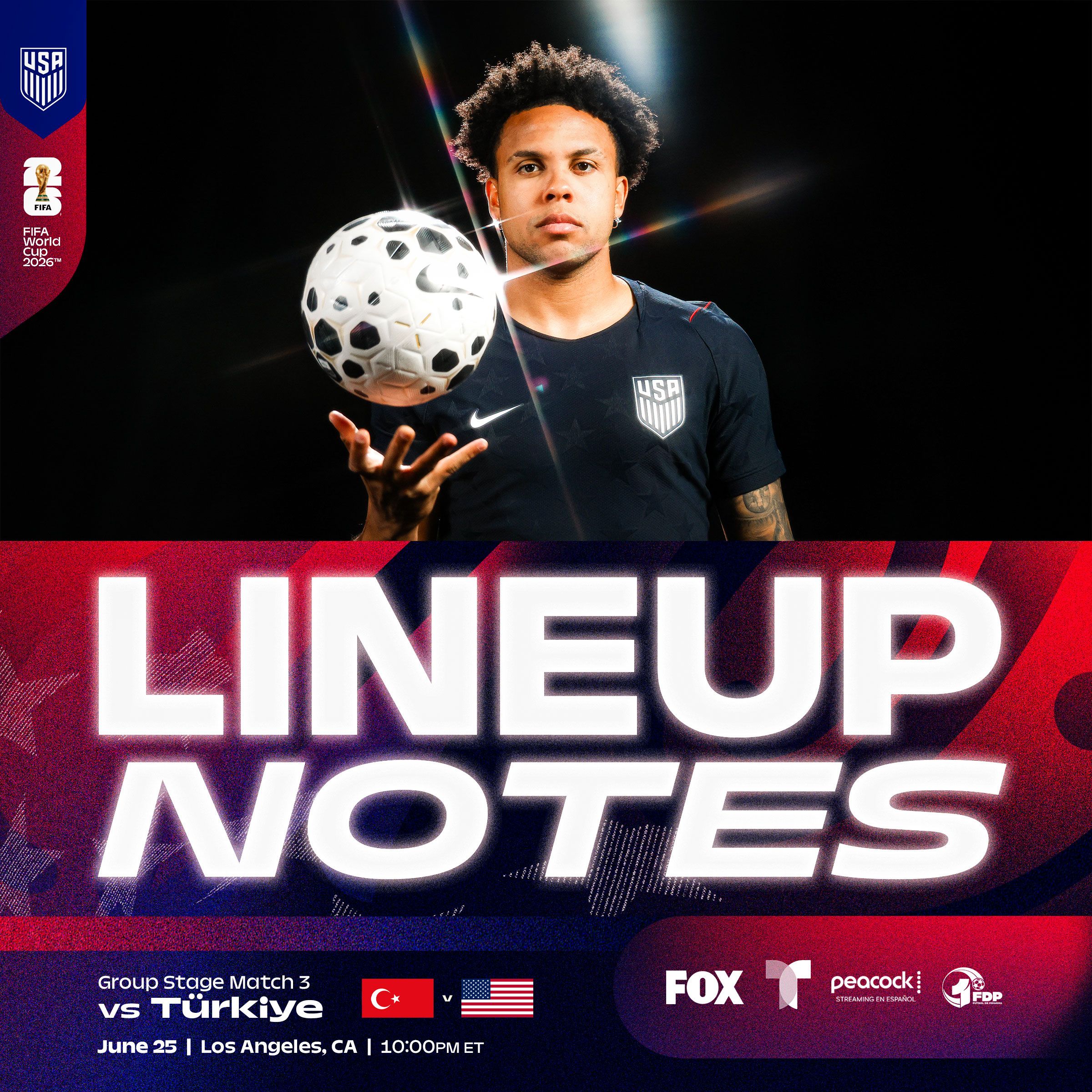
The June 25, 2026, encounter at Los Angeles Stadium between the United States Men’s National Team (USMNT) and Türkiye highlighted divergent team objectives. With the USMNT having already secured top seeding in Group D, Türkiye, facing early elimination, approached the match as a crucial opportunity for individual performance showcase and tactical assessment.
Arda Güler’s maiden FIFA World Cup goal transcended statistical significance, serving as a high-impact display of individual talent within a tournament campaign that had otherwise underperformed. For Türkiye, struggling for offensive output, Güler’s breakthrough offered a vital validation of their long-term player development strategy and offensive potential.
The USMNT initially took the lead in the third minute via Auston Trusty, a goal that seemingly affirmed manager Mauricio Pochettino’s aggressive tactical setup. However, this early advantage also exposed a potential lack of defensive intensity, a common pitfall for teams with secured advancement.
Strategic Repercussions of USMNT’s Tactical Rotation
Pochettino’s lineup selection for the final group match represented a strategic balance between managing player fatigue, avoiding yellow card accumulation, and maintaining momentum for a potential historic nine-point group finish. The objective was to preserve physical condition for the demanding knockout stages.
The subsequent performance against a technically adept European side underscored a persistent challenge for the USMNT when confronting sophisticated UEFA tactical systems. Despite Trusty’s early goal, the American defense struggled to adapt to Güler’s fluid transitions, revealing defensive frailties in their mid-block structure that future opponents are likely to target.
A critical juncture occurred with a disallowed goal for the United States, which disrupted the team’s psychological equilibrium and allowed Türkiye to gain momentum. This incident underscored the fine margins in elite international football, where officiating decisions can significantly alter match flow.
Commercial and Cultural Significance of the Los Angeles Venue
The presence of celebrities such as Paris Hilton, Ashton Kutcher, and Zlatan Ibrahimović at Los Angeles Stadium amplified the tournament’s commercial appeal. This fusion of entertainment and sport aligns with FIFA’s strategy to enhance the World Cup’s cultural impact within the North American market, leveraging Southern California’s influential celebrity ecosystem.
For the USMNT, the Los Angeles atmosphere presented a dual dynamic of robust fan support and intense public scrutiny. The inability to complete the group stage with a perfect record before a star-studded home crowd could influence the team’s commercial value and the prevailing narrative of American soccer’s ascent leading into the Round of 16.
The successful staging of this high-profile fixture at the Los Angeles venue sets a benchmark for the tournament’s logistical execution. As a key host city for the 2026 World Cup, the stadium’s capacity to manage global media attention and implement stringent security measures is integral to the event’s overall credibility.
Arda Güler’s Impact on Market Value and European Standing
Güler’s performance in a match of limited consequence for his nation carries substantial implications for his professional marketability and standing among elite European clubs. Scoring on the global stage, particularly against the host nation, solidifies his reputation as a foundational talent for Türkiye’s future international endeavors.
Türkiye’s comeback, marked by Güler’s equalizer and subsequent go-ahead goal, demonstrated a resilience previously absent in their group stage matches. This late surge suggests the Turkish squad prioritized securing a strong reputational finish, thus preserving their FIFA ranking by avoiding a winless tournament.
From a talent evaluation standpoint, Güler’s ability to perform under pressure against a formidable opponent provides crucial insights into his mental fortitude for top clubs. His goal was a product of intelligent positioning and capitalizing on defensive errors, not solely technical execution.
Historical Performance Patterns Against European Teams
The USMNT’s struggle to overcome Türkiye echoes a historical trend of difficulty against European opposition in competitive matches. Despite considerable progress in domestic player development, the tactical sophistication of UEFA nations remains a significant challenge for CONCACAF’s leading team.
This defeat prevented the United States from achieving a historic nine-point group stage, a milestone that would have signaled a more pronounced shift in the global soccer hierarchy. The result serves as a cautionary reminder that early group stage success does not guarantee sustained elite performance against motivated, tactically astute opponents.
The disallowed goal and late-game struggles suggest that the USMNT’s squad depth may still lack the consistency needed for a deep tournament run without key tactical players. Pochettino’s post-match analysis will likely scrutinize the transition from an aggressive offensive strategy to maintaining defensive solidity when protecting a lead.
Institutional and Financial Ramifications of the Outcome
The financial impact of the USMNT’s performance could affect domestic broadcasting deals and sponsorship activities, which often hinge on the narrative of an undefeated host nation. While the Group D top seed is secured, the loss to an eliminated Türkiye introduces an element of performance variance that might influence short-term market perceptions.
For FIFA, the match illustrated the ongoing value of the group stage format, where even eliminated teams can significantly influence competitive outcomes and generate compelling global content. The drama surrounding Güler’s goal and the USMNT’s attempted comeback ensured the match retained considerable commercial interest until the final whistle.
The result also has implications for the FIFA World Rankings, with Türkiye’s victory providing crucial points to offset their tournament exit. For the United States, it represents a missed opportunity to improve their global standing, impacting future seeding and overall prestige.
Conclusion of Group D and Strategic Outlook
As the United States advances to the knockout phase, the lessons from the Türkiye defeat will be critical for Pochettino’s tactical adjustments. The identified defensive vulnerabilities and reliance on early scoring suggest a need for a more consistent 90-minute game plan to succeed in the elimination rounds.
Türkiye’s exit, marked by Güler’s memorable goal, provides a foundation for their next World Cup cycle. The ability to disrupt the host nation’s momentum underscores the individual quality within the Turkish squad, despite collective shortcomings in reaching the knockout stages.
The 2026 World Cup continues to demonstrate the narrowing performance gap between established footballing nations and emerging talents, where individual brilliance, exemplified by Arda Güler, can redefine group stage narratives. Attention now shifts to the knockout stage, where the USMNT must integrate the lessons from their tactical exposures in Los Angeles with their demonstrated group-stage dominance.

Photo by BulgarianF on Pixabay.