Strategic Risk Analysis: Navigating Layoff and Infrastructure Challenges in Tournament Play
The Iowa women’s basketball team faced a unique set of strategic challenges entering the NCAA Tournament, stemming from both scheduling and environmental factors. Following a nearly two-week layoff, the team’s preparation transitioned from beneficial recovery to a period of potential competitive rust. This extended break, totaling 13 days since their last game, creates a significant variable in high-stakes, single-elimination competition where maintaining rhythm and focus is paramount. For a high-seeded team like Iowa (No. 2 seed), the primary challenge lies in managing the psychological and physical transition from a prolonged rest period back into peak performance conditions, particularly against a lower-seeded opponent (No. 15 seed FDU) where expectations for immediate victory are high. While rest is crucial for recovery, a break of this duration can disrupt established routines and shooting grooves, potentially leading to a “herky-jerky start” as players readjust to game speed and pressure. This challenge is particularly acute for younger players, who may lack the experience to quickly regain competitive form in the high-pressure environment of the NCAA Tournament. The coach’s focus on “control the controllables” represents a standard risk management technique in sports psychology, aimed at mitigating the influence of external factors like scheduling gaps and internal anxieties. However, the effectiveness of this approach is tested when the team’s momentum and confidence are contingent on re-establishing performance standards in a short timeframe.
.
Infrastructure Deficiency as a Competitive Factor
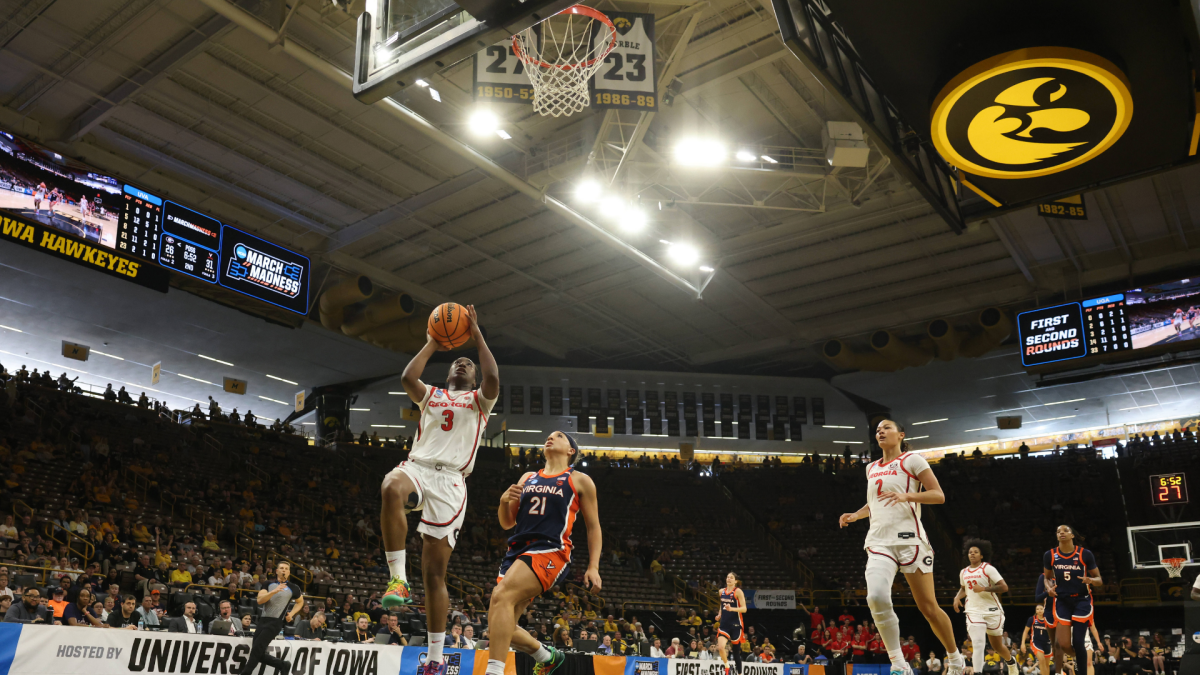
Beyond the scheduling challenge, the physical environment of Carver-Hawkeye Arena introduced significant operational constraints for all participating teams. The arena, which is 43 years old, lacks air conditioning, leading to internal temperatures exceeding 80 degrees with a 26% humidity rate during the first-round games. This unseasonably warm weather, which saw outside temperatures reach a record high of 84 degrees for March 21 in Iowa City, transformed the venue’s infrastructure into a competitive factor. The sell-out crowd of over 15,000 further exacerbated the heat inside the arena, creating a physically demanding environment that directly impacts player physiology and performance.
The high temperature and humidity levels directly influence competitive dynamics by altering player endurance and increasing the risk of heat-related fatigue. For teams relying on high-tempo offensive strategies, the environmental conditions can inhibit performance by accelerating physical exhaustion. This creates a strategic challenge for coaching staff regarding substitution patterns and pace management. The lack of climate control in a high-profile venue highlights a broader issue of institutional investment in sports infrastructure. While older arenas offer historical significance, their operational limitations pose risks to athlete safety and competitive fairness, especially in light of increasingly unpredictable weather patterns and the demands of modern athletic performance standards. For the opposing team (FDU), the environmental constraints could potentially serve as a strategic equalizer, disrupting Iowa’s preferred pace of play and creating opportunities for the underdog to capitalize on fatigue.
Athlete-Driven Economic Leverage and Stakeholder Management
The NCAA Tournament’s presence in Iowa City serves as a powerful case study in athlete-driven economic leverage. The city’s recognition as a host location for the tournament is directly attributed to the success of specific Hawkeye stars, notably Caitlin Clark and Maegan Gustafson. This phenomenon demonstrates how individual athlete performance and brand recognition can translate into significant local economic stimulus. The influx of thousands of fans for the first and second rounds generates substantial revenue for local businesses, including restaurants and sports bars, transforming a standard weekend into a high-demand economic event. The economic impact, however, creates operational challenges for local infrastructure. The influx of March Madness fans strains local accommodations, creating a supply-demand imbalance. The strategic response by the athletic department and the Iowa City Area Sports Commission to manage this constraint involves pre-emptive coordination to lock in hotel rates for visiting teams before the event becomes public. This process ensures operational efficiency for the tournament organizers and participating institutions while managing the potential market volatility caused by the sudden surge in demand. This highlights the sophisticated stakeholder management required to leverage high-profile sporting events for community benefit while mitigating logistical bottlenecks.
Long-Term Institutional Strategy and Climate Adaptation
The operational challenges experienced during the tournament, specifically the heat and infrastructure constraints, raise strategic questions regarding institutional investment priorities. The decision to host a major tournament in a venue lacking climate control reflects a calculated risk based on historical weather patterns, which typically do not include record-breaking heat in March. However, the increasing frequency of extreme weather events necessitates a re-evaluation of venue infrastructure requirements for high-stakes events. The potential impact on player safety and performance, coupled with the reputational risk associated with suboptimal conditions, creates a strong incentive for institutions to prioritize modernization projects. The economic benefits derived from hosting the tournament, driven by athlete popularity, provide a financial justification for future capital expenditures. The local economic boost, measured by increased business activity and tourism revenue, demonstrates the return on investment associated with maintaining a high-quality sports program and facilities. However, the reliance on specific athletes for this economic leverage creates a high-risk dependency. The long-term sustainability of this model requires continuous investment in both athletic talent development and physical infrastructure to ensure the institution remains competitive in attracting and hosting major events. The incident at Carver-Hawkeye Arena serves as a micro-example of a broader challenge facing sports institutions: adapting aging infrastructure to changing environmental conditions.