Escalating Disorder and Operational Responses in Belfast
The unprecedented deployment of water cannons by the Police Service of Northern Ireland (PSNI) signifies a critical escalation in public order management, marking a second consecutive night of severe anti-immigrant unrest in Belfast. This tactical decision, aimed at forcibly dispersing large, aggressive crowds, directly underscores the profound operational challenges confronting law enforcement following a street stabbing incident.
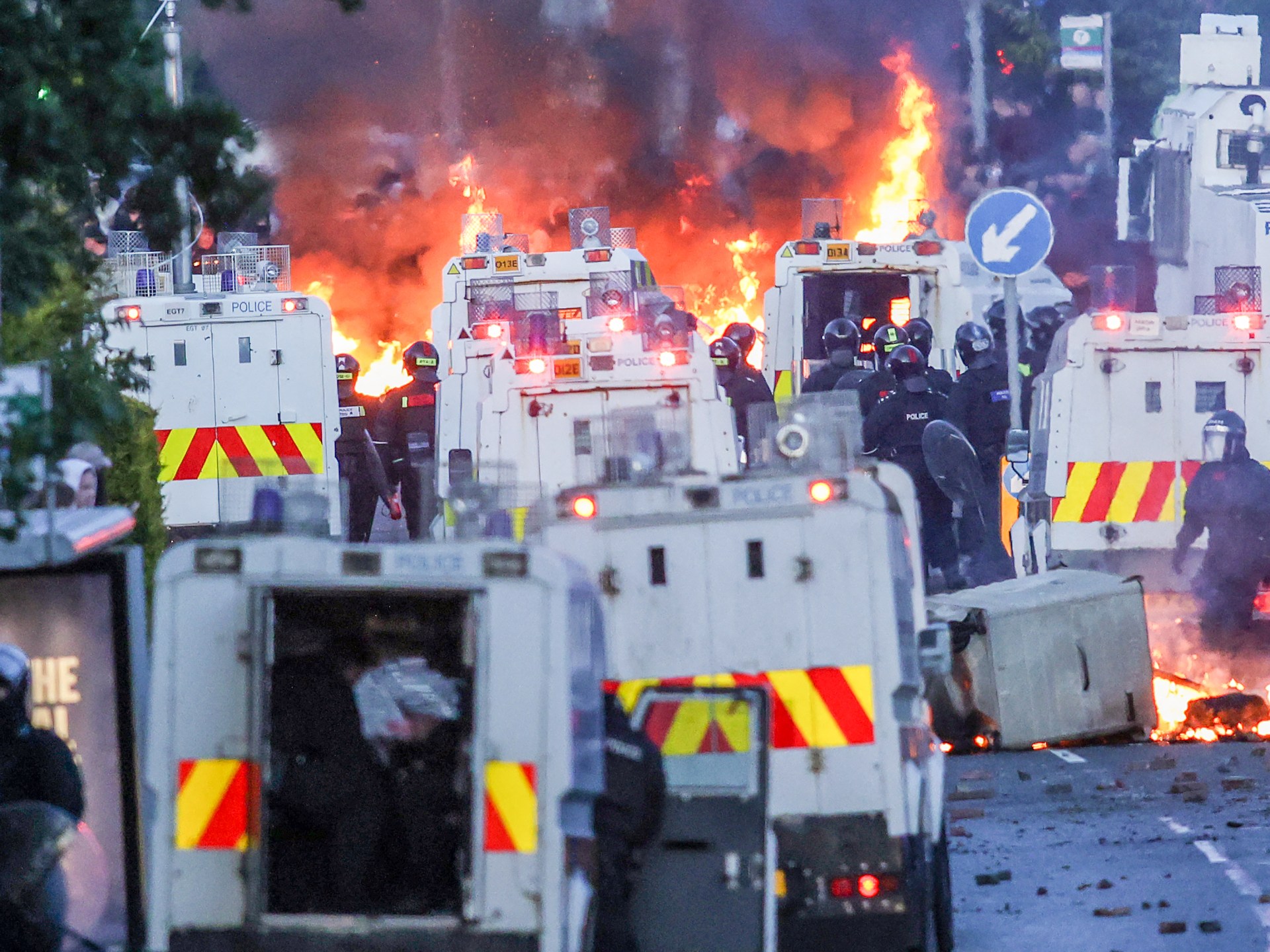
Riot police faced sustained, violent aggression, with groups employing bricks, bottles, and planks as projectiles at the strategic Sandyknowes roundabout in Glengormley. The necessity for significant resource reallocation, including drafting in additional officers and specialized equipment like water cannons, illustrates the substantial operational strain on public safety infrastructure. This tactical response at a key arterial point aimed to prevent the dissemination of disorder into more densely populated urban centers.
Beyond direct confrontation, the unrest triggered widespread societal disruption. Pre-emptive shutdowns of public transport networks across Northern Ireland and early school closures, while prioritizing public safety, imposed immediate logistical and socio-economic costs. These measures critically disrupted daily routines and local commerce, signaling a pervasive impact that transcends direct flashpoints.
The city centre experienced a significant economic paralysis, with numerous businesses opting for early closure, creating a deserted urban core. This collective private sector response highlights the direct financial leverage exerted by civil unrest, compelling a prioritization of safety over immediate revenue and severely impacting local economic vitality and commercial confidence.
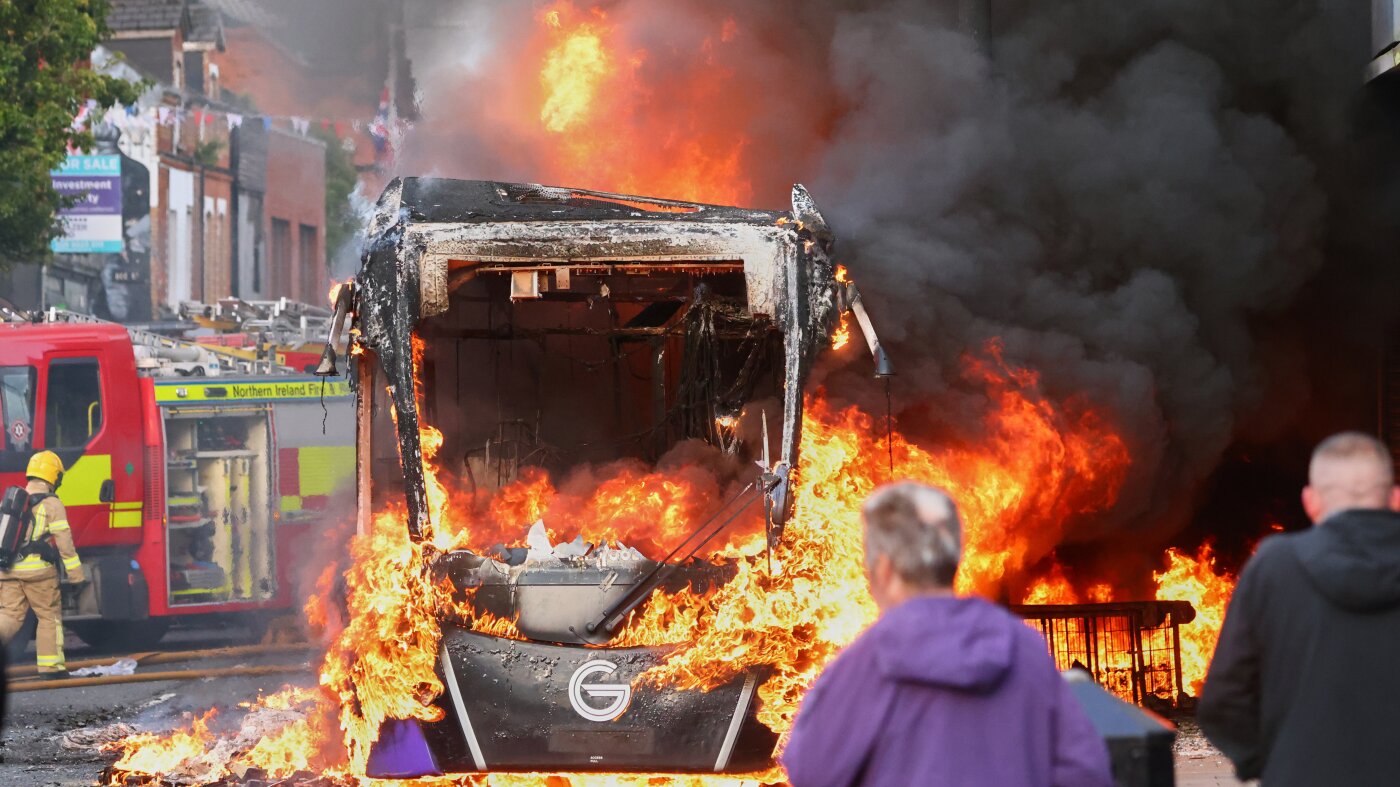
Visual evidence revealed individuals clad in black and face coverings systematically dismantling private property for projectiles, alongside targeted acts of arson against a Department for Infrastructure vehicle and public bins. Attempts to ignite a derelict property and the deployment of petrol bombs against police lines further underscore a calculated intent to inflict maximal damage and directly challenge state authority. These actions clearly signify a deliberate escalation beyond mere protest, introducing elements of sustained criminal damage and direct, life-threatening confrontation.
Socio-Political Catalysts and Stakeholder Implications
The PSNI’s explicit characterization of the unrest as ‘anti-immigrant violence’ directly links the disorder to its precipitating event: a knife attack involving a Sudanese refugee. This incident functioned as a potent flashpoint, activating deeply embedded socio-political tensions regarding immigration and exposing the inherent fragility of social cohesion within specific community demographics, offering a narrative for organized extremist elements.
In a crucial intervention, the family of the stabbing victim issued a public appeal for calm, unequivocally condemning the anti-immigrant violence. This act sought to de-escalate tensions and ethically dissociate the victim’s personal tragedy from the broader disorder, highlighting the complex moral imperative to prevent further victimization and the cynical exploitation of an individual’s suffering.
High-level political condemnations, including from UK Prime Minister Starmer and Northern Ireland’s leaders, unequivocally denounced the ‘unjustified’ anti-immigrant violence. These pronouncements underscore acute national concern for public order and social stability, functioning as strategic messaging to delegitimize the unrest, reinforce the state’s commitment to the rule of law, and mitigate potential damage to Northern Ireland’s international reputation for peace and progress.
The formal legal process commenced with the arrest of the 30-year-old Sudanese suspect on charges including attempted murder. This judicial response is pivotal for establishing individual accountability for the criminal act, critically aiming to compartmentalize the incident from the broader, more diffuse socio-political grievances that subsequently fueled the anti-immigrant protests.
Police investigations rigorously affirmed no terrorism link in the initial attack, a crucial clarification to prevent the proliferation of unsubstantiated claims and counter extremist narratives. This procedural transparency is essential for safeguarding public trust and pre-empting the incident’s co-option by divisive ideologies capable of further destabilizing an already fragile community.
The joint appeal from Northern Ireland’s political leaders and the Chief Constable, explicitly warning against inciting hate, fear, or targeting specific communities, underscores a proactive strategy to mitigate the propagation of divisive rhetoric. This unified leadership response is paramount in a region acutely sensitive to historical sectarian and communal tensions, where inflammatory language can rapidly exacerbate social fractures and poses significant risks to hard-won peace.
Economic and Institutional Ramifications
The widespread disruption to public services and commercial activity imposed substantial and immediate economic costs. Local businesses faced significant lost revenue, while residents endured logistical burdens. This immediate financial strain not only exposes the inherent economic fragility susceptible to civil disorder but also risks deterring future investment and impeding long-term economic growth across Northern Ireland, compounding existing challenges.
The sustained nature of the disorder placed immense operational demands on the PSNI, necessitating significant resource reallocation. This diversion of personnel and equipment from routine policing critically impacts general public safety provision and incurs substantial financial expenditure for overtime, tactical deployments, and damage repair, severely straining public budgets and institutional capacity.
Furthermore, the events inflict significant reputational damage upon Belfast and Northern Ireland. Persistent images of civil unrest actively deter tourism, foreign direct investment, and skilled migration, thereby undermining critical long-term economic development strategies and jeopardizing efforts to project an image of stability, security, and post-conflict progress.
The coordinated institutional response, marked by unified appeals from political leaders across the UK and Northern Ireland, underscores the critical intergovernmental dimension of crisis management. This collaborative approach is indispensable for presenting a unified front against disorder, leveraging broader governmental resources, and reinforcing the imperative to restore calm and stability through a cohesive political message.
The explicit politicization of the incident through the suspect’s asylum seeker status immediately injected it into contentious national and international immigration debates. This highlights how individual criminal acts can be weaponized to exploit pre-existing societal fault lines, transforming them into catalysts for broader political and social movements, challenging the principles of due process and inclusive societies.
The sustained, organized nature of attacks on police, employing various projectiles and incendiary devices, necessitates a strategic review of policing tactics and intelligence gathering to effectively counter such sophisticated public disorder. This also underscores the inherent challenge for political leaders in balancing the right to protest with the imperative of public safety and maintaining the rule of law; their condemnations are strategic efforts to reclaim the narrative from those seeking to exploit the crisis for divisive ends.
The collective calls for calm from diverse stakeholders—from the victim’s family to national political leaders—underscore a unified recognition of the severe consequences of unchecked violence and the potential for rapid escalation. Such events invariably lead to increased community polarization, deepened distrust between the populace and state institutions, and significant financial burdens from property damage and restoration costs, borne by taxpayers. Addressing these underlying fractures demands sustained community engagement, robust efforts to counter hate speech, and proactive investment in social cohesion programs.
Ultimately, this incident serves as a profound test of institutional resilience for law enforcement and local governance structures. Their demonstrable capacity to effectively manage public order, communicate transparently, and proactively address underlying community grievances will axiomatically determine the long-term trajectory of social cohesion and regional stability. The enduring challenge lies in identifying and addressing the fundamental causes of discontent while rigorously upholding the rule of law and vigilantly protecting vulnerable populations from targeted violence.