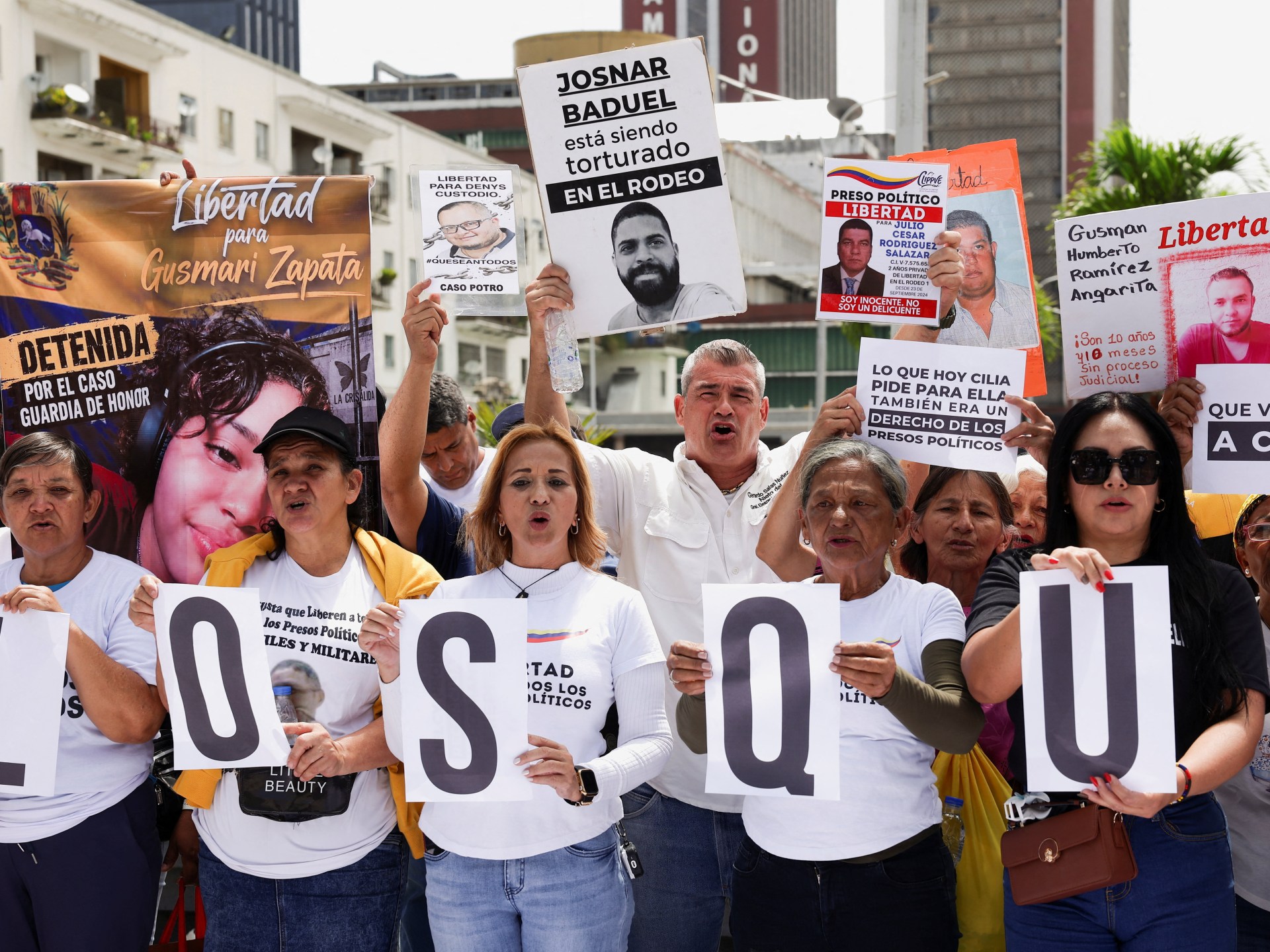
The verified release of 39 political detainees across Venezuela marks a calculated operational concession by the interim administration of Delcy Rodríguez amid high-stakes negotiations with political opposition factions. Brokered under an emerging bilateral framework actively backed by authorities in Washington, the measure concluded a formal second round of mediated dialogue. While civil society and human rights monitors view the discharges as vital humanitarian relief, the legal mechanics governing the cohort highlight the transactional nature of Venezuela’s post-Maduro transitional architecture.
Documentation verified by the human rights organization Justicia, Encuentro y Perdón confirms that 39 dissidents were discharged between Friday and Saturday from geographically dispersed detention facilities. The decentralized execution reflects an executive directive rather than systematic judicial reform. The cohort notably incorporates two high-profile categories of political detainees: eight women incarcerated since 2021 on contested narco-terrorism allegations, and six individuals held since 2020 for alleged complicity with the United States in an operational attempt to overthrow former President Nicolás Maduro. Both legal cases have long served as primary metrics of domestic judicial politicization.
Transactional Diplomacy and Sanctions Recalibration
The operational timing of these releases confirms that foreign policy recalibrations in Washington are driving internal political adjustments in Caracas. Following renewed direct channels between former U.S. President Donald Trump and Venezuela’s interim leadership, bilateral engagement shifted toward reciprocal concessions. Central to this diplomatic architecture is Washington’s formal removal of Venezuela from its designated narcotics trafficking list—a major regulatory and reputational de-escalation that substantially lowers sovereign risk and diminishes international trade liabilities.
In return, the interim executive has used selective penal releases to demonstrate procedural compliance to external stakeholders. This transactional model allows Rodríguez’s administration to pursue sovereign normalization and diplomatic legitimacy abroad. However, human rights monitors caution that trading political prisoners for sanctions relief fails to address systemic institutional deficits within the Venezuelan judiciary, leaving the underlying architecture of political prosecution fully operational.
Interim Governance and the Electoral Roadmap Deficit
The leadership of interim President Delcy Rodríguez—a pivotal administrative figure in the previous Maduro government—embodies the structural friction between regime preservation and democratic transition. Facing concurrent pressure from Washington, domestic opposition factions, and historical ruling-party loyalists, Rodríguez must project democratic intent without destabilizing internal power dynamics.
While Rodríguez explicitly committed to organizing competitive national elections during her address to the United Nations General Assembly, the executive statement omitted an operational timetable, legal benchmarks, or an established electoral calendar. For the negotiating opposition, the liberation of political prisoners offers tangible validation for sustained dialogue. Conversely, engaging in open-ended talks without guaranteed electoral timelines risks institutionalizing interim executive authority without achieving substantive constitutional normalization.
Conditional Discharges and the Verification Deficit
Despite their physical exit from penitentiaries, the comprehensive legal status of the 39 discharged individuals remains systematically ambiguous. Civil society legal analysts emphasize that such executive releases frequently entail precautionary measures, including foreign travel prohibitions and periodic court presentation mandates, rather than formal statutory dismissals (sobreseimiento). Without the complete expunction of charges, these individuals remain vulnerable to judicial re-arrest.
Simultaneously, human rights organizations face severe verification hurdles generated by the lack of a centralized, transparent national penitentiary registry. While Justicia, Encuentro y Perdón strictly authenticated 39 individual cases, competing wire reports cited wider, unconfirmed tallies. The geographical dispersion of provincial detention centers forces civil society networks to conduct ad hoc, manual confirmations directly with families, prolonging legal ambiguity and underscoring the structural opacity of the Venezuelan penal complex.
Systemic Limitations in Transitional Justice
The negotiated release of dissidents underscores the fundamental limitations of ad hoc transitional justice. Because the indictments were processed through specialized counter-terrorism and state-security courts whose institutional personnel and jurisdictional mandates remain unchanged, the institutional capacity for arbitrary detention remains intact. Meaningful democratization requires converting discretionary executive gestures into permanent statutory safeguards and restoring judicial impartiality.
For the released dissidents and their families, immediate priorities involve medical stabilization and social reintegration after prolonged confinement. Domestically and regionally, the broader durability of this diplomatic thaw will be tested in subsequent negotiation phases. Progress hinges on whether interim authorities leverage these initial confidence-building measures into an inclusive, verifiable electoral roadmap with binding rule-of-law protections.