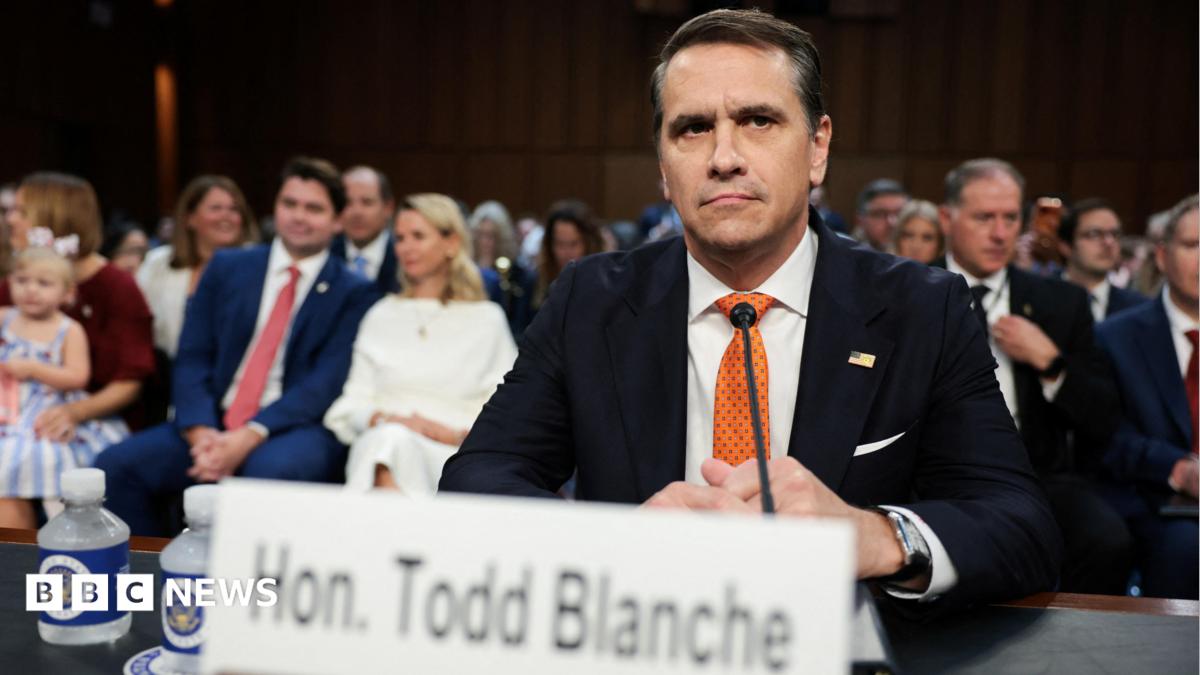
The Strategic Context of the Nomination
The nomination of Todd Blanche as Attorney General marks a critical shift for the Department of Justice (DOJ), transitioning from traditional institutional autonomy toward an agenda focused on rigorous policy enforcement. As a former defense attorney for President Donald Trump, Blanche’s shift to the nation’s chief law enforcement role has placed the department’s institutional independence under unprecedented scrutiny.
The confirmation process is constrained by a razor-thin Senate Judiciary Committee margin, exacerbated by the vacancy following the death of Senator Lindsey Graham. This narrow pathway provides individual senators significant leverage, as the committee allows only one dissenting vote to advance the nomination to the full Senate, effectively transforming the hearing into a venue for policy-based negotiation.
Institutional Friction and Professional Dissent
Blanche faces opposition from legal professionals, including former colleagues from the Southern District of New York. Critics argue that his tenure since March 2025 signals a departure from the department’s established norms of impartiality. The core of the dissent lies in the concern that aligning the DOJ with the executive branch’s political priorities erodes the ‘institutional firewall’ essential to the impartial administration of justice.
Operational Priorities and Political Optics
To secure support, Blanche has emphasized his record in prosecuting gang activity, fraud, and drug trafficking, while aligning with the administration’s immigration enforcement goals. This strategy serves a dual purpose: appealing to security-focused Republican priorities and attempting to counter perceptions of systemic politicization. Meanwhile, external protests regarding the handling of sensitive case files further complicate the department’s public standing.
Dynamics of Senate Negotiation and Structural Implications
The current confirmation environment reflects a broader trend of utilizing the vetting process as a mechanism for policy leverage. Republican senators are leveraging their votes to extract specific departmental commitments, altering the traditional procedural nature of the confirmation. If confirmed, Blanche faces the challenge of reconciling the administration’s aggressive policy agenda with the urgent need to restore institutional credibility. The hearing serves as a litmus test for the department’s future, balancing enforcement mandates against mounting public and institutional skepticism regarding its commitment to objective legal standards.
Conclusion of the Confirmation Process
The confirmation of Todd Blanche remains a high-stakes exercise in political management. His ability to navigate the tension between political loyalty and the historical expectation of independent, non-partisan legal operation will define the trajectory of the DOJ. Every statement made during these proceedings is being closely monitored for its impact on undecided votes, underscoring the fragility of the administration’s legislative strategy in this current political climate.