Thirty-nine years after its debut on broadcast television, the institutional ecosystem surrounding collegiate television programming faces a fundamentally different media landscape. When the original production of A Different World premiered on September 24, 1987, American primetime network television operated under rigid demographic programming structures and centralized distribution schedules. The arrival of a ten-episode sequel on Netflix precisely thirty-nine years later marks a strategic pivot in how legacy television intellectual property is monetized and deployed across direct-to-consumer streaming platforms.
The Evolution of Network Scheduling and Streamer Distribution
In 1987, NBC established the foundation of its primetime comedy block by placing the original iteration of A Different World between The Cosby Show and Cheers on Thursday nights. That deliberate broadcast scheduling provided structural insulation, granting the freshman series immediate access to a mass linear audience. By contrast, the 2026 sequel bypasses broadcast linear channels entirely, entering an ecosystem defined by on-demand streaming portfolios and decentralized viewer acquisition models.
The structural transition from a broadcast multi-cam series to a bounded ten-episode streaming order alters the narrative mechanics and capital allocation of the franchise. Broadcast television models in the late 1980s relied on twenty-plus episode orders designed to reach eventual off-network syndication thresholds. The Netflix model instead deploys compressed seasonal orders intended to retain subscribers and drive global engagement without the long-term scheduling dependency of traditional linear television networks.
Franchise Insulation and the Cosby Separation
The institutional viability of A Different World in 2026 relies significantly on its narrative distance from its original parent series. While the production originated as a direct spinoff centered on Lisa Bonet’s character Denise Huxtable, the series underwent a structural decoupling early in its original broadcast run. This historical boundary allows Netflix to reactivate the Hillman College universe while fully bypassing the commercial and reputational baggage associated with The Cosby Show.
During its initial season, the narrative depended heavily on familial ties to Denise Huxtable, including on-screen cameos from Cliff Huxtable to resolve narrative dilemmas concerning student finances and campus integration. However, the subsequent departure of Bonet following her real-life pregnancy altered the operational trajectory of the production. As the creative focus redirected toward the ensemble cast, the program established autonomous cultural equity that remains commercially viable for modern multi-platform monetization.
Creative Governance and Thematic Transformation
The editorial pivot of the original production solidified after Season 1 when Debbie Allen assumed responsibilities as chief creative officer, director, and producer. Under Allen’s operational leadership, the multi-camera format expanded beyond conventional domestic sitcom boundaries to integrate pressing civic and sociopolitical realities. The program tackled systemic matters including the HIV/AIDS epidemic, date rape, and the urban unrest following the beating of Rodney King.
This shift from standard situational comedy tropes toward structurally grounded social examination redefined the creative assets of the franchise. By addressing urgent socio-political matters within an educational environment, the production established a blueprint that outlasted its original 1987 to 1993 run. The 2026 continuation directly inherits this institutional blueprint, using the fictional campus of Hillman College as an analytical microcosm for macro-level civic conflicts.
Thematic Parallels Across Thirty-Nine Years
The geopolitical and domestic environment surrounding the September 24, 1987 premiere featured a lame-duck conservative Republican administration navigating complex Middle East operations. Thirty-nine years later, the production encounters a domestic climate characterized by acute tensions regarding race and institutional equity. The new series intentionally integrates these parallel realities into its dramatic framework, positioning higher education as an embattled frontline of cultural discourse.
Across its ten episodes, the sequel illustrates how contemporary collegiate institutions navigate aggressive institutional pushback against diversity, equity, and inclusion initiatives. The narrative directly confronts an era where civil rights protections for communities of color experience systematic retrenchment alongside visible escalations in xenophobia and racial hostility. Rather than treating campus life as an insulated preserve, the writing frames Hillman College as an environment acutely vulnerable to broader structural rollbacks.
Intergenerational Continuity and Cast Dynamics
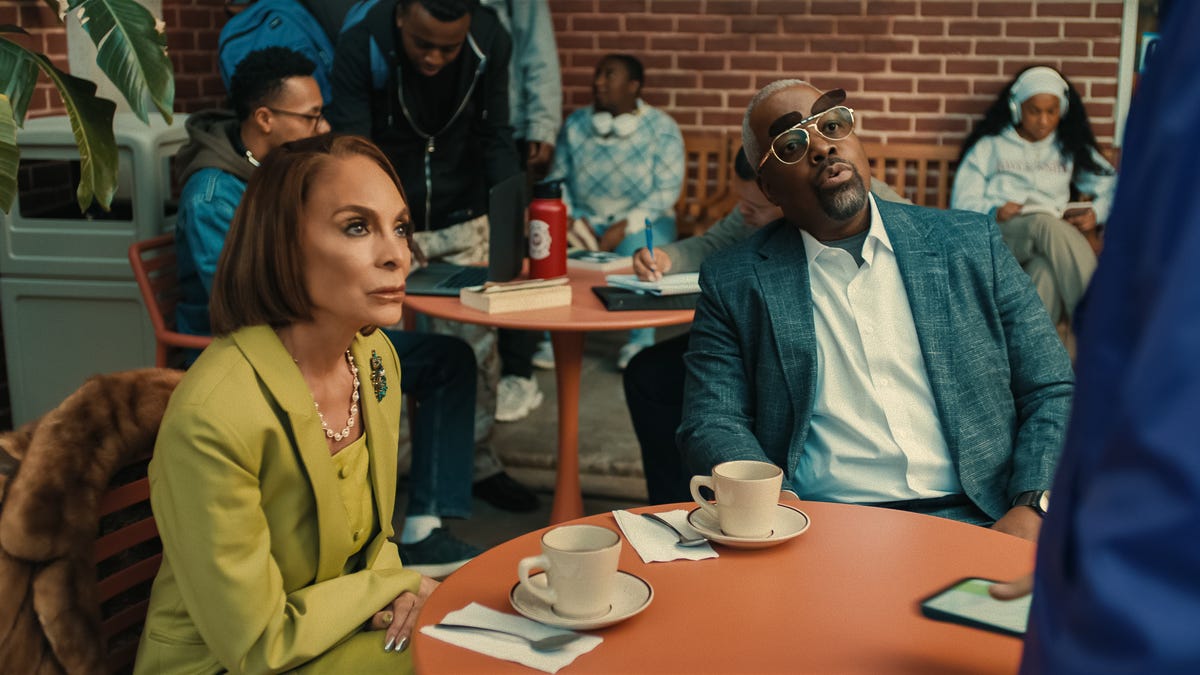
The preservation of franchise continuity is anchored by the return of central original cast members including Jasmine Guy as Whitley Gilbert and Kadeem Hardison as Dwayne Wayne. The original series concluded its six-season arc with Dwayne and a pregnant Whitley preparing for an international relocation to Tokyo. The 2026 iteration leverages this conclusion by introducing their daughter, Deborah Wayne, portrayed by Maleah Joi Moon, as a matriculating student.
This intergenerational lineage extends through supporting personnel, incorporating Darryl M. Bell as Ron Johnson alongside his on-screen son, Shaquille. With recurring appearances from Cree Summer and a cameo participation from Jada Pinkett Smith, the production constructs an intergenerational narrative bridge. This casting balance allows the platform to capture older demographics familiar with the original broadcast run while simultaneously marketing to younger audiences seeking coming-of-age institutional narratives.
Cultural Uplift Versus Victimhood Framing
Historically, A Different World occupied a distinct position within broadcast history by portraying Black characters and culture as active participants in upward mobility rather than passive subjects of systemic deprivation. The show deliberately placed educated Black youth inside the aspirational framework of the American dream. This ideological framing offered a stark departure from the prevailing broadcast depictions of urban trauma that dominated late-twentieth-century media representations.
The cultural consequence of this framing was immediate, legitimizing historically Black colleges and universities in the broader public imagination and fostering subsequent network investments in upwardly mobile Black programming. Series such as The Fresh Prince of Bel-Air and Living Single capitalized on the operational and cultural precedents established by the Hillman College ensemble. The 2026 series enters production with the task of preserving this aspirational core while acknowledging contemporary systemic hostilities that challenge collegiate accessibility.
The Streaming Economy and Intellectual Property Mining
Streaming entertainment models increasingly prioritize established intellectual properties that carry pre-existing brand affinity and cross-generational recognition. In an entertainment market where customer acquisition costs have surged, unproven concepts carry heightened financial and audience retention risks. Reviving a critically acknowledged property that spanned six seasons provides Netflix with a built-in baseline of viewer interest.
However, modern adaptations face the commercial risk of fragmentation, as contemporary viewers possess widely divergent expectations regarding nostalgia versus narrative novelty. The multi-camera, laughter-track-heavy format of the original 1987 series contrasts sharply with the visual language and pacing standard in mid-2020s premium episodic content. Adapting the rhythmic pacing of a traditional broadcast sitcom to modern cinematic aesthetics represents an operational balance between preserving legacy identity and securing modern streaming engagement.