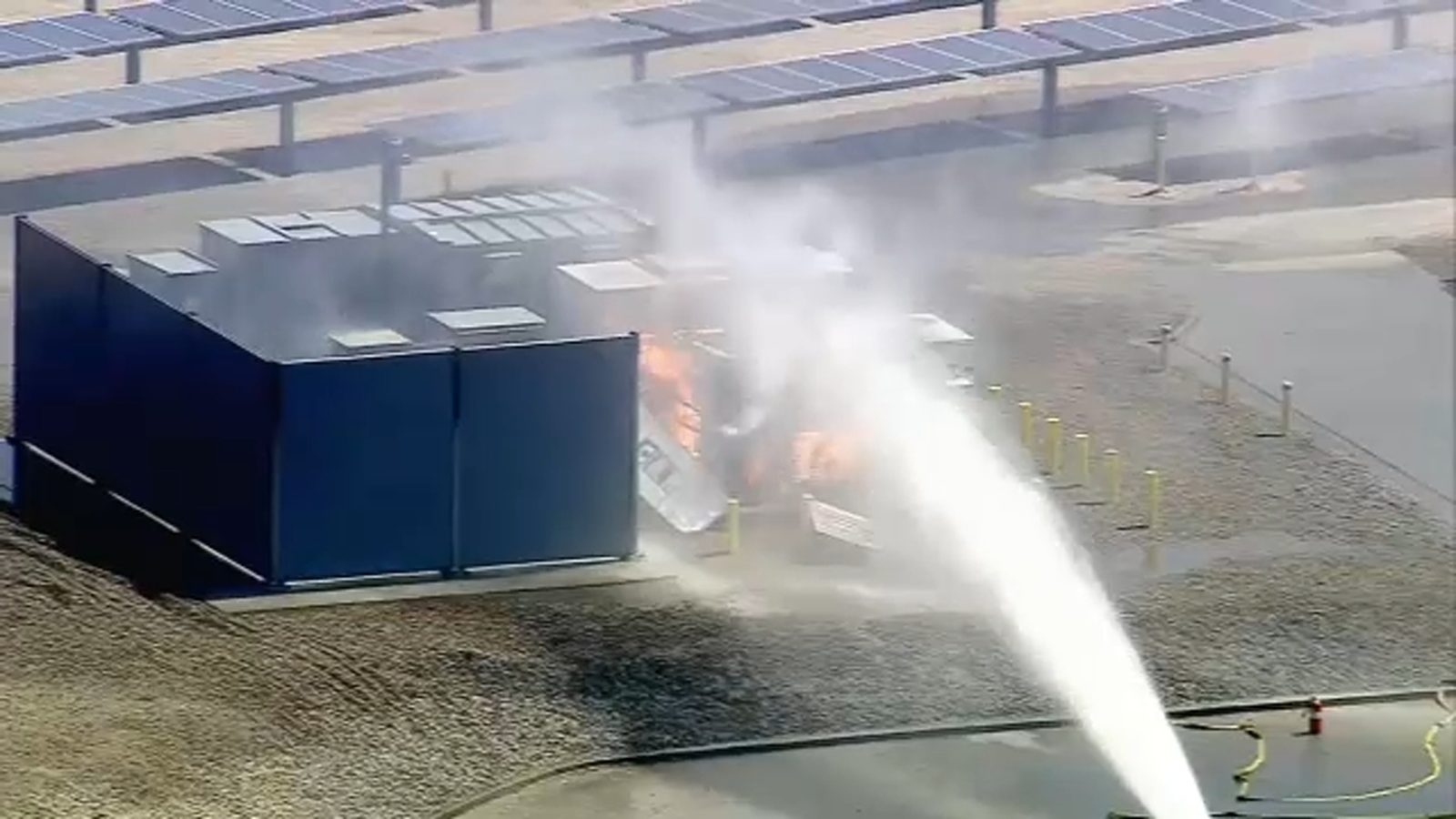
Thermal Instability at the Critical Infrastructure Nexus
The ignition of a lithium-ion Battery Energy Storage System (BESS) at the Metropolitan Water District’s (MWD) F.E. Weymouth Water Treatment Plant in La Verne underscores a burgeoning risk profile for utility-scale green infrastructure. The fire, localized near a solar array on the facility’s northeast perimeter, represents a complex intersection of renewable energy storage and municipal water security. While MWD officials confirmed that potable water supplies for Southern California remain uncontaminated, the incident highlights the logistical friction of co-locating volatile chemical storage with essential hydrological assets.
Tactical response from the La Verne and Los Angeles County Fire Departments focused on boundary cooling and containment. According to Battalion Chief Mark Savage, initial crews encountered a kinetic release event—a small explosion—within the storage container. This failure mode is characteristic of thermal runaway in high-density lithium-ion cells, where internal short-circuits trigger self-sustaining exothermic reactions, complicating traditional fire suppression efforts through persistent re-ignition risks.
Containment Logistics and Public Health Mandates
The chemical composition of lithium-ion off-gassing necessitated immediate exclusionary zoning to protect public health. Law enforcement and emergency management agencies enacted mandatory evacuations for sectors south of the 210 Freeway, specifically targeting the Wheeler and Bonita Avenue corridors. These measures were designed to mitigate the inhalation of toxic particulates and volatile organic compounds (VOCs) released during the combustion of battery electrolytes. Commercial centers north of Foothill Boulevard were similarly cleared as a precautionary measure against shifting plume dynamics.
Educational continuity was disrupted as the hazard footprint expanded. Grace Miller Elementary School implemented shelter-in-place protocols due to its proximity to the Weymouth site, while Ramona Middle School and Bonita High School adjusted dismissal procedures to prevent student exposure. The closure of Holly Oak Street and adjacent arteries illustrated the cascading transportation friction inherent in managing industrial accidents within high-density residential suburban zones.
Engineering Challenges in Urban Utility Resilience
The La Verne incident serves as a critical case study for the safety frameworks governing BESS deployments near urban centers. As water authorities like the MWD—which serves approximately 19 million people across six counties—integrate localized storage to offset peak energy costs, they must navigate the ‘safety-density paradox.’ Increasing the concentration of energy storage enhances grid reliability but necessitates more robust hazardous materials (HAZMAT) protocols and structural fire-hardening. The minor injury reported to a facility worker emphasizes that even with automated systems, the human element remains vulnerable during the initial stages of thermal failure.
Strategic suppression shifted toward high-volume water application, a standard yet resource-intensive method for cooling BESS fires where chemical extinguishers often prove insufficient. This reliance on water-based cooling emphasizes the ongoing need for advanced electrolyte chemistries and more effective fire-suppression technology. For municipal planners, the event reaffirms that the path toward carbon neutrality requires a rigorous re-evaluation of the spatial relationship between industrial energy assets and civilian populations.