Recent status reports submitted to the U.S. District Court in Washington have delineated the logistical, financial, and structural parameters governing two high-profile capital projects: the physical alterations to the John F. Kennedy Center for the Performing Arts and the construction of a new ballroom complex at the White House. Arising from ongoing litigation challenging the Kennedy Center board of trustees’ administrative oversight, the disclosures clarify how institutional governance, judicial constraints, and executive directives intersect across federally designated sites.
Kennedy Center Façade Modifications and Governance Strategy
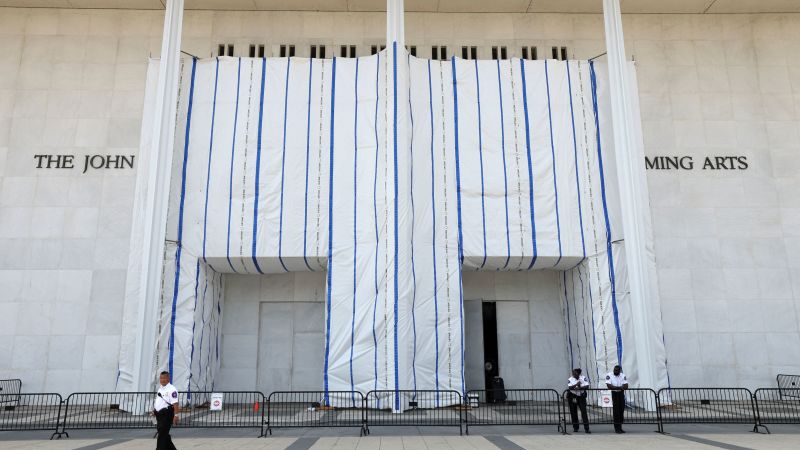
According to court filings submitted late Tuesday, the Kennedy Center’s board plans to install an exterior inscription beneath the primary venue signage in early September, attributing recent structural renovations to President Donald J. Trump. This planned action follows a previous judicial ruling that invalidated earlier administrative efforts to modify the historic marble exterior alongside established memorial inscriptions. Legal filings further indicate that an additional reference may be incorporated if a designated $100 million endowment benchmark is achieved.
In parallel, the board has advanced measures to formally designate the real estate parcel underlying the memorial in honor of Mr. Trump. These administrative resolutions coincide with a recent board determination to close the facility for an extended, multi-year renovation program. Pending further judicial review, protective tarps shielding the disputed exterior sections remain in place indefinitely.
White House Ballroom Infrastructure and Engineering Logistics
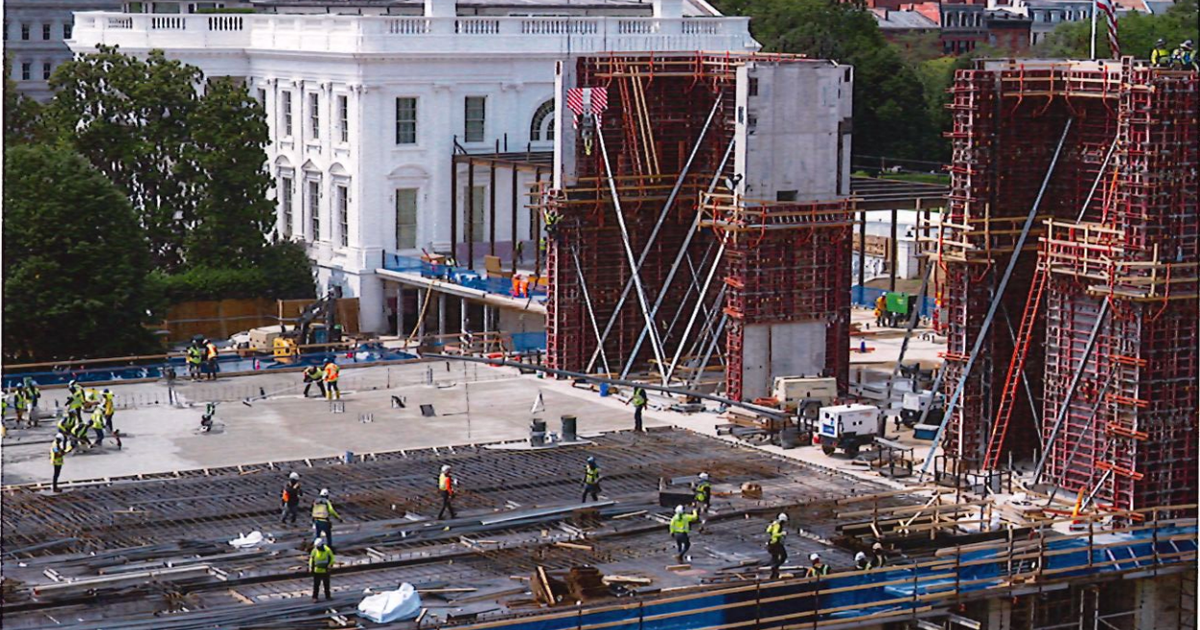
Simultaneously filed status reports outline the industrial scale and resource deployment allocated to the White House ballroom infrastructure. The development necessitated the complete demolition of the historic East Room to accommodate a subterranean and above-ground multi-use facility. Structural requirements include millions of pounds of reinforced rebar, fabricated structural steel, and extensive electrical conduit networks designed to meet modern security and operational criteria.
Construction operations maintain a high cadence within the secure executive perimeter, powered by an active workforce exceeding 200 specialized personnel operating on continuous shifts. The dual progression of these architectural overhauls underscores the complex jurisdictional and regulatory scrutiny applied to capital modifications within the federal district.
Judicial Review and Regulatory Compliance
The institutional restructuring at the Kennedy Center remains constrained by judicial oversight initiated to enforce statutory preservation standards and board governance protocols. The periodic status reports serve as compliance benchmarks under active federal court monitoring, balancing institutional execution against prior injunctive orders.
For stakeholders—including federal administrative bodies, public interest litigants, and cultural sector administrators—the extended operational hiatus presents significant programming disruptions and personnel realignments. Long-term implementation remains contingent upon final judicial determinations regarding statutory compliance and historic preservation mandates.