
NOAA Signals Climate Inflection Point with El Niño Watch
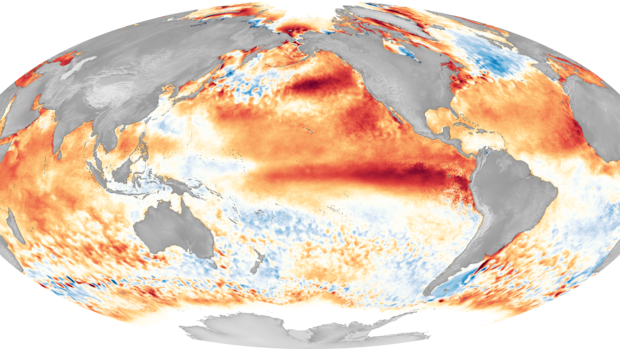
The National Oceanic and Atmospheric Administration (NOAA), via its Climate Prediction Center (CPC), has formally issued an El Niño Watch, signaling a decisive potential transition away from persistent La Niña conditions. Based on data reviewed around March 12, the CPC assigned a 62% probability for El Niño emergence between June and August, projecting persistence through year-end. This institutional alert quantifies a significant shift in equatorial Pacific Sea Surface Temperatures (SSTs), which drives global climate teleconnections.
A critical intermediate phase, with a 55% chance of ENSO-Neutral conditions persisting through May/June, defines the immediate risk landscape. This short-term atmospheric instability necessitates rapid operational adjustments as models navigate system recalibration.
Sectoral Exposure: Quantifying Probabilistic Climate Impacts
El Niño’s mechanism—anomalous equatorial Pacific warming—introduces probabilistic, but historically correlated, impacts, especially for the Pacific Northwest (PNW). The historical signature of El Niño involves warmer and drier winter conditions, creating immediate exposure for sectors reliant on stable hydrological cycles.
Hydrological Risk and Energy Security
Reduced winter snowpack accumulation directly compromises spring and summer water security and challenges hydroelectric generation capacity, a cornerstone of PNW energy supply. Utilities must accelerate risk hedging: securing non-hydro power purchase agreements (PPAs) or increasing reserves in natural gas/alternative fuels to mitigate the dual stress of reduced hydro output and potentially higher heating loads from warmer winters.
The CPC notes that model accuracy is inherently lower during this transitional period, injecting operational risk. Stakeholders must weigh the cost of robust preparedness (e.g., drought mitigation infrastructure stress-testing) against the economic damage of inaction should the forecast solidify.
Agricultural Resilience and Capital Allocation
For agriculture, drier winter prospects mandate strategic review of crop selection and irrigation resilience. Capital allocation decisions are now complicated by the need to hedge against potential supply shortages rather than relying on baseline expectations.
NOAA framing emphasizes that El Niño ‘loads the dice.’ Stakeholders must implement tiered decision matrices where specific probability thresholds trigger pre-defined operational responses.
Forecasting Uncertainty vs. Competitive Leverage
The one-in-three probability assigned to a ‘strong’ El Niño event (October–December) creates a policy dilemma: over-investing in mitigation or risking resource depletion. Entities leveraging high-frequency observational data streams to refine NOAA’s broad probabilistic guidance gain significant competitive leverage in inventory management and supply chain optimization.
Institutional and Financial Recalibration
The Watch serves as an administrative trigger, moving planning from theory to action across federal, state, and local agencies responsible for resource conservation and emergency management.
Financial Market Sensitivity
Financial markets are beginning to price in elevated risk for regional energy benchmarks and agricultural futures due to potential precipitation-pattern disruption. Insurance underwriters must adjust catastrophic risk modeling, particularly for Western US wildfire profiles, which increase under drier scenarios.
Ecosystem and Policy Stress Points
Environmental agencies must recalibrate conservation strategies for aquatic systems adapted to La Niña-driven flow regimes. Water governance frameworks face pressure to implement dynamic, transparent allocation adjustments without triggering protracted legal challenges inherent in altering senior water rights commitments.
Conclusion: Operationalizing Probabilistic Signals
The NOAA El Niño Watch is a critical inflection point. The core challenge lies in operationalizing the 62% probability into concrete, resource-committing decisions across disparate commercial and administrative units. Competitive advantage will accrue to those institutions that integrate this early, imperfect probabilistic signal into dynamic, risk-adjusted capital expenditure models for infrastructure and supply chain resilience, defining their positioning throughout the anticipated climate cycle.
Photo by PublicDomainPictures on Pixabay.