
Civic Liturgy and Administrative Mobilization
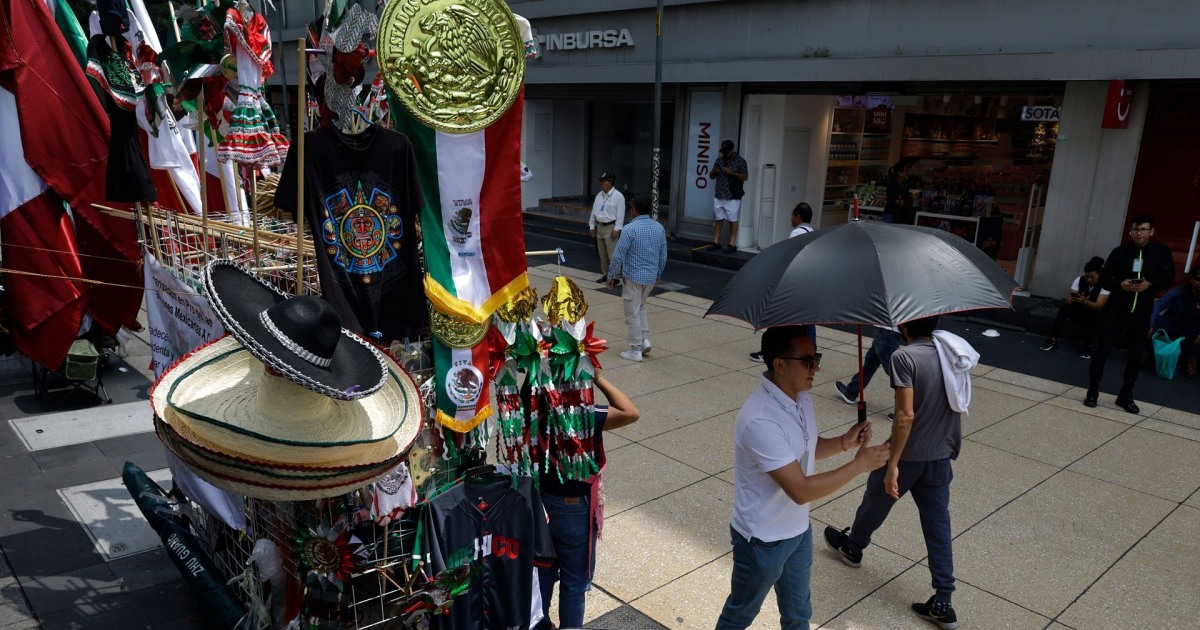
Mexico City’s Plaza de la Constitución remains the definitive stage for the nation’s premier state ritual: the 216th anniversary of Independence. President Claudia Sheinbaum’s delivery of the Grito de Dolores from the National Palace balcony functions as a high-stakes exercise in institutional continuity and symbolic consolidation. Beyond the festive atmosphere, the event represents a complex operational synchronization between federal security apparatuses, municipal logistics, and metropolitan transit networks, managing the high-density migration of hundreds of thousands into the historic core.
The Geopolitics of Cultural Programming: Intocable and the Diaspora
A strategic shift in this year’s official program is the selection of the Texas-based ensemble Intocable as the central musical act. By positioning a Tejano-Norteño group from Zapata, Texas, at the geographic heart of Mexican identity, the administration formally acknowledges the transnational reality of the Mexican state. This selection serves as a rhetorical and cultural bridge to the millions of dual-heritage citizens in the United States, whose economic contributions via remittances remain vital to domestic stability. The performance transforms the Zócalo into a space of binational dialogue, where lyrics of displacement and resilience resonate with a distributed global audience.
Urban Engineering and Public Utility
Integrating large-scale, cost-free entertainment within the Grito proceedings facilitates equitable civic engagement, ensuring that the historic center remains accessible to diverse socioeconomic tiers. From a logistical perspective, the installation of high-output audio-visual arrays around colonial architecture necessitates precision engineering to prevent structural degradation while maximizing audience immersion. This operational model leverages cultural assets to reinforce communal cohesion and extend public dwell-time in the capital’s central business district.
Media Dispersion and Digital Validation
The reach of the anniversary celebrations is amplified through an international multi-channel network, bridging the gap between the physical square and the global diaspora. Modern broadcasting strategies, utilizing automated transcription and real-time digital feeds, ensure the ceremony serves as a bellwether for civic sentiment. This decentralized media environment allows for the simultaneous consumption of state-led narratives alongside uncurated populist documentation, creating a dual-layered record of the 216th anniversary that reflects both institutional protocol and raw public participation.
Institutional Accountability and the Modern State
The pageantry of the Grito occurs against a backdrop of persistent demands for judicial reform and public security. Media reporting during the festivities highlights the intersection of sovereign ritual with active civil rights advocacy, notably regarding investigations into regional homicides and demands for systemic transparency. This juxtaposition underscores the ongoing tension within the Mexican state: the necessity of maintaining historical traditions while addressing contemporary mandates for legal integrity and human rights. Ultimately, the 216th Independence Day serves as a public stress test for administrative logistics and the enduring mobilizing power of national symbols in a globalized era.