
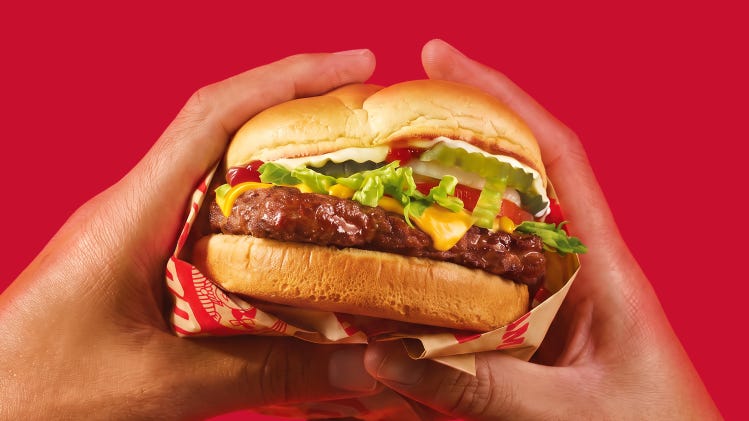
The Economic Footprint of National Cheeseburger Day
National Cheeseburger Day—observed on September 18—triggers widespread promotional campaigns across the quick-service restaurant (QSR) sector. The commercial significance of this date is anchored in consumer preferences, with the cheeseburger holding an 84% popularity rating in YouGov rankings, placing it just behind french fries and grilled cheese while tying with traditional hamburgers in the United States.
Data compiled by Circana CREST demonstrates the scale of this consumption pattern. Americans consumed an average of 20 cheeseburgers per capita from foodservice establishments over the 12-month period concluding in July 2026, aggregating to approximately 6.9 billion units domestically. Demographic breakdowns indicate that men consume an average of 24 cheeseburgers per month, compared to 17 for women.
Historical Context and Digital Monetization
While the foundational hamburger traces its roots to the 1904 St. Louis World’s Fair, the origin of the cheeseburger remains disputed between Pasadena, California (1924) and a Louisville, Kentucky restaurant. Despite these historical origins, contemporary commercial exploitation relies on digital infrastructure rather than culinary heritage.
Today, the holiday functions as an operational mechanism for major market players to capture consumer traffic. Chains utilize the occasion as a deliberate leverage point for proprietary digital ecosystems, transforming a culinary preference into a recurring customer acquisition channel via mobile apps.
Strategic Deployment of Loyalty Programs
Market leaders McDonald’s and Burger King have structured their promotional offerings around proprietary loyalty programs. McDonald’s deploys a mechanism where MyMcDonald’s Rewards members spending at least one dollar in the mobile app claim a free Double Cheeseburger at participating locations. This transactional threshold acts as a filter for engaged digital users while establishing a sales floor for franchise locations.
Burger King implements an extended operational timeline, deploying a week of promotional offers for Royal Perks loyalty members running through Sunday, September 20. The multi-day structure includes a free hamburger with a qualifying purchase on Thursday, followed by a free bacon cheeseburger tied to an order minimum on Friday. Subsequent days incorporate a free four-piece order of chicken nuggets on Saturday and a free Original Chicken Sandwich on Sunday, all contingent on meeting a three-dollar minimum spend threshold. Five Guys executes alternative mechanics, including buy-one-get-one-free burger deals running through the Friday observance.
Competitive Implications and Ecosystem Dynamics
The concentration of promotional activity around a single calendar date illustrates broader competitive dynamics within the QSR industry. By tying promotional value to proprietary mobile applications, corporations accelerate the migration of casual walk-in consumers into structured digital databases. This shift enables operators to capture first-party data, optimize marketing expenditures, and influence future purchasing frequency through targeted push notifications.
The financial architecture of these promotions requires balancing customer acquisition costs and margin compression for franchise operators. Requiring minimum spend thresholds—such as Burger King’s three-dollar requirement or McDonald’s one-dollar entry point—mitigates top-line erosion while driving volume through automated kitchen systems. Consequently, National Cheeseburger Day operates as a stress test for digital infrastructure, supply chain readiness, and customer acquisition strategies.
Photo by mirashin1 on Pixabay.