Strategic Anchoring and the 1886 Narrative Pivot
The November 1 premiere for HBO’s ‘The Gilded Age’ Season 4 signifies a deliberate strategic alignment with historical milestones. By centering the season on the 1886 dedication of the Statue of Liberty, executive producers Julian Fellowes and Sonja Warfield are utilizing a high-leverage historical event to consolidate multiple character arcs. This decision, informed by resident historian Dr. Erica Armstrong Dunbar, represents a strategic pivot from the fragmented social climbing of prior seasons towards a unified national event designed to catalyze institutional and personal change.
The arrival of the completed Statue of Liberty functions as a structural narrative bookend, complementing its initial introduction via the torch displayed in Madison Square Park. This circular design element reinforces the series’ commitment to depicting the passage of time and the accumulation of social and economic capital within the van Rhijn and Russell households. For the audience, this continuity enhances the series’ authority as a definitive chronicle of New York’s transformation during a period of unprecedented capital movement and urban expansion.
From a production perspective, integrating the 1886 dedication necessitates sophisticated orchestration of historical accuracy and dramatic pacing. The creators’ methodology of reverse-engineering the season’s arc from this central event ensures that every subplot contributes to a larger thematic resonance, mitigating the risk of narrative drift common in extended period dramas. This approach provides a clear, high-stakes objective for the ensemble cast, reinforcing narrative cohesion.
The Professionalization of the Peggy Scott Narrative
Season 4 places a renewed emphasis on Peggy Scott’s career, expanding the show’s exploration of professionalization among the Black elite in the late 19th century. By spotlighting her professional journey, the series moves beyond the domestic spheres of the upper class to examine the broader economic and social pressures confronting Black professionals. This narrative expansion offers a critical counterpoint to the leisure-class dynamics of the Russell and van Rhijn families, providing a more comprehensive view of the era’s labor markets and intellectual life.
Peggy’s trajectory serves as a vehicle for exploring the institutional barriers and strategic maneuvers required to navigate a segregated professional landscape. Her career development represents the emerging influence of the Black press and the strategic alliances formed within marginalized communities. This focus allows the series to address the complexities of agency and visibility, adding significant depth to the historical portrayal of New York’s diverse social strata.
Elevating Peggy’s professional life also reflects a broader industry trend toward diversifying historical narratives without sacrificing period authenticity. By grounding her story in documented realities, the writers avoid anachronistic tropes, focusing instead on the tactical decisions and systemic challenges that defined her experience. This adds intellectual rigor, appealing to an informed viewership that values historical complexity.
Character Evolution as Asset Management: The Case of Marian Brook
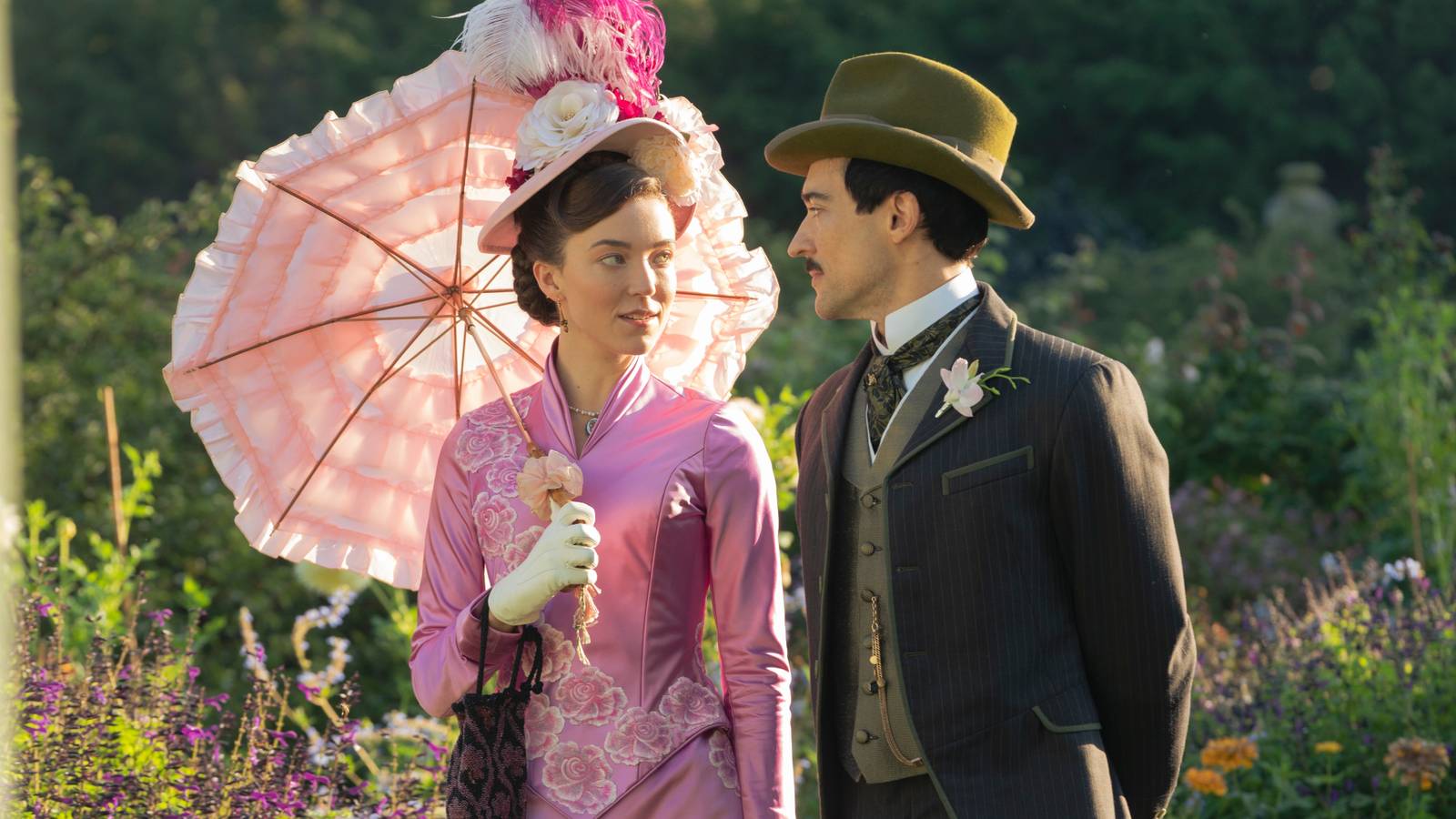
Louisa Jacobson’s portrayal of Marian Brook has evolved significantly, transforming from a penniless ingenue into a woman actively asserting her place within the New York elite. This shift is characterized by a progression from passive observation to active participation in the strategic maneuvers of her social circle. Jacobson’s performance reflects a nuanced understanding of how power is negotiated through subtle gestures, sartorial choices, and calculated social interactions.
Marian’s evolving character is essential for the series’ long-term viability, providing a stable emotional core amidst the volatile conflicts of the era. Her transition into a woman claiming her own decisions signifies a narrative maturation, moving away from Victorian romance tropes toward a more complex exploration of female autonomy. This development is visually mirrored in her changing physical presence and wardrobe, indicators of her rising status and increasing confidence.
Jacobson’s extended tenure with the character, spanning six years from casting to the current production of Season 4, has facilitated a gradual and believable transformation. This continuity is a valuable asset for HBO, fostering a deep audience connection with the protagonist. The actress’s ability to inhabit Marian’s world with precision and authority contributes to the series’ overall prestige, reinforcing its position as a high-value property within the network’s portfolio.
Executive Confidence and the Season 5 Roadmap
HBO CEO Casey Bloys’ endorsement, describing Season 4 as “excellent,” signals the series’ strong institutional standing. Bloys’ public acknowledgement of ongoing discussions regarding a fifth season indicates that HBO views ‘The Gilded Age’ as a long-term strategic asset, crucial for a production demanding significant capital investment in period-accurate sets, costumes, and a large ensemble cast.
The indication of a potential fifth season before the fourth has premiered reflects high confidence in the show’s performance metrics and critical reception. For stakeholders, this reduces the perceived risk associated with the series’ high production costs and allows the creative team to plan more ambitious multi-season arcs, ensuring narrative cohesion as it navigates the complex history of the late 19th century.
Bloys’ comments also underscore HBO’s commitment to maintaining its reputation for prestige drama in an increasingly competitive streaming landscape. Securing the future of a series with established critical acclaim and a loyal audience reinforces HBO’s brand identity as a purveyor of high-quality, historically grounded content, essential for retaining subscribers and attracting top-tier talent.
Talent Logistics and Competitive Market Pressures
The scheduling conflict involving Morgan Spector, who portrays George Russell, highlights the logistical complexities of managing a high-profile ensemble cast. Spector’s involvement in a Netflix project necessitates a flexible production schedule for ‘The Gilded Age’. Casey Bloys’ statement that HBO will “try to work around” this commitment underscores the importance of Spector’s character to the series’ core dynamic and narrative continuity.
This situation reflects broader challenges for major networks competing for sought-after actors’ availability. The ability to accommodate talent across multiple platforms is a necessary strategy for maintaining continuity in long-running series. The potential loss of a central figure like George Russell, who embodies the “new money” ambition of the era, would be a significant blow to the show’s narrative integrity and commercial appeal.
Managing these scheduling conflicts requires high operational coordination between production teams and talent agencies, illustrating the leverage top-tier actors now hold in a fragmented media environment. By prioritizing the retention of its core cast, HBO protects its investment and ensures production quality remains consistent, even as its stars pursue opportunities elsewhere.
Historical Accuracy as a Mechanism for Brand Authority
Dr. Erica Armstrong Dunbar’s role as resident historian and co-executive producer is a key component of the series’ strategic framework. Her influence ensures the narrative remains anchored in historical fact, bolstering the show’s credibility and prestige. The decision to feature the 1886 Statue of Liberty dedication is a direct result of this commitment to historical integrity, providing a factual foundation for the season’s dramatic developments.
This emphasis on accuracy serves as brand protection, distinguishing ‘The Gilded Age’ from more speculative historical dramas. For an informed audience, the inclusion of specific historical details, such as the fundraising efforts for the statue’s pedestal, adds intellectual engagement that enhances the viewing experience. This attention to detail also provides a wealth of material for writers, ensuring the story remains grounded in the actual social and economic conditions of the time.
Furthermore, using historical milestones as narrative anchors allows the series to explore broader themes of national identity and progress. The Statue of Liberty, a symbol of international cooperation and American ideals, provides a powerful backdrop for the characters’ personal and political conflicts. This thematic depth, a hallmark of Julian Fellowes’ work, is successfully integrated into ‘The Gilded Age’, demonstrating the creative team’s ability to balance historical fact with compelling storytelling.
The Economic and Social Implications of the Gilded Age Setting
The series’ exploration of the “old money” versus “new money” conflict remains its most potent thematic engine. In Season 4, this conflict is amplified by the monumental scale of the Statue of Liberty project, which necessitated significant philanthropic contributions from New York’s elite. The competition for social recognition through large-scale public works was a defining characteristic of the era, offering insight into the period’s power dynamics.
The van Rhijn and Russell families represent the opposing forces in this economic struggle, each leveraging resources to secure its position in a rapidly changing society. The Russells’ “new money” ambition, fueled by industrial and financial booms, directly challenges the established social order represented by the van Rhijns. This tension reflects profound economic shifts reshaping the American landscape.
By grounding these conflicts in actual events of the 1880s, the series offers a sophisticated analysis of wealth and power consolidation and contestation. The strategic decisions made by characters, whether in social or business spheres, are informed by the real-world pressures of the era. This focus on the structural drivers of the Gilded Age ensures the series’ relevance to contemporary discussions about wealth inequality and the role of capital in shaping society.
Conclusion: The Institutional Value of Long-Form Historical Drama
As ‘The Gilded Age’ enters its fourth season, its value as a strategic asset for HBO is increasingly evident. The series combines high production values, historical rigor, and compelling character development, earning it a secure place in the network’s lineup. Positive executive reviews and ongoing discussions for a fifth season suggest a long-term commitment to the franchise.
The series’ success highlights the enduring appeal of long-form historical drama for exploring complex social and economic themes. By offering a detailed, nuanced portrayal of a pivotal period in American history, ‘The Gilded Age’ provides more than entertainment; it offers a framework for understanding the forces that shaped the modern world. The strategic use of historical milestones, such as the 1886 dedication, ensures the narrative remains grounded and purposeful.
The continued growth and evolution of ‘The Gilded Age’ will depend on its ability to maintain the balance between historical accuracy and dramatic innovation. With a strong ensemble cast, a clear creative vision, and robust network support, the series is well-positioned for continued exploration of the Gilded Age. The upcoming season promises to be a significant milestone, bringing the story full circle and setting the stage for future developments.