
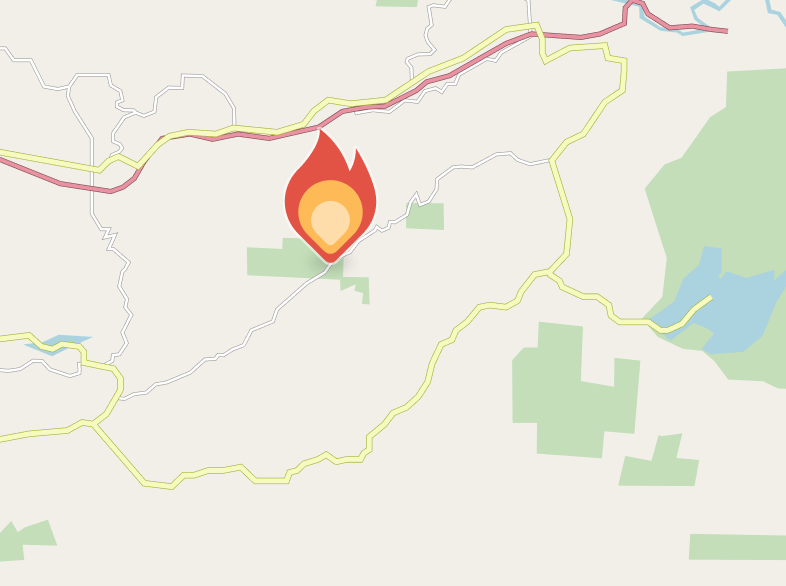
Operational Command and WUI Suppression Strategy
The Fred Mountain Fire’s expansion to 1,393 acres northeast of the active Bug Fire underscores the operational friction inherent to managing contiguous wildland-urban interface (WUI) incidents. Responding units from the Truckee Meadows Fire Protection District face a wildfire propagating at a moderate rate along the Red Rock Road corridor. Tactical priorities require balancing direct assault tactics—establishing anchored perimeter containment lines—against defensive structure protection across shifting rural-residential transition zones.
Infrastructure Risk Management via Grid De-Energization
To prevent catastrophic secondary ignitions, utility providers initiated targeted grid de-energization across the incident impact zone. Power shutoffs reduce the risk of energized lines contacting windborne embers or falling debris while insulating ground crews from arc flash and electrocution hazards during heavy equipment operations beneath high-voltage corridors. However, local de-energization introduces operational trade-offs, degrading regional cellular coverage and complicating emergency communication protocols during active public evacuations.
Spatial Dynamics of Overlapping Evacuation Corridors
Contiguous fire perimeters have created complex spatial dynamics along major traffic routes. While public safety authorities lifted evacuation orders for Cold Springs, active warnings and mandatory orders simultaneously expanded along Red Rock Road. This fluid, non-linear progression demonstrates the necessity of dynamic perimeter management to prevent transit bottlenecks and ensure safe public egress.
Evacuation Center Infrastructure and Animal Intake Protocols
Municipal emergency managers established primary civilian shelter services at the Evelyn Mount Community Center (1301 Valley Road, Reno), supported by an on-site mobile unit for small animal intake to drive evacuation compliance. Concurrently, agricultural and livestock resources were routed to the Reno Livestock Event Center (1350 North Wells Avenue, Gate 2), isolating heavy trailer traffic from residential evacuation routes and mitigating loose-livestock risks on active roadways.
Digital Communication Vulnerabilities and Multi-Channel Redundancy
While real-time spatial platforms like Perimeter Map and Watch Duty offer critical updates, their reliance on active JavaScript execution and operational cellular networks creates single points of failure during grid shutdowns. When power loss degrades local cell towers, digital-only alerts fail to reach isolated populations. Consequently, robust WUI incident management demands multi-channel redundancy, pairing digital perimeter mapping with localized radio broadcasts and physical door-to-door notifications.

Photo by googles on Pixabay.