
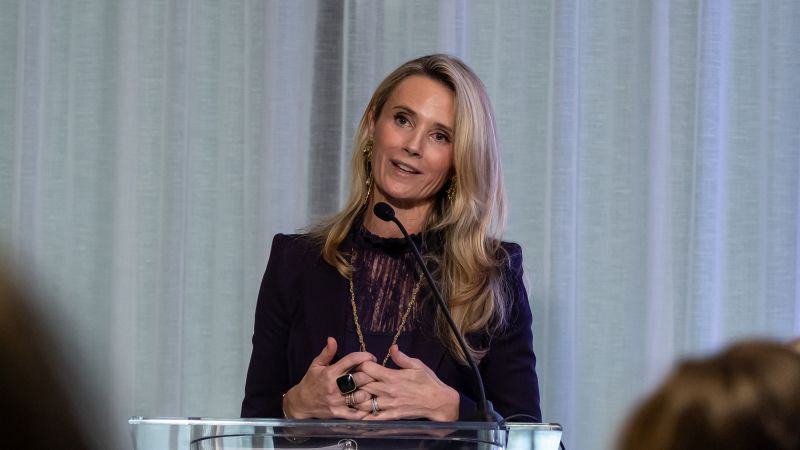
Institutional Collision: The Federal-State Legal Nexus
The disclosure of a Department of Justice (DOJ) investigation into Jennifer Siebel Newsom, filmmaker and spouse of California Governor Gavin Newsom, signifies an escalation in the institutional friction between Sacramento and federal authorities. This development shifts the long-standing ideological conflict from the public square into a formal investigative framework, introducing new operational liabilities for the Governor’s administration.
By confirming the probe, federal authorities have altered the strategic calculus for the Newsom inner circle. This transition from political theater to legal scrutiny creates an immediate necessity for a bifurcated defense strategy: managing the technicalities of a federal inquiry while maintaining the Governor’s visibility as a national leader of the opposition.
The ‘Political Tax’ on 2028 Aspirations
In the high-stakes environment of a potential 2028 presidential cycle, a federal investigation acts as a significant drain on political capital. The inquiry necessitates a defensive posture that threatens to divert resources from policy advocacy and national coalition-building. Beyond the immediate legal costs, the probe introduces ‘donor volatility’—a scenario where stakeholders prioritize stability and may hesitate to commit to a candidate facing an active federal shadow.
The Newsom administration’s tactical response—framing the probe as an abuse of power—aims to consolidate the progressive base. However, the persistence of the investigation creates long-term structural hurdles, particularly regarding the recruitment of top-tier political talent and the maintenance of a clear, unencumbered national narrative.
Internal DOJ Dynamics and Procedural Autonomy
A pivotal element of this case is the report that the investigation was not initiated by the Justice Department’s political leadership in Washington. If the probe originated from career prosecutors or regional offices, it undermines the Newsom camp’s narrative of a purely partisan vendetta. This distinction highlights the ongoing tension between the DOJ’s institutional career staff and the political figures who oversee the department during transitions of power.
The alleged lack of involvement by DC leadership suggests a decentralized investigative process, intended to be insulated from direct executive interference. This structural independence is a cornerstone of the DOJ’s identity, yet it remains under intense public scrutiny as it intersects with high-profile political figures.
The Role of Acting Attorney General Todd Blanche
The leadership of Acting Attorney General Todd Blanche adds a layer of complexity to the oversight of this investigation. Blanche must navigate the department’s mandate for impartial justice while operating within an administration frequently accused of weaponizing the legal system. His stewardship will be measured by the degree of autonomy granted to investigators and the transparency of the process.
Any perceived acceleration or irregularity in the probe will likely be interpreted by Newsom’s supporters as validation of their ‘weaponization’ claims. Consequently, the DOJ faces its own institutional risk: the need to demonstrate that this inquiry follows standard evidentiary protocols rather than political mandates.
Federalism and the Crisis of Intergovernmental Cooperation
This investigation underscores the fragility of American federalism when federal law enforcement targets the inner circle of a state executive. Such friction often impedes intergovernmental cooperation on critical issues, from infrastructure to public safety. When the nation’s most populous state is at odds with federal investigators, the impact extends beyond the individuals involved, potentially chilling collaborative policy efforts between Sacramento and Washington.
Ultimately, the resolution of this probe—whether it results in formal charges or a dismissal—will set a precedent for how the Justice Department handles the families of high-ranking political figures in a hyper-polarized environment. The outcome will test the resilience of institutional norms and the public’s trust in the neutral application of the law.

Photo by MikeGoad on Pixabay.