The Mechanics of Procurement Bypass
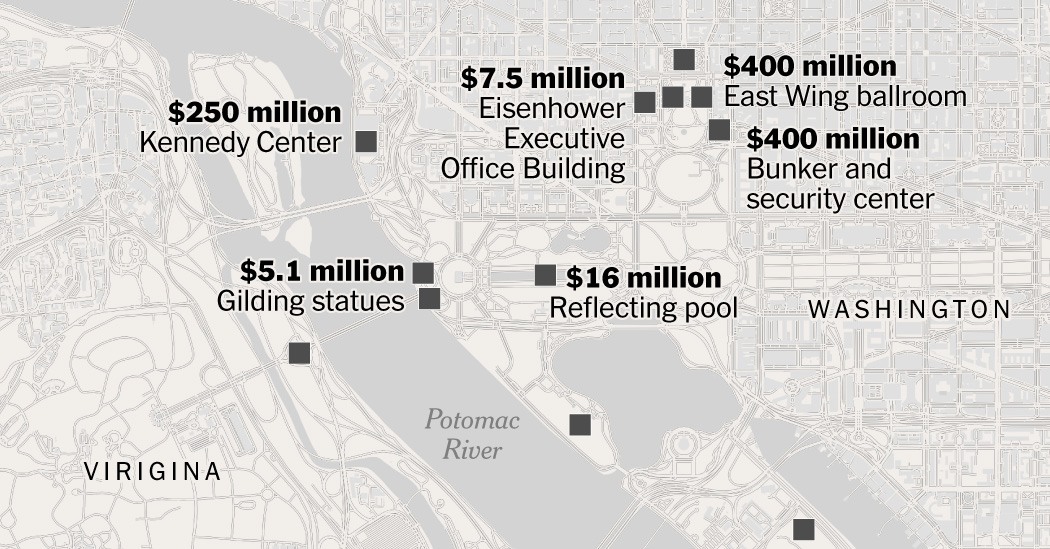
The development of a $500 million ballroom at the White House Executive Residence has bypassed standard federal competitive bidding requirements. By utilizing the Executive Residence—a division primarily focused on interior maintenance and hospitality—as the procurement vehicle, the administration has circumvented the General Services Administration (GSA), the body mandated to oversee large-scale federal capital projects. This structural deviation removes essential safeguards designed to ensure cost-efficiency through market-driven competition.
Financial Exposure and Stakeholder Risk
While the administration characterizes the project as a philanthropic gift, significant taxpayer exposure remains. The project is part of a broader $1 billion capital expansion, including security centers and municipal upgrades. By opting for a non-competitive contract with Clark Construction, the federal government forfeits the ability to conduct price discovery. This lack of benchmarking against industry standards creates a high risk of budgetary inflation, with future maintenance and operational costs likely falling under the purview of public funding.
Institutional and Strategic Consequences
The centralization of procurement authority within the Executive Office signals a shift toward relationship-driven contracting. Former GSA officials have noted that such projects, given their technical and financial magnitude, typically require a rigorous, competitive environment to ensure fiscal discipline. When high-level intervention replaces standardized bidding protocols, the government introduces long-term structural vulnerabilities, including the potential for conflicts of interest and weakened oversight of infrastructure assets.
The Precedent of Decentralized Procurement
Using the Executive Residence to manage major capital improvements risks eroding the technical expertise and institutional memory maintained by the GSA. This approach prioritizes administrative velocity over fiscal transparency. If this model for bypassing centralized oversight becomes a precedent, the federal government may face systemic issues in managing complex construction risks, ultimately compromising the long-term stewardship of national assets and leaving future administrations with the financial burden of opaque, high-cost infrastructure commitments.